Common Autoflower Problems and How to Fix Them: Complete Troubleshooting Guide

Jun
Even experienced growers run into problems when growing autoflowers.
The challenge with autoflowering cannabis is that these plants have a limited life cycle. Unlike photoperiod strains, you can’t simply extend the vegetative stage while your plant recovers from stress. Every day lost to poor growing conditions can impact final yields.
The good news is that most autoflower problems show warning signs before serious damage occurs. Learning to identify those signs early allows you to correct issues before they affect growth, flowering, or harvest quality.
This guide covers the most common autoflower problems, what causes them, and how to fix them before they reduce your yields.
Why Autoflowers Are More Sensitive to Problems
Autoflowers contain Cannabis ruderalis genetics, which allow them to flower automatically based on age rather than light schedules.
While this gives growers faster harvests, it also means autoflowers have less time to recover from:
- Overwatering
- Nutrient deficiencies
- Root damage
- Environmental stress
- Pest infestations
A photoperiod plant might recover from a mistake over several weeks of additional vegetative growth.
An autoflower usually doesn’t have that luxury.
This is why early detection is one of the most important skills a grower can develop.
Problem #1: Stunted Autoflower Growth
One of the most frustrating issues growers encounter is a plant that simply stops growing.
Instead of vigorous vegetative growth, the autoflower remains small and underdeveloped.
Common Causes
- Overwatering
- Transplant shock
- Poor genetics
- Cold temperatures
- Root restriction
- Incorrect pH
Symptoms
- Slow growth
- Small leaves
- Short internodal spacing
- Tiny overall plant size
How to Fix It
First, check your watering practices.
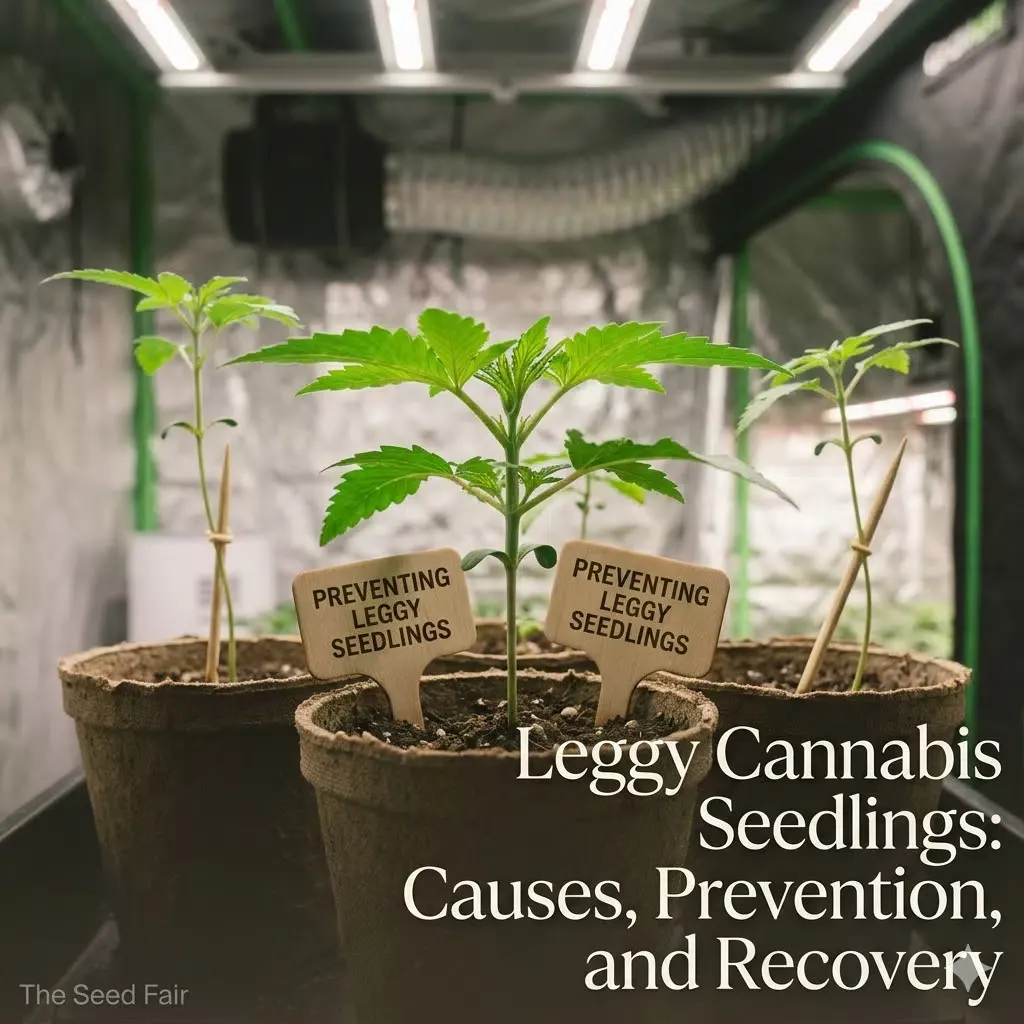
Overwatering is responsible for many cases of stunted growth because roots require oxygen to function properly.
Also verify:
- Root space is adequate
- Temperatures remain between 70–80°F (21–27°C)
- pH stays within the correct range
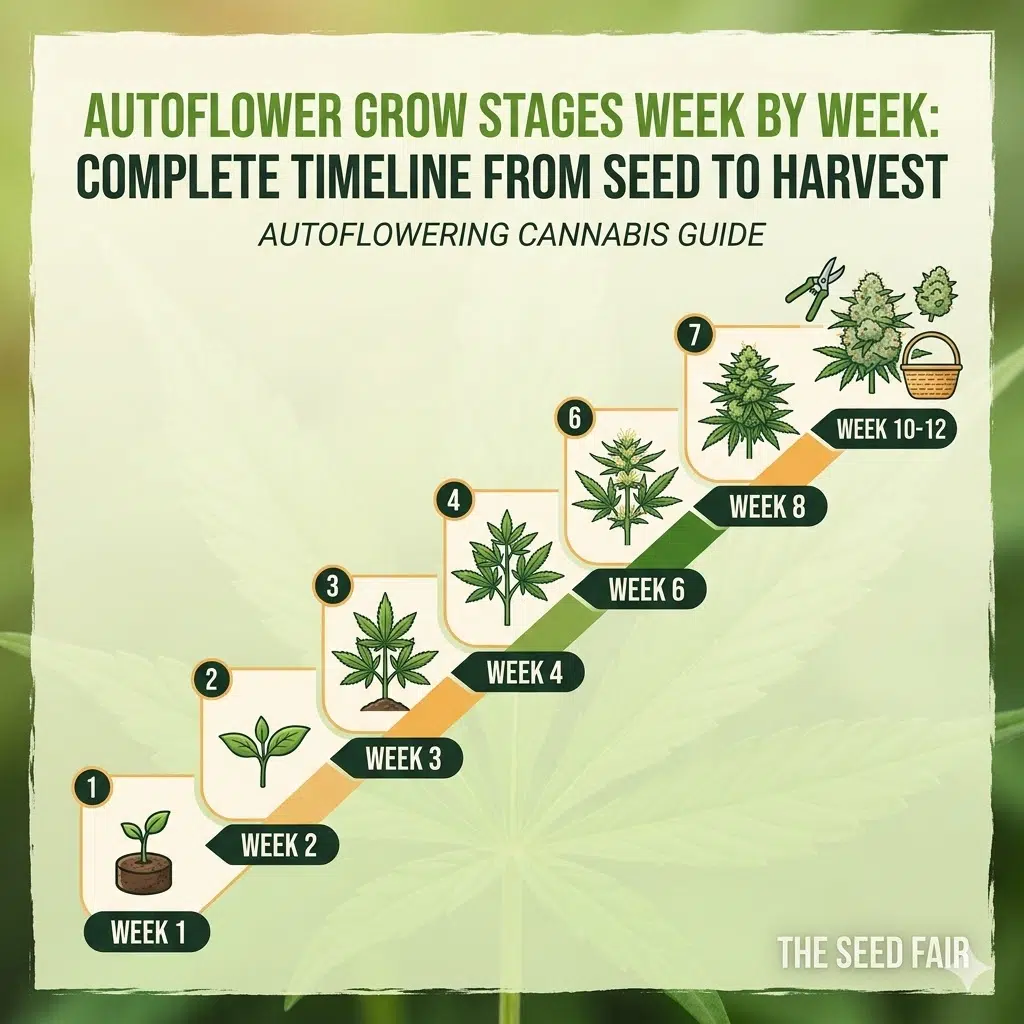
Unfortunately, severe stunting during the first few weeks often permanently reduces final yields because autoflowers have very little time to recover before flowering begins. Understanding how healthy autoflowers should develop from week to week makes it much easier to recognize abnormal growth before it affects harvest size.
Problem #2: Yellow Leaves
Yellow leaves are one of the most searched autoflower problems online.
The challenge is that yellowing can have several different causes.
Normal Yellowing
During late flowering, older fan leaves naturally turn yellow as the plant consumes stored nutrients.
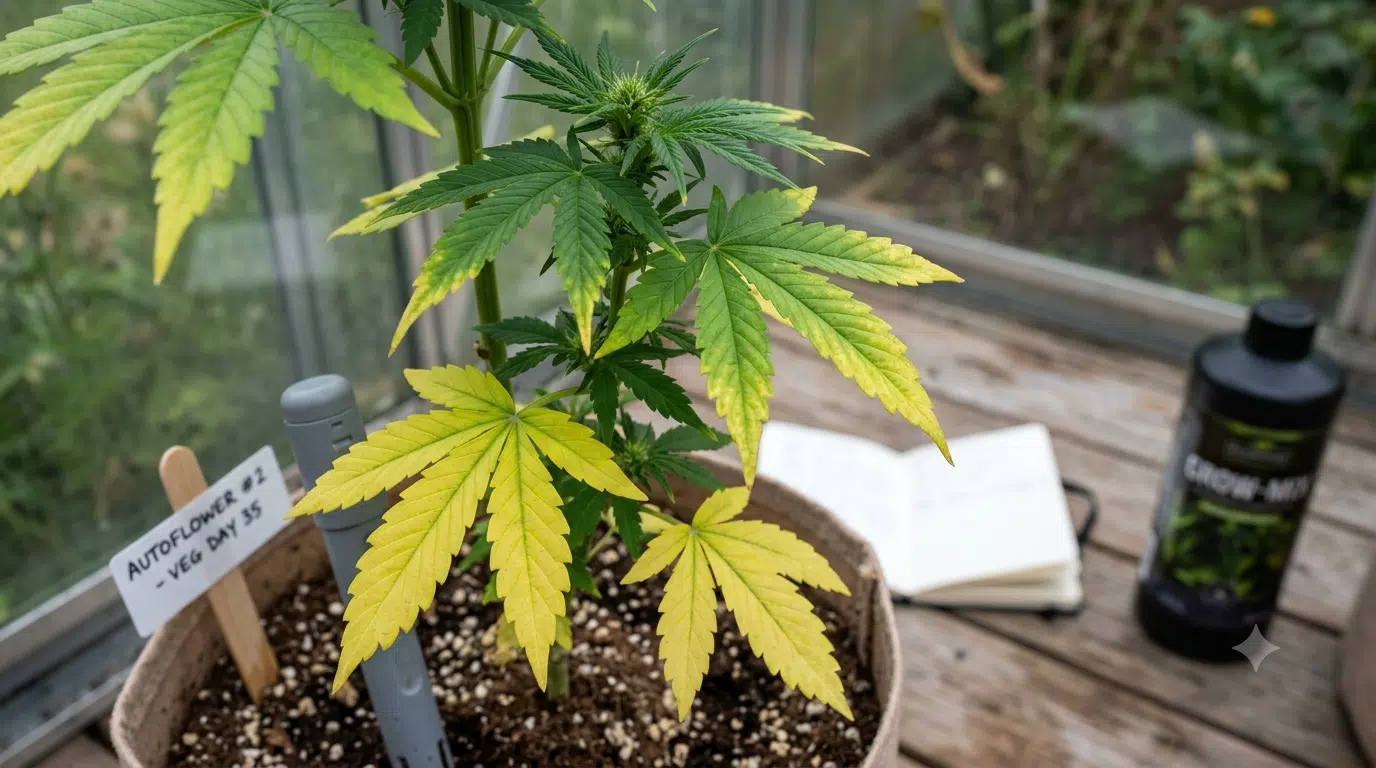
This is normal.
Problematic Yellowing
If yellow leaves appear during seedling or vegetative growth, something may be wrong.
Potential Causes
- Nitrogen deficiency
- Overwatering
- Underwatering
- Root problems
- Nutrient lockout
- Incorrect pH
How to Fix It
Check:
- Soil moisture
- Feeding schedule
- pH levels
Nitrogen deficiencies typically begin with older leaves at the bottom of the plant before moving upward.
Problem #3: Drooping Leaves
Drooping leaves often cause panic among new growers.
However, drooping doesn’t always mean the same thing.
Overwatered Drooping
Characteristics:
- Leaves appear swollen
- Soil remains wet
- Growth slows
Underwatered Drooping
Characteristics:
- Leaves appear limp
- Growing medium is dry
- Plant perks up after watering
How to Fix It
Always check soil moisture before watering.
Adding more water to an already overwatered plant is one of the most common mistakes beginners make.
Problem #4: Nutrient Burn
Many growers believe more nutrients equal bigger yields.
Unfortunately, autoflowers generally require less feeding than photoperiod plants.
Excess nutrients can cause nutrient burn.
Symptoms
- Brown leaf tips
- Burnt leaf edges
- Dark green foliage
- Curling leaves
How to Fix It
Reduce feeding strength immediately.
Many experienced growers start with:
- 25% manufacturer recommendations
- Gradually increase if needed
If nutrient burn becomes severe, flushing the medium may help restore balance.
Problem #5: Nutrient Deficiencies
Deficiencies occur when plants cannot access essential nutrients.
This may be caused by:
- Underfeeding
- Incorrect pH
- Root problems
- Nutrient lockout
Nitrogen Deficiency
Symptoms
- Yellow lower leaves
- Reduced growth
- Pale foliage
Solution
Increase vegetative nutrients carefully.
Magnesium Deficiency
Symptoms
- Yellowing between leaf veins
- Rust-colored spots
- Older leaves affected first
Solution
Use a Cal-Mag supplement if needed.
Calcium Deficiency
Symptoms
- Twisted new growth
- Brown spotting
- Weak stems
Solution
Supplement calcium and stabilize pH.
Problem #6: Light Burn
More light isn’t always better.
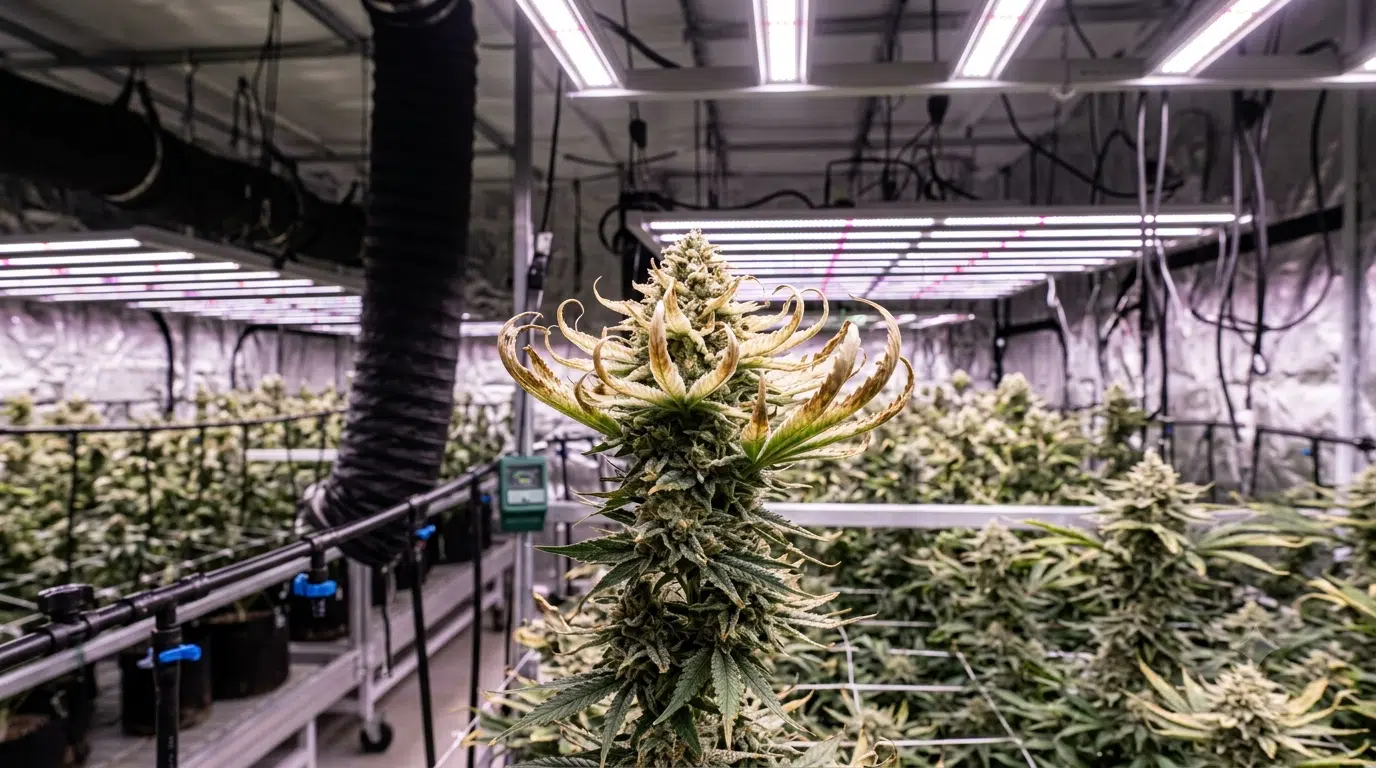
High-intensity LEDs placed too close can damage plants.
Symptoms
- Bleached tops
- Upward leaf curling
- Burnt upper growth
- Stalled development
How to Fix It
Increase distance between canopy and light source.
Follow manufacturer recommendations for:
- Seedlings
- Vegetative growth
- Flowering
Proper PPFD levels are more important than simply maximizing brightness.
Problem #7: Heat Stress
Autoflowers prefer stable temperatures.
Excessive heat can reduce growth and flower quality.
Symptoms
- Taco-shaped leaves
- Dry leaf edges
- Bleaching
- Excessive stretching
How to Fix It
Improve:
- Ventilation
- Air circulation
- Exhaust systems
Aim for temperatures between:
- 70–80°F (21–27°C)
during most of the grow cycle.
Problem #8: Excessive Stretching
Stretching usually occurs when plants search for more light.
Symptoms
- Long internodal spacing
- Thin stems
- Weak structure
Causes
- Weak lighting
- Poor light placement
- Incorrect spectrum
How to Fix It
Increase light intensity.
Blue-spectrum lighting during vegetative growth often helps maintain compact growth.
Problem #9: Slow Flowering
Most autoflowers begin flowering between weeks four and six.
Occasionally, flowering appears delayed.
Causes
- Genetics
- Environmental stress
- Poor root development
How to Fix It
Patience is often the solution.
Some strains naturally require longer vegetative periods before flowering begins.
Monitor:
- Growth rate
- Plant health
- Environmental conditions
before making major changes.
Problem #10: Bud Rot
Bud rot is one of the most devastating problems growers face.
Dense flowers combined with high humidity create ideal conditions for fungal growth.
Symptoms
- Brown flower tissue
- Soft buds
- Musty odor
- Gray mold inside flowers
How to Fix It
Remove affected flowers immediately.
Improve:
- Airflow
- Ventilation
- Humidity control
Prevention is far easier than treatment.
Problem #11: Powdery Mildew
Powdery mildew appears as white powder-like patches on leaves.
Causes
- High humidity
- Poor airflow
- Crowded canopies
Prevention
Maintain:
- Proper spacing
- Good air circulation
- Moderate humidity levels
Remove infected foliage immediately.
Problem #12: Pest Infestations
Pests can quickly damage autoflowers due to their short life cycle.
Common Pests
Spider Mites
Symptoms:
- Tiny white spots
- Fine webbing
- Leaf damage
Fungus Gnats
Symptoms:
- Small flying insects
- Root damage
- Slow growth
Aphids
Symptoms:
- Clusters of insects
- Sticky residue
- Distorted growth
Prevention
Keep the grow environment clean.
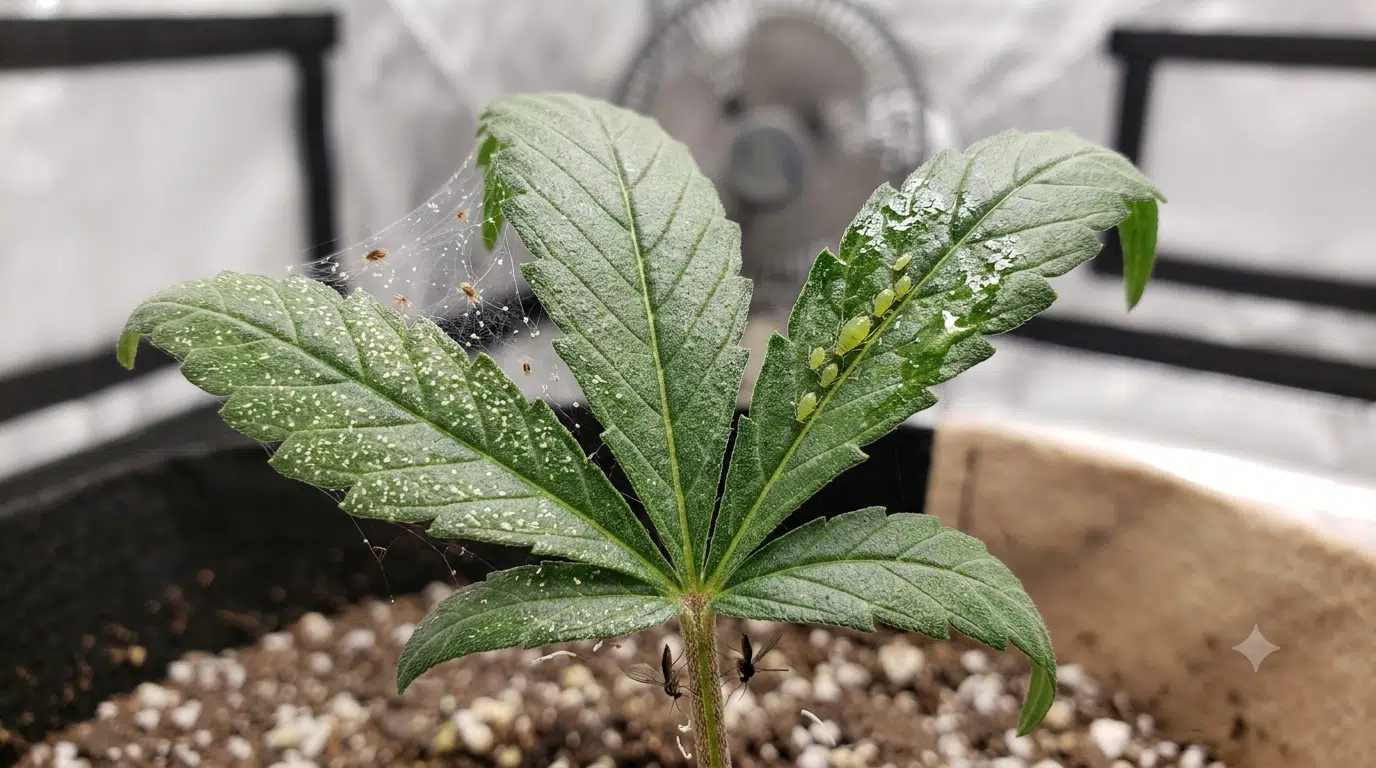
Inspect plants regularly.
Early intervention prevents major infestations.
Problem #13: Rootbound Plants
Roots eventually fill available space.
When containers are too small, growth slows.
Symptoms
- Slow growth
- Frequent wilting
- Reduced yields
Prevention
Start autoflowers in their final container whenever possible.
Most growers use:
- 3-gallon pots
- 5-gallon pots
depending on strain size.
How to Prevent Most Autoflower Problems
Most problems can be avoided by focusing on a few fundamentals.
Start With Quality Genetics
Healthy genetics establish the foundation for healthy growth.
Avoid Overwatering
The most common mistake among beginners.
Use Proper Pot Sizes
Allow sufficient room for root development.
Monitor pH
Prevent nutrient lockout before it occurs.
Control Humidity
Especially during flowering.
Maintain Good Airflow
Healthy airflow reduces mold, mildew, and pest pressure.
Follow a Conservative Feeding Schedule
Autoflowers generally require less fertilizer than photoperiod plants.
Frequently Asked Questions
Why are my autoflower leaves turning yellow?
Possible causes include nitrogen deficiency, overwatering, nutrient lockout, or natural late-flowering fade.
Why is my autoflower growing so slowly?
Overwatering, poor root development, low temperatures, or weak lighting are common causes.
Can an overwatered autoflower recover?
Yes, if the issue is corrected quickly. However, growth delays may reduce final yields.
Why are my autoflower buds small?
Insufficient lighting, poor genetics, nutrient issues, or environmental stress can all contribute to small flowers.
Should I remove yellow leaves?
Only if they are fully dead or interfering with airflow. Healthy leaves still contribute to photosynthesis.
Final Thoughts
Growing autoflowers successfully isn’t about avoiding every problem—it’s about identifying issues early and responding appropriately.
The most successful growers develop the habit of observing their plants daily. Small changes in leaf color, posture, growth rate, or environmental conditions often provide early warning signs before major problems develop.
By understanding the most common autoflower problems and how to fix them, you’ll improve plant health, reduce stress, and consistently produce larger yields and higher-quality flowers. These issues are much easier to prevent when you understand the complete autoflower growing process from seed to harvest, including lighting, watering, nutrition, training, and harvest timing.

Alexander Broodryk is a very skilled grower and has been writing about his experiences online for many years. With over 5 years in the Cannabis Industry Alexander is not only engaging with many of his audiences but also informational. Alex has a lot of writings about Cannabis all over online and we are very happy to have him here at The Seed Fair helping to contribute his well thorough content for our website. He is dedicated to educating readers on the latest developments and trends in this rapidly evolving market. Check out his biography under our Author pages at Alexander Broodryk, Author at The Seed Fair.