How Often Should You Water Autoflowers? The Complete Autoflower Watering Guide

Jun
Overwatering kills more autoflowers than almost any other growing mistake.
Many new growers assume cannabis plants need constant watering to grow quickly. In reality, autoflowers often perform best when the root zone experiences a healthy wet-and-dry cycle.
Learning how often to water autoflowers can dramatically improve root development, nutrient uptake, growth rate, and final yields. Because autoflowers have a short life cycle, watering mistakes during the early weeks can permanently limit plant size and production. Understanding how the plant develops from seedling through flowering makes it much easier to adjust your watering routine as its needs change.
This guide covers everything you need to know about watering autoflowers from seed to harvest, including how often to water, how much water to use, signs of overwatering, and how pot size affects watering schedules.
Why Proper Watering Matters for Autoflowers
Autoflowers grow fast.
Most strains complete their entire life cycle in just 8 to 12 weeks, leaving very little room for recovery if something goes wrong.
Because autoflowers have limited time to develop roots, poor watering habits can quickly impact:
- Root growth
- Nutrient absorption
- Vegetative growth
- Flower production
- Final yields
Healthy roots need both water and oxygen.
When the growing medium stays constantly wet, roots struggle to access oxygen, creating conditions that slow growth and increase the risk of root disease.
The goal isn’t to keep the soil wet all the time.
The goal is to maintain a healthy balance between moisture and oxygen.
How Often Should You Water Autoflowers?
There is no universal watering schedule.
The correct frequency depends on several factors:
- Plant age
- Pot size
- Growing medium
- Temperature
- Humidity
- Light intensity
- Airflow
A seedling in a 5-gallon fabric pot requires far less water than a flowering plant in the same container.
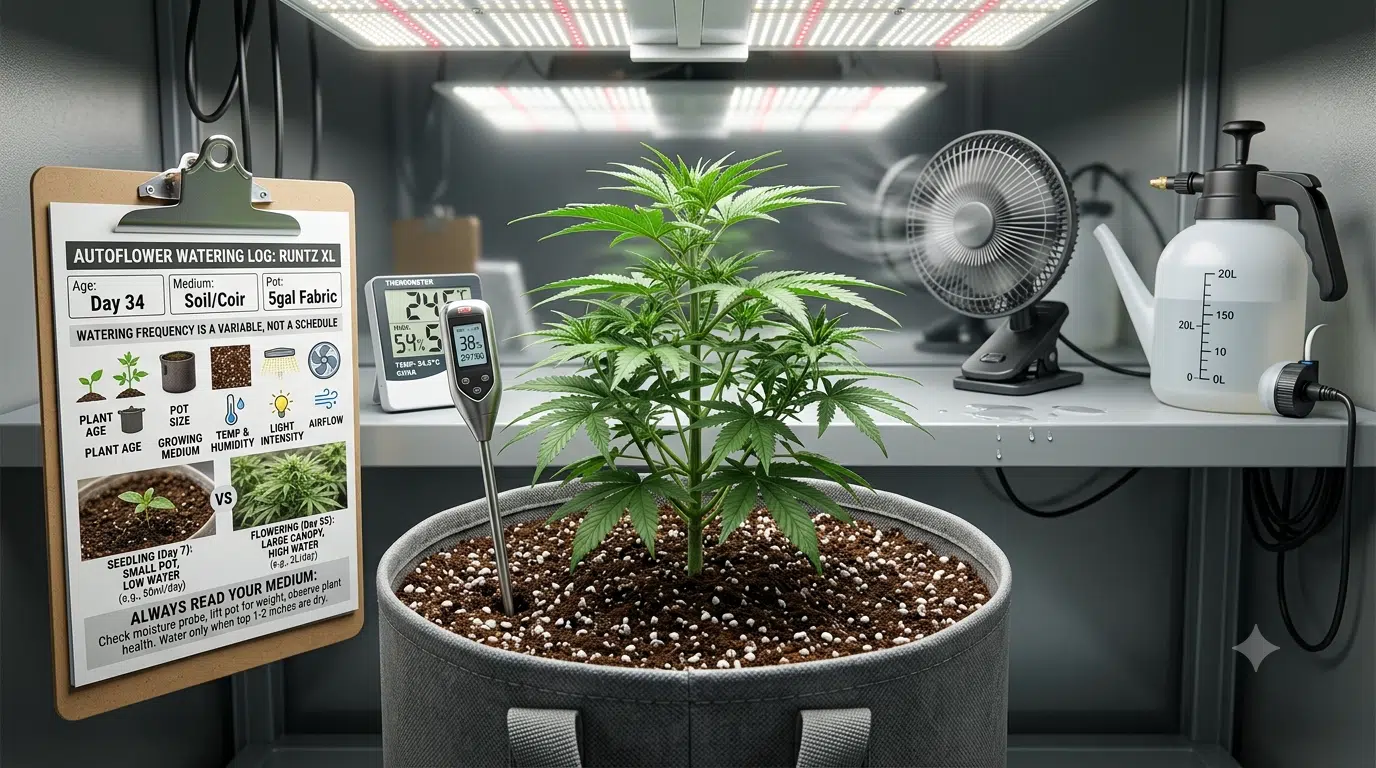
Instead of watering on a fixed schedule, learn to read your plant and growing medium.
As a general rule:
Seedlings
Every 2–4 days
Vegetative Plants
Every 1–3 days
Flowering Plants
Often daily or every other day depending on container size and environmental conditions
Always let the growing medium partially dry before watering again.
Watering Autoflowers During Each Growth Stage
Germination Stage
During germination, the goal is simply to keep the medium lightly moist.
Avoid soaking the soil.
Excess moisture can lead to:
- Damping off
- Root rot
- Slow germination
Many growers use a spray bottle to maintain moisture around newly planted seeds.
Seedling Stage (Weeks 1–2)
This is the stage where most watering mistakes occur.
Seedlings have very small root systems and consume very little water.
Best Practice
Water in a small circle around the seedling rather than saturating the entire pot.
This encourages roots to search outward for moisture.
Signs you’ve used too much water include:
- Drooping leaves
- Slow growth
- Thin stems
- Pale foliage
At this stage, less is usually better.
Vegetative Stage (Weeks 3–5)
Root systems expand rapidly during vegetative growth.
Plants begin consuming significantly more water.
You can gradually increase both watering volume and frequency.
Healthy vegetative plants typically show:
- Rapid growth
- Upright leaves
- Strong stems
- Consistent color
This stage is ideal for establishing a strong root system that will support heavy flowering later.
Flowering Stage (Weeks 6–10+)
Water demand often peaks during flowering.
As flowers develop and environmental conditions intensify, plants can consume surprising amounts of water.
Large autoflowers in fabric pots may require daily watering during late flower.
However, frequency should always depend on medium moisture rather than a calendar.
One mistake many growers make is assuming flowering plants should always receive more water.
If environmental conditions change, water consumption can decrease rapidly.
Monitor the medium rather than following a rigid schedule.
How Much Water Should Autoflowers Receive?
The better question is:
“How much water does my plant need right now?”
Watering should increase gradually as the plant grows.
General Guidelines
Week 1
50–100 ml
Week 2
100–250 ml
Week 3–4
250–500 ml
Week 5–6
500–1000 ml
Flowering
1–2 liters or more depending on plant size and container volume
These numbers are starting points only.
Environmental conditions can dramatically change water requirements.
The Lift-The-Pot Method
One of the most reliable watering techniques is simply lifting the container.
A freshly watered pot feels heavy.
A dry pot feels significantly lighter.
Experienced growers often determine watering needs more accurately by weight than by looking at the soil surface.
This method works particularly well with:
- Fabric pots
- Plastic pots
- Indoor grows
Over time, you’ll quickly learn when your autoflowers actually need water.
How Pot Size Affects Watering Frequency
Container size has a major impact on watering schedules.
Small Pots
Advantages:
- Dry faster
- Easier oxygen exchange
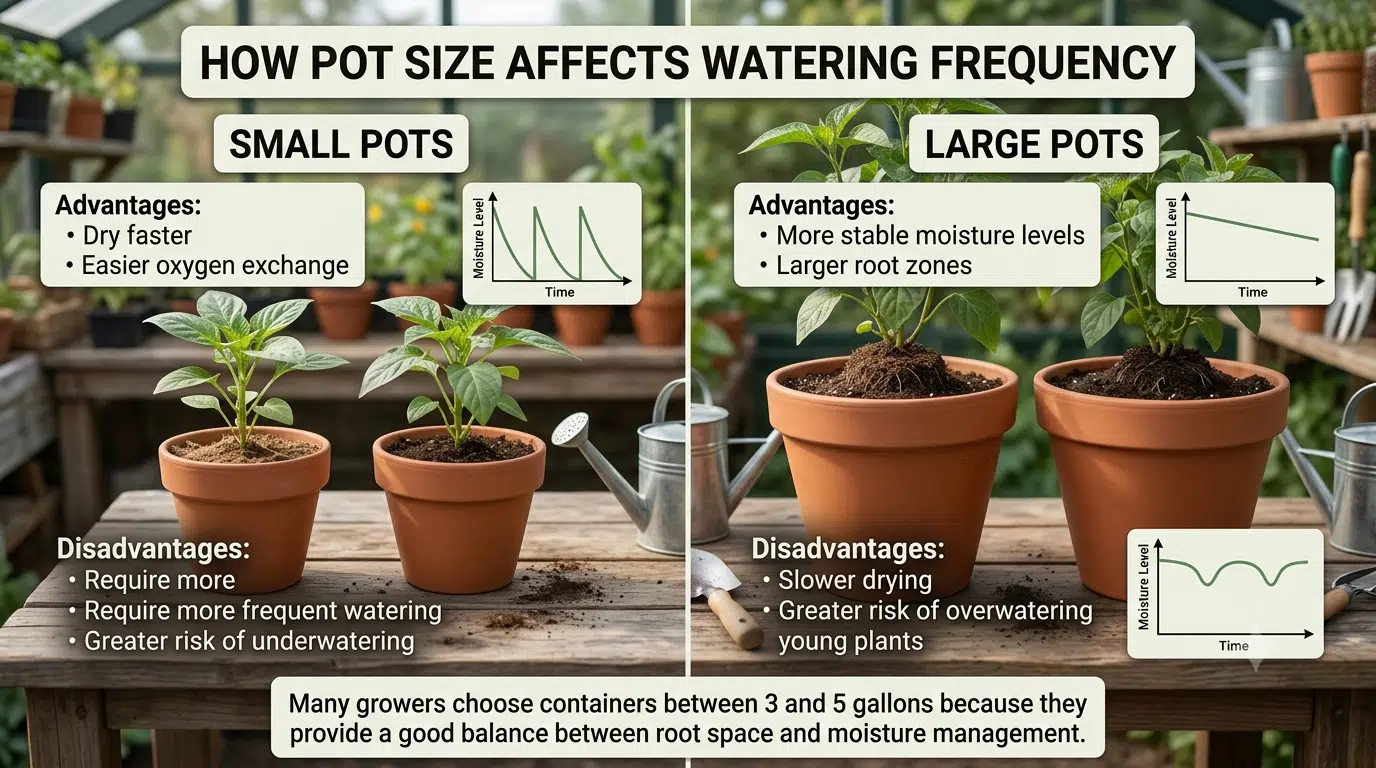
Disadvantages:
- Require more frequent watering
- Greater risk of underwatering
Large Pots
Advantages:
- More stable moisture levels
- Larger root zones
Disadvantages:
- Slower drying
- Greater risk of overwatering young plants
Many growers choose containers between 3 and 5 gallons because they provide a good balance between root space and moisture management.
Fabric Pots vs Plastic Pots
The type of container also affects watering frequency.
Fabric Pots
Fabric pots allow water to evaporate through the sides.
Benefits include:
- Improved aeration
- Better root health
- Reduced risk of root circling
However, they dry much faster.
Many growers need to water more frequently in fabric pots.
Plastic Pots
Plastic containers retain moisture longer.
Benefits include:
- Less frequent watering
- Slower drying
However, drainage becomes even more important because oxygen exchange is reduced.
Signs of Overwatered Autoflowers
Overwatering is far more common than underwatering.
Symptoms Include
- Drooping leaves
- Puffy leaf appearance
- Slow growth
- Yellowing foliage
- Weak stems
- Wet soil for extended periods
Many growers mistake overwatering symptoms for underwatering and add even more water, making the problem worse.
If the medium remains wet for several days, the plant probably doesn’t need additional water.
Signs of Underwatered Autoflowers
Underwatering is usually easier to identify.
Symptoms Include
- Limp leaves
- Dry growing medium
- Wilting
- Crispy leaf edges
- Slow growth
Unlike overwatering, underwatered plants often recover quickly after watering.
Water Quality Matters
Not all water is equal.
Poor-quality water can create nutrient uptake issues even when feeding schedules are correct.
Ideal Water Sources
- Reverse osmosis water
- Filtered water
- Clean rainwater
Things to Monitor
- pH
- Chlorine levels
- Dissolved minerals
- Temperature
Water that is too cold can shock roots.
Room-temperature water is generally ideal.
The Importance of pH
Even perfect watering practices won’t help if pH is incorrect.
Improper pH can cause nutrient lockout, preventing plants from absorbing nutrients.
Recommended pH
Soil
6.0–7.0
Coco Coir
5.8–6.2
Hydroponics
5.5–6.0
Checking pH regularly helps avoid many common nutrient deficiencies.
Watering Autoflowers in Soil
Soil naturally retains moisture and nutrients.
This makes watering more forgiving for beginners.
The key is allowing the medium to partially dry between waterings.
Good-quality soil should:
- Drain well
- Hold moisture
- Maintain oxygen availability
Many growers improve drainage by adding:
- Perlite
- Coco coir
- Worm castings
Watering Autoflowers in Coco Coir
Coco behaves differently than soil.
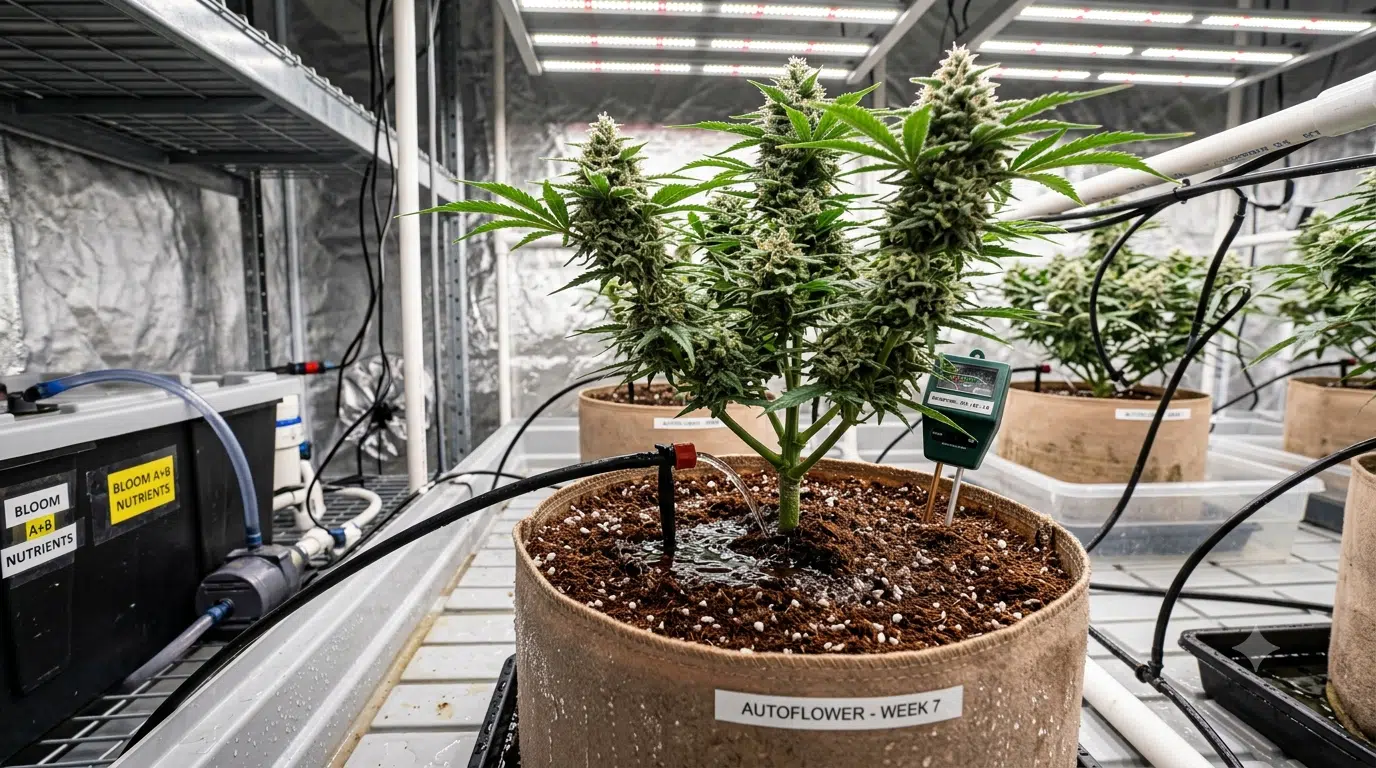
It drains faster and contains more oxygen.
As a result:
- Watering is more frequent
- Nutrients are supplied more often
- Dry-back periods are shorter
Many coco growers water daily during flowering.
Common Watering Mistakes
Watering Too Frequently
The number one mistake.
Roots need oxygen as much as they need water.
Watering on a Schedule
Plants don’t follow calendars.
Environmental conditions constantly change.
Poor Drainage
Water must leave the container efficiently.
Standing water increases root problems.
Using Cold Water
Cold water can slow root activity and growth.
Ignoring Pot Weight
The lift-the-pot method remains one of the easiest ways to avoid watering mistakes.
Frequently Asked Questions
How often should I water autoflower seedlings?
Typically every 2–4 days depending on container size and environmental conditions.
Can autoflowers recover from overwatering?
Yes, but recovery takes time and may reduce final yields if growth is slowed significantly.
Should I water every day?
Only if the growing medium is drying appropriately between waterings.
Large flowering plants in fabric pots may require daily watering.
Is it better to underwater or overwater?
Slight underwatering is generally less harmful than chronic overwatering.
How do I know when my autoflower needs water?
Lift the pot, check medium moisture, and observe plant posture rather than following a fixed schedule.
Final Thoughts
Proper watering is one of the most important skills an autoflower grower can develop. While nutrients, lighting, and genetics all influence yields, poor watering habits can undermine every other aspect of cultivation.
The best growers don’t water based on the calendar. They water based on what the plant and growing medium are telling them.
By focusing on root health, allowing healthy dry-back periods, maintaining proper drainage, and adjusting watering as the plant develops, you’ll avoid the most common mistakes and give your autoflowers the foundation they need to produce healthy growth, dense flowers, and larger harvests. Proper watering is just one part of successful cultivation, so it’s worth understanding how lighting, nutrition, training, and harvest timing all work together throughout the autoflower life cycle.

Alexander Broodryk is a very skilled grower and has been writing about his experiences online for many years. With over 5 years in the Cannabis Industry Alexander is not only engaging with many of his audiences but also informational. Alex has a lot of writings about Cannabis all over online and we are very happy to have him here at The Seed Fair helping to contribute his well thorough content for our website. He is dedicated to educating readers on the latest developments and trends in this rapidly evolving market. Check out his biography under our Author pages at Alexander Broodryk, Author at The Seed Fair.