
Cannabis affects everyone differently, yet certain patterns emerge repeatedly among experienced growers and consumers. Some strains are commonly associated with energy and focus, while others are often chosen for relaxation, creativity, or evening use. The challenge is that many people begin their search for cannabis effects by asking questions such as: What are the best […]
Even experienced growers run into problems when growing autoflowers. The challenge with autoflowering cannabis is that these plants have a limited life cycle. Unlike photoperiod strains, you can’t simply extend the vegetative stage while your plant recovers from stress. Every day lost to poor growing conditions can impact final yields. The good news is that […]
Overwatering kills more autoflowers than almost any other growing mistake. Many new growers assume cannabis plants need constant watering to grow quickly. In reality, autoflowers often perform best when the root zone experiences a healthy wet-and-dry cycle. Learning how often to water autoflowers can dramatically improve root development, nutrient uptake, growth rate, and final yields. […]
One of the most common questions growers ask is: What is the best light schedule for autoflowers? Unlike photoperiod cannabis plants, autoflowers don’t rely on changes in light exposure to begin flowering. Instead, they transition from vegetative growth to flowering based on age and genetics. This unique characteristic gives growers much more flexibility with lighting […]
Growing autoflowers successfully starts with understanding how they develop from week to week. Unlike photoperiod cannabis, autoflowering strains operate on a genetic timer. They don’t wait for changes in the light cycle before entering flowering, which means every week of growth matters. One of the biggest mistakes new growers make is treating autoflowers like traditional […]
Autoflowering cannabis has changed the way many growers approach cultivation. Instead of managing strict light schedules and long vegetative periods, autoflowers offer a faster, simpler route from seed to harvest. Most modern autoflower strains can finish their entire life cycle in as little as 8–12 weeks while still producing potent, resin-rich flowers. But growing autoflowers […]
One of the first decisions growers face after harvest is whether to wet trim or dry trim their cannabis. Both methods are widely used, and both can produce excellent results when executed correctly. The best choice often depends on environmental conditions, workflow preferences, and the type of final product being produced. While growers frequently debate […]
Many growers assume the job is finished once cannabis has dried. In reality, curing is where much of the final quality develops. Proper curing improves flavor, smoothness, aroma, and long-term stability while helping preserve cannabinoids and terpenes. Well-cured cannabis often provides a dramatically better experience than flower that was simply dried and stored. What […]
Many growers spend months producing healthy cannabis plants only to lose quality during drying. Drying is often overlooked, yet it plays a major role in preserving potency, aroma, and smoke quality. A rushed dry can leave cannabis harsh, grassy, and lacking in terpene expression. A controlled dry preserves the qualities developed throughout the entire grow […]
Knowing when to harvest cannabis is one of the most important skills a grower can develop. Harvest too early and cannabinoids remain underdeveloped. Wait too long and THC begins degrading into other compounds that alter the plant’s effects. The difference between an average harvest and an exceptional one often comes down to timing. Fortunately, cannabis […]
The Screen of Green (ScrOG) method is one of the most effective cannabis training techniques for maximizing yield in limited grow spaces. Rather than allowing plants to grow naturally upward, ScrOG uses a screen or net to train branches horizontally across the canopy. This creates an even layer of flowering sites that receive consistent light […]
Every cannabis grower wants bigger buds. While genetics establish the plant’s maximum potential, cultivation practices determine how much of that potential is actually realized. Large, dense flowers are not the result of a single trick or nutrient additive. They are the product of healthy plant structure, environmental consistency, and efficient light utilization. 1. Build […]
Topping is one of the most widely used cannabis training techniques for increasing canopy size and improving overall yield potential. By removing the plant’s primary growth tip, growers can redirect energy into multiple branches rather than a single dominant cola. When performed correctly, topping creates a wider, more productive plant structure capable of supporting larger […]
Low Stress Training, commonly called LST, is one of the most effective techniques for increasing cannabis yields without causing significant plant stress. Unlike topping or other high-stress methods, LST relies on gently bending and positioning branches to improve canopy structure and light distribution. For many growers, especially beginners, LST offers the best balance between plant […]
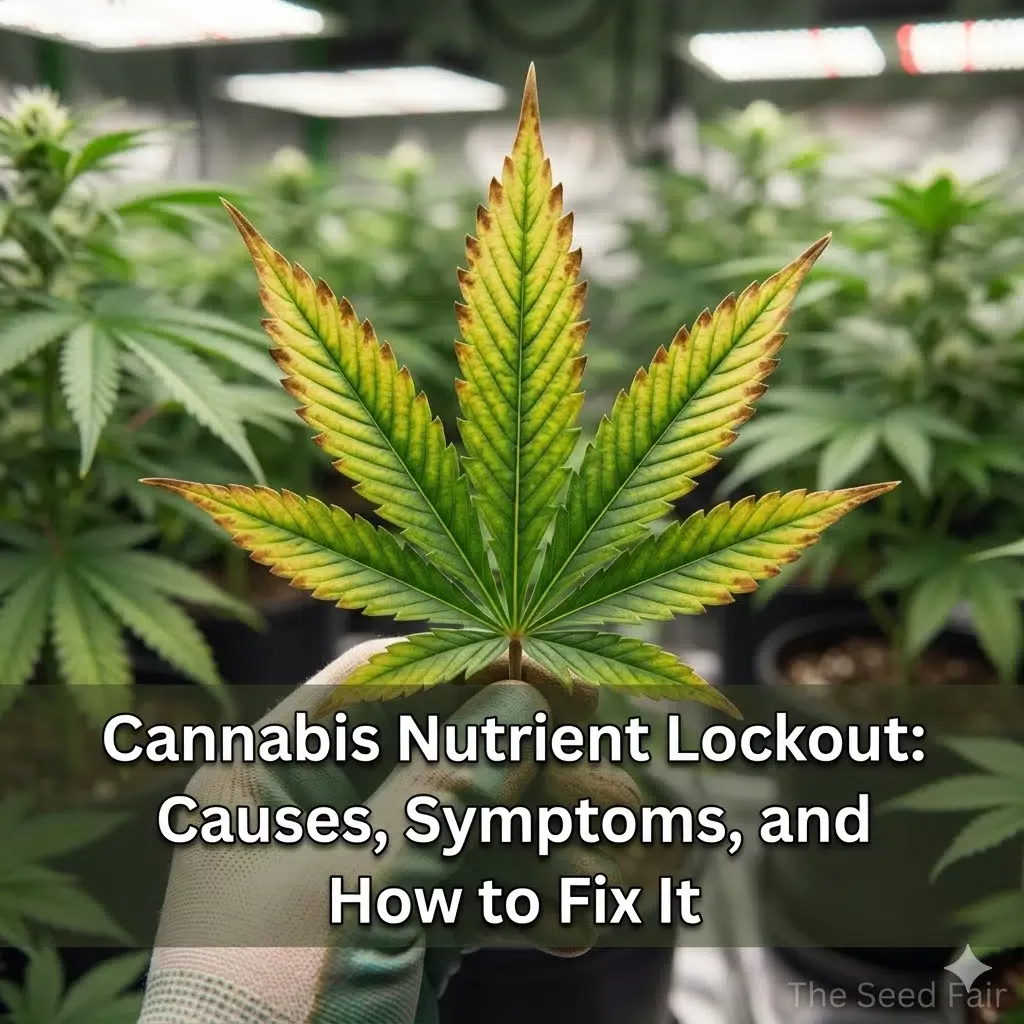
Nutrient lockout is one of the most frustrating problems cannabis growers face because it often looks exactly like a nutrient deficiency. Leaves begin yellowing. Brown spots appear. Growth slows. The natural reaction is to add more nutrients. Unfortunately, that approach often makes the problem worse. In many cases, the plant already has access to sufficient […]
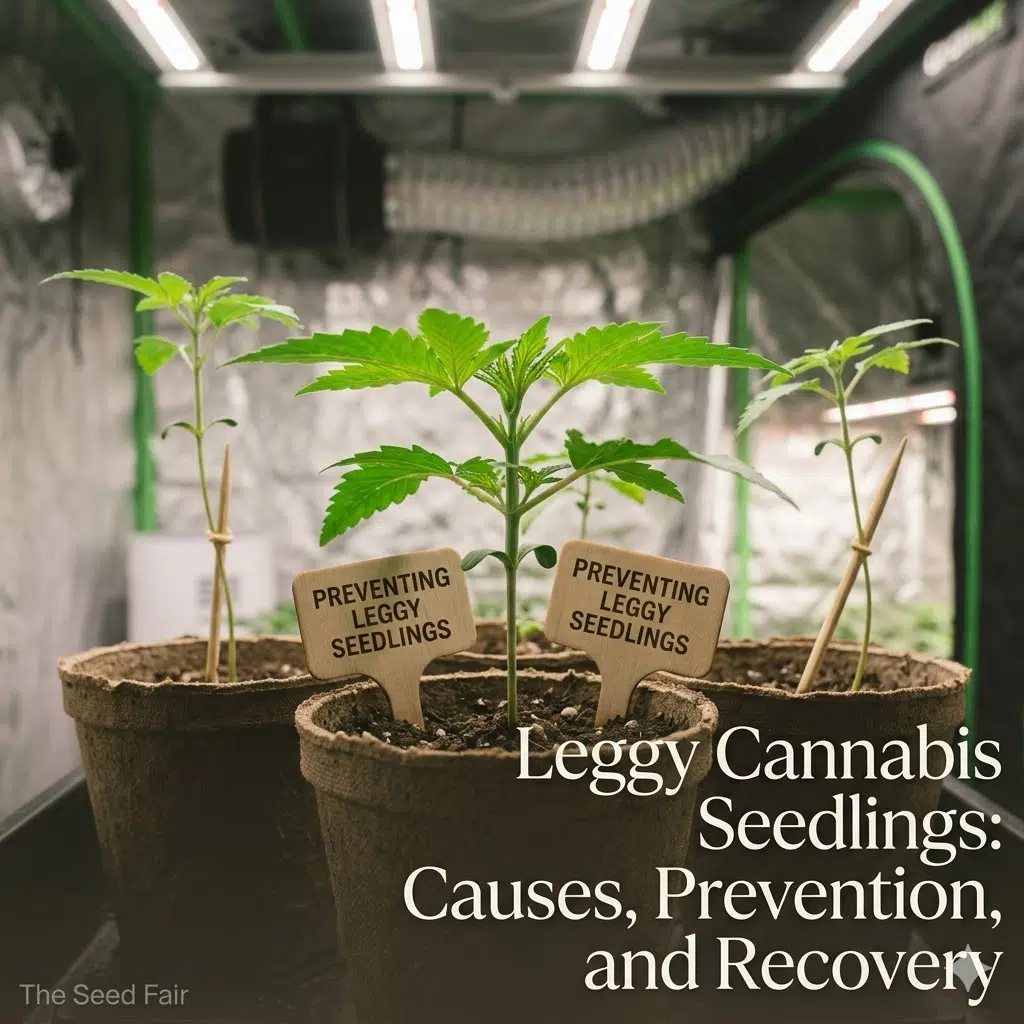
Leggy seedlings are one of the most common problems new cannabis growers encounter. The condition occurs when young plants stretch excessively, producing long, thin stems with large spaces between nodes. While leggy seedlings can often survive, the structural weakness they develop can affect growth throughout the vegetative stage. Understanding why seedlings stretch is essential for […]
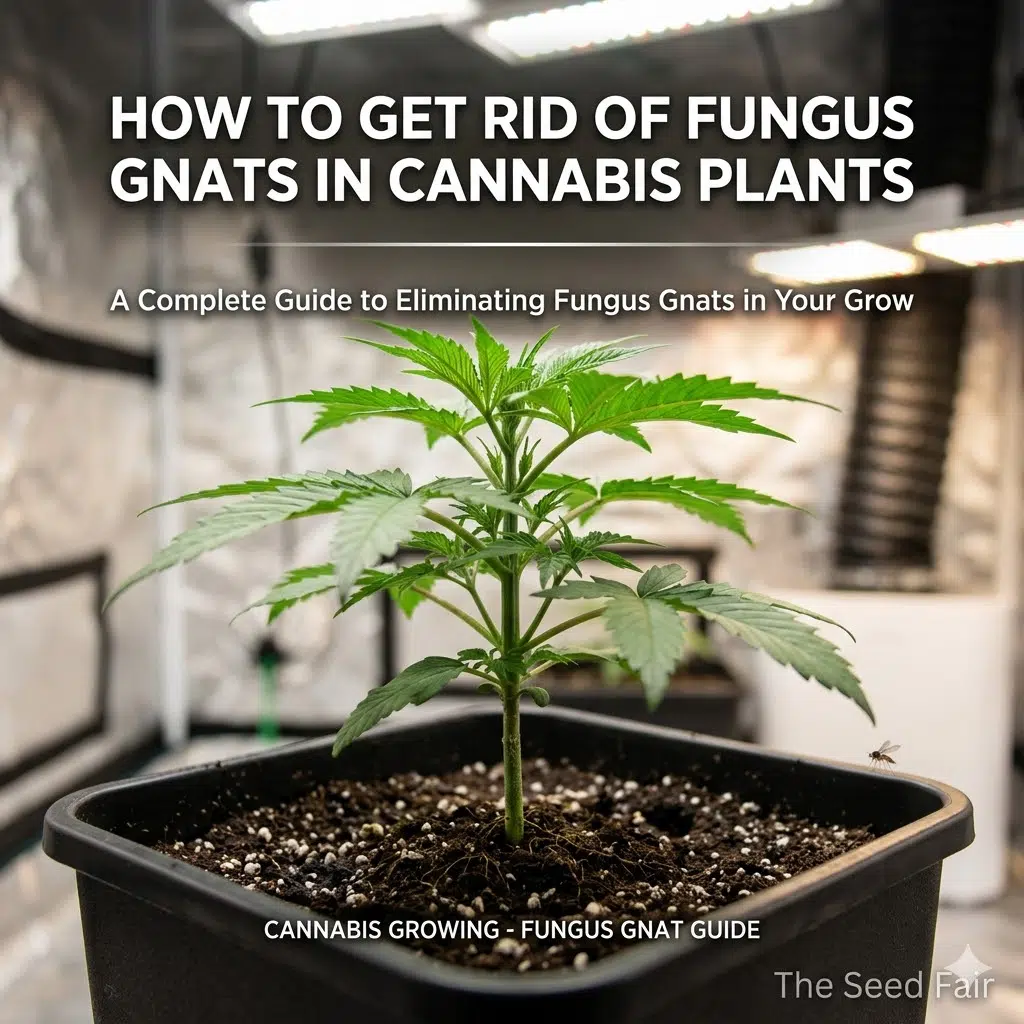
Fungus gnats are among the most common pests encountered in indoor cannabis cultivation. While adult gnats are mostly a nuisance, their larvae can damage roots, slow plant growth, and create ongoing stress throughout the grow cycle. The good news is that fungus gnats are usually a symptom of environmental conditions rather than a serious infestation […]
Calcium is one of the most important secondary nutrients in cannabis cultivation. While growers often focus heavily on nitrogen, phosphorus, and potassium, calcium plays a critical role in cell development, root growth, and overall plant structure. When calcium becomes unavailable, plants quickly begin showing signs of stress, particularly in new growth. If left untreated, calcium […]
Cannabis cultivation does not end when flowering finishes. In many ways, this is where some of the most important decisions are made. Harvest timing, drying conditions, curing methods, and post-harvest processing all determine whether a grow produces harsh, underdeveloped flower or smooth, aromatic, high-potency cannabis. Growers often underestimate how much quality is “locked in” after the plant […]
Cannabis cultivation is often framed as a question of genetics, but experienced growers quickly learn that genetics only set the ceiling — cultivation determines how close you get to it. Yield, density, potency, and even aroma are all deeply influenced by how a plant is trained, structured, and supported throughout its life cycle. Whether you are growing autoflowers, photoperiod plants, […]
Cannabis cultivation is not a straight path from seed to harvest. Even in controlled environments, plants constantly respond to small environmental shifts, feeding mistakes, pests, pathogens, and genetic instability. These issues rarely appear all at once. Instead, they build gradually—starting with subtle leaf changes, slowed growth, or minor stress signals that are often ignored until they become […]
Nitrogen toxicity is one of the most common feeding mistakes in cannabis cultivation, especially among beginners who assume that more nutrients automatically mean faster growth. In reality, nitrogen is powerful but highly sensitive in excess. When overapplied, it can disrupt plant metabolism, reduce bud quality, and create long-term growth issues that are difficult to reverse quickly. Unlike […]
Cal-Mag deficiency is one of the most frequently discussed nutrient issues in cannabis cultivation, and also one of the most misunderstood. Many growers treat it as a single problem, but in reality it involves two closely connected nutrients: calcium and magnesium. These two elements work together inside the plant’s structure, which is why deficiencies often appear at the same […]
Cannabis nutrient lockout is one of the most frustrating problems growers encounter because it often looks like a deficiency at first glance. Plants may appear to be starving for nutrients even when the grower is feeding them correctly. The issue isn’t the absence of nutrients — it’s the plant’s inability to absorb them. This is […]
Cannabis cultivation is fundamentally a nutritional process. Every stage of plant development—from early root formation to final flower production—is driven by how effectively the plant can absorb and utilize nutrients from its growing medium. Unlike many garden crops, cannabis is highly sensitive to nutrient balance. Small changes in pH, feeding strength, or mineral availability can quickly lead to visible stress symptoms […]
Do you know what “420 Day” is all about? Every April 20th, stoners around the globe come together in their city streets to celebrate the decriminalization of marijuana and its removal from the list of illegal drugs. But why is 420Day so significant? Where did it originate? And, most importantly, how can you celebrate “420 […]