Calcium Deficiency in Cannabis Plants: Signs, Causes, and Solutions

Jun
Calcium is one of the most important secondary nutrients in cannabis cultivation. While growers often focus heavily on nitrogen, phosphorus, and potassium, calcium plays a critical role in cell development, root growth, and overall plant structure.
When calcium becomes unavailable, plants quickly begin showing signs of stress, particularly in new growth. If left untreated, calcium deficiency can slow development, reduce yields, and weaken the plant’s ability to resist environmental stress.
What Does Calcium Do for Cannabis?
Calcium helps build strong cell walls throughout the plant. It supports:
- Root development
- New leaf growth
- Nutrient transport
- Structural strength
- Stress resistance
Unlike some nutrients, calcium is considered immobile inside the plant. Once deposited in tissue, it cannot be relocated to support new growth.
Because of this, deficiency symptoms usually appear first in the newest leaves.
Signs of Calcium Deficiency in Cannabis
The most common symptoms include:
- Small rust-colored spots on leaves
- Brown necrotic patches
- Twisted or irregular new growth
- Leaf edge damage
- Slow overall development
Early symptoms often begin as tiny brown spots that gradually spread across younger leaves.
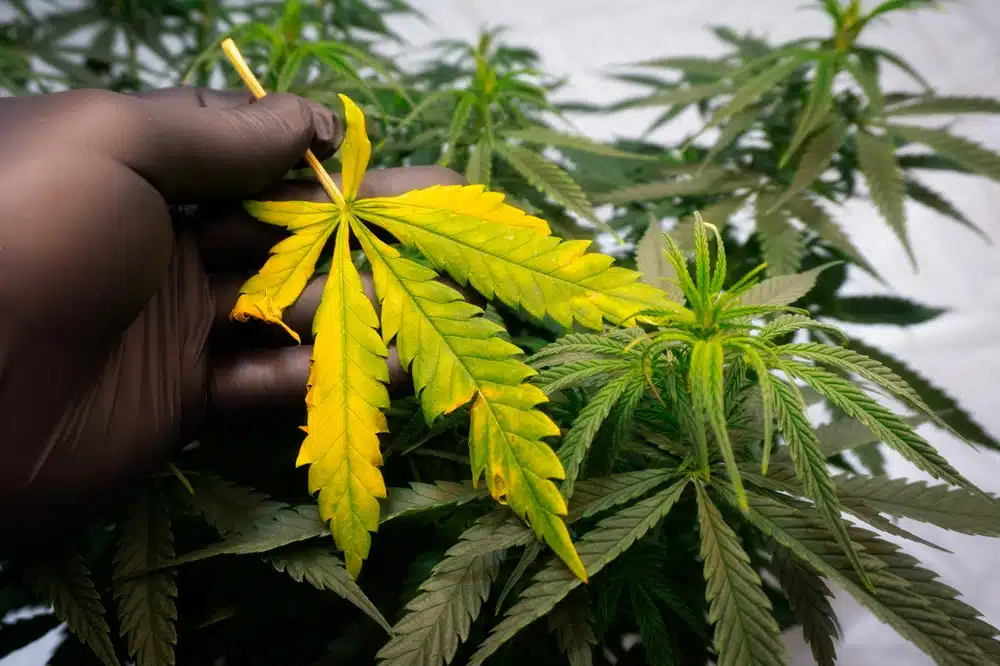
Many growers mistake these symptoms for light burn or fungal disease.
Common Causes of Calcium Deficiency
pH Problems
In many cases, calcium is present in the growing medium but unavailable to the plant.
When root zone pH moves outside the ideal range, nutrient uptake becomes restricted.
Nutrient Lockout
Excessive nutrient concentrations can interfere with calcium absorption.
This is especially common in heavily fertilized grows.
Soft Water
Reverse osmosis and very soft water sources often contain little natural calcium.
Without supplementation, deficiencies may develop.
Root Stress
Poor oxygen levels, compacted soil, or overwatering can reduce nutrient uptake even when calcium is available.
How to Fix Calcium Deficiency
Start by testing pH levels in the root zone.
Ideal ranges include:
- Soil: 6.0–7.0
- Coco: 5.8–6.2
- Hydroponics: 5.5–6.2
Additional steps include:
- Use a calcium-magnesium supplement when needed
- Improve drainage and root oxygenation
- Avoid excessive fertilizer applications
- Maintain consistent watering practices
Damaged leaves may not recover, but healthy new growth should appear within several days.
Preventing Future Deficiencies
Prevention is easier than correction.
To reduce risk:
- Monitor pH regularly
- Avoid overwatering
- Use balanced nutrient programs
- Supplement calcium when using reverse osmosis water
- Maintain healthy root development
Most calcium deficiencies begin as root zone problems rather than nutrient shortages.
Final Thoughts
Calcium deficiency is one of the most common causes of brown spotting in cannabis plants. Fortunately, it is also one of the easiest issues to correct when identified early.
For a complete overview of nutrient problems, environmental stress, pests, and plant diseases, see our Complete Guide to Cannabis Plant Problems & Fixes.