
Cannabis Nutrient Lockout Explained: Causes, Symptoms, and How to Fix It
Jun
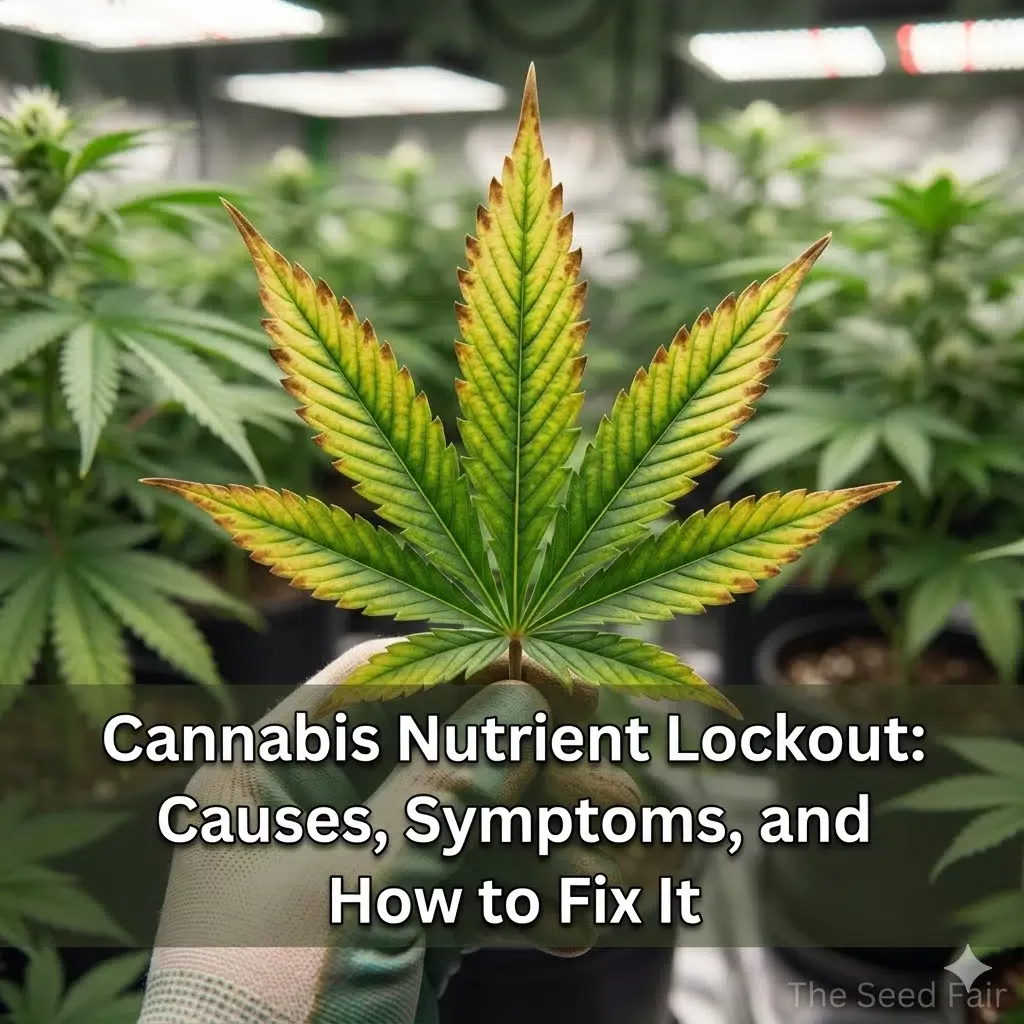
Nutrient lockout is one of the most frustrating problems cannabis growers face because it often looks exactly like a nutrient deficiency.
Leaves begin yellowing. Brown spots appear. Growth slows. The natural reaction is to add more nutrients.
Unfortunately, that approach often makes the problem worse.
In many cases, the plant already has access to sufficient nutrients. The issue is that the roots can no longer absorb them properly.
Understanding nutrient lockout is critical for diagnosing cannabis plant problems accurately and preventing unnecessary crop stress.
What Is Nutrient Lockout?
Nutrient lockout occurs when cannabis roots are unable to absorb nutrients that are already present in the growing medium.
This happens when conditions in the root zone interfere with nutrient availability or uptake.
As a result, the plant begins showing symptoms that resemble deficiencies even though nutrients may be abundant.
Think of nutrient lockout as a delivery problem rather than a supply problem.
The nutrients are there, but the plant cannot access them.
What Causes Nutrient Lockout?
Several factors can trigger lockout, but the most common cause is improper pH.
Incorrect pH Levels
Cannabis roots absorb nutrients most efficiently within specific pH ranges.
When pH drifts outside those ranges, certain nutrients become unavailable.
Recommended pH ranges include:
- Soil: 6.0–7.0
- Coco coir: 5.8–6.2
- Hydroponics: 5.5–6.2
Even a small pH imbalance can reduce nutrient availability significantly.
Salt Buildup
Over time, excess fertilizer salts can accumulate in the root zone.
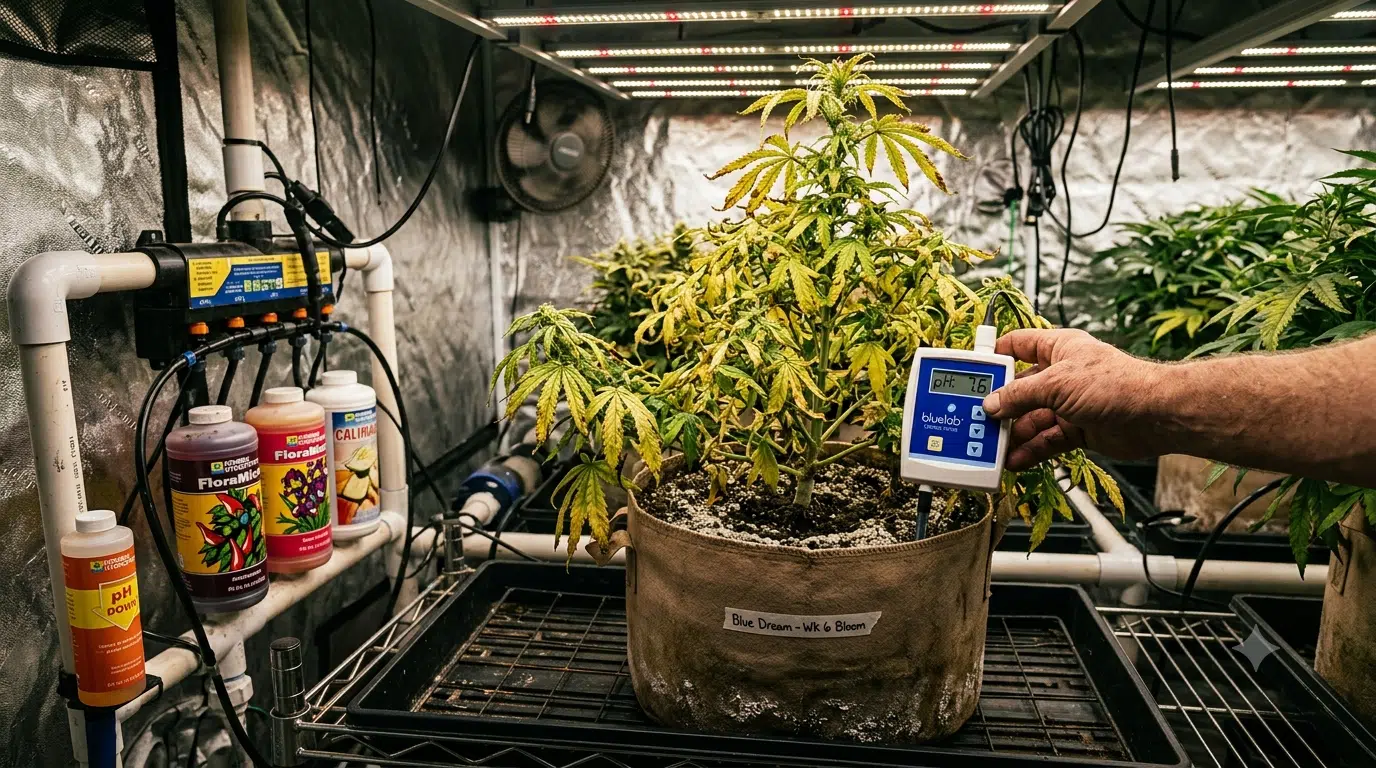
This buildup can interfere with water movement and nutrient absorption.
Salt accumulation is particularly common in:
- Container gardens
- Indoor grows
- Heavy feeding programs
- Coco-based systems
Overfeeding
More nutrients do not always produce better growth.
Excessive feeding can create imbalances that prevent roots from absorbing nutrients efficiently.
Many nutrient lockout cases begin when growers increase fertilizer strength in response to early symptoms.
Root Zone Stress
Healthy roots are essential for nutrient uptake.
Root stress can result from:
- Overwatering
- Poor drainage
- Compacted growing media
- Lack of oxygen
- Root disease
Even perfectly balanced nutrients cannot be absorbed by unhealthy roots.
Symptoms of Nutrient Lockout
Because lockout affects multiple nutrients simultaneously, symptoms often appear inconsistent.
Common warning signs include:
- Yellowing leaves
- Brown spotting
- Burned leaf tips
- Curling leaves
- Slow growth
- Weak stems
- Drooping foliage
- Multiple deficiency symptoms at once
One of the biggest clues is when nutrient deficiency symptoms continue to worsen despite regular feeding.
This often indicates a root zone issue rather than an actual shortage of nutrients.
Nutrient Lockout vs. Nutrient Deficiency
The two problems look very similar, but they have different causes.
Nutrient Deficiency
- Nutrient levels are genuinely too low.
- Plant lacks access because the nutrient is absent.
Nutrient Lockout
- Nutrients are present.
- Roots cannot absorb them properly.
Adding nutrients can help a deficiency.
Adding nutrients to a locked-out plant often worsens the situation.
This distinction is one of the most important concepts in cannabis cultivation.
How to Diagnose Nutrient Lockout
Before making adjustments, evaluate the entire growing environment.
Start by checking:
Root Zone pH
Measure runoff or reservoir pH.
Improper pH is responsible for a large percentage of lockout cases.
Feeding Schedule
Review nutrient concentrations.
Excessive feeding frequently contributes to salt buildup and root stress.
Watering Practices
Overwatering reduces oxygen availability around roots.
Without oxygen, nutrient uptake declines rapidly.
Root Health
Inspect roots whenever possible.
Healthy roots should appear:
- White or cream colored
- Firm
- Vigorous
Dark, slimy, or foul-smelling roots may indicate additional root zone problems.
How to Fix Nutrient Lockout
Step 1: Correct pH
If pH is outside the ideal range, adjust it gradually.
Avoid making dramatic corrections all at once.
Stable conditions are more important than chasing perfect numbers.
Step 2: Flush Excess Salts
In cases involving fertilizer buildup, flushing the growing medium may help restore balance.
Flushing removes excess salts that interfere with nutrient uptake.
Use properly pH-balanced water during the process.
Step 3: Resume Balanced Feeding
After correcting the root zone, return to a moderate feeding program.
Avoid immediately increasing nutrient concentrations.
The goal is restoring uptake, not increasing nutrient levels.
Step 4: Improve Root Conditions
Focus on creating a healthy root environment.
Key improvements include:
- Better drainage
- Proper container sizing
- Consistent watering practices
- Adequate oxygen availability
- Stable environmental conditions
Healthy roots recover faster and absorb nutrients more efficiently.
How Long Does Recovery Take?
Recovery speed depends on severity.
Minor lockout issues may show improvement within several days.

More severe cases can require one to two weeks before healthy new growth becomes visible.
Existing leaf damage usually remains.
The goal is monitoring new growth for signs of recovery.
Healthy new leaves indicate that nutrient uptake has resumed.
Preventing Nutrient Lockout
Prevention is far easier than correction.
Best practices include:
- Monitor pH regularly
- Avoid overfeeding
- Water appropriately
- Prevent salt buildup
- Use balanced nutrient schedules
- Maintain healthy root zones
- Ensure adequate drainage
Most nutrient lockout problems develop gradually and provide warning signs before serious damage occurs.
Final Thoughts
Nutrient lockout is one of the most commonly misdiagnosed cannabis cultivation issues. Many growers mistake it for a nutrient deficiency and respond by adding more fertilizer, which often intensifies the problem.
Successful growers focus on root health, pH stability, and environmental consistency rather than simply increasing nutrient levels.
When the root zone functions properly, cannabis plants can access the nutrients they need to grow vigorously from seedling through harvest.
For more solutions to nutrient deficiencies, pests, diseases, environmental stress, and growth problems, explore our Complete Guide to Cannabis Plant Problems & Fixes.