Low Stress Training (LST) for Cannabis: How to Increase Yield Without Slowing Growth
Jun
Low Stress Training, commonly called LST, is one of the most effective techniques for increasing cannabis yields without causing significant plant stress.
Unlike topping or other high-stress methods, LST relies on gently bending and positioning branches to improve canopy structure and light distribution.
For many growers, especially beginners, LST offers the best balance between plant health, yield improvement, and ease of execution.
What Is Low Stress Training?
Cannabis plants naturally prioritize a dominant main stem known as apical dominance.
Without intervention, most of the plant’s energy is directed toward the highest growing tip.
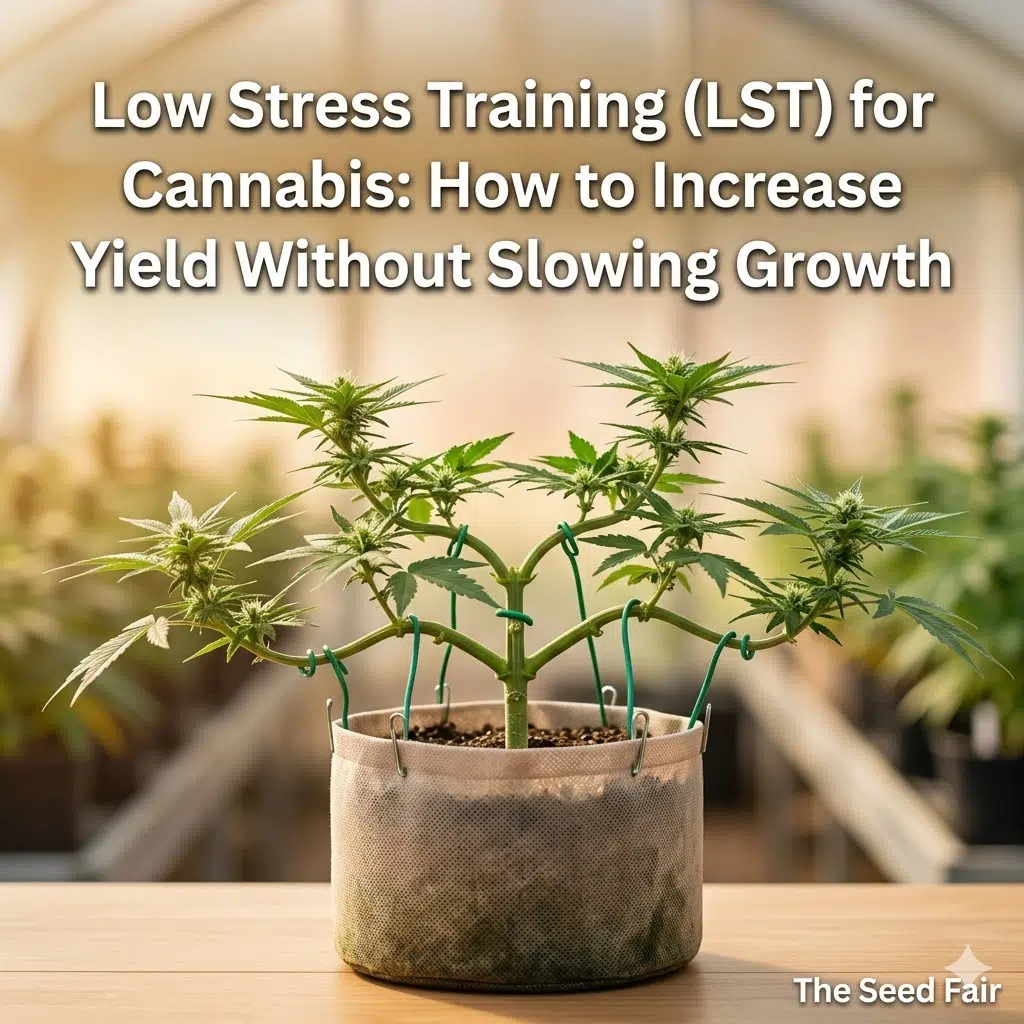
LST works by bending that dominant growth away from the center of the plant, encouraging lower branches to develop into productive flowering sites.
The result is a wider, more even canopy.
Why LST Increases Yield
Yield is largely determined by how efficiently a plant captures light.
When one large cola shades lower branches, those lower bud sites receive less energy.
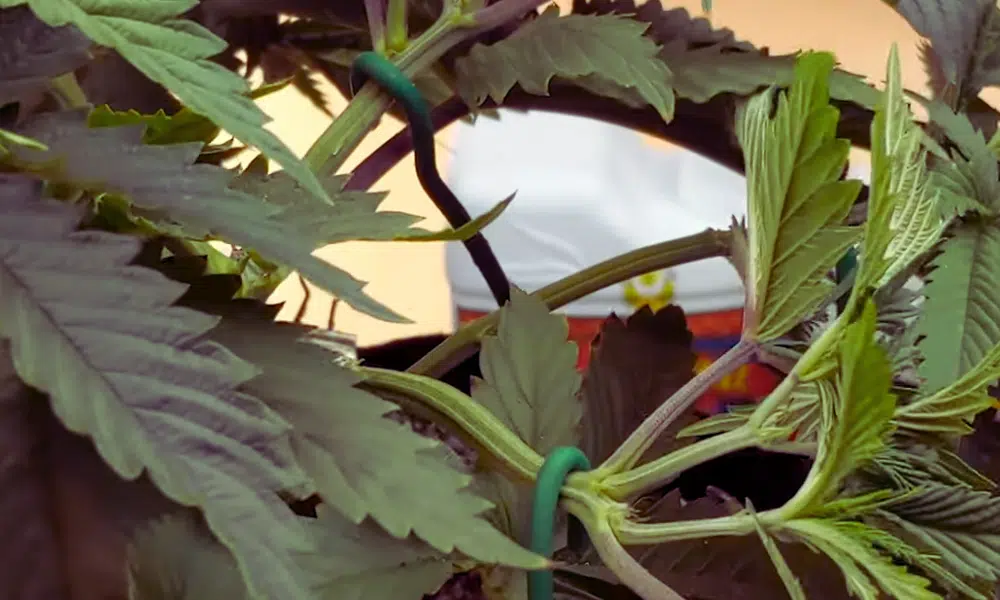
LST improves:
- Light penetration
- Bud site exposure
- Airflow through the canopy
- Branch development
- Overall canopy efficiency
Instead of producing a few dominant flowers, the plant develops multiple productive colas.
When to Start LST
Most growers begin LST during early vegetative growth.
The ideal time is when the plant has developed:
- 4–6 nodes
- Flexible stems
- Healthy root development
Younger stems bend more easily and recover faster.
Waiting too long can make branches more rigid and difficult to train.
How to Perform LST
The process is straightforward:
- Identify the main stem.
- Gently bend it away from the center.
- Secure it using soft plant ties.
- Continue adjusting growth as new shoots develop.
The goal is maintaining a flat canopy where all major growth points receive similar light intensity.
Small adjustments made regularly are more effective than large corrections.
Common LST Mistakes
Bending Too Aggressively
Branches can split or snap if forced too quickly.
Starting Too Late
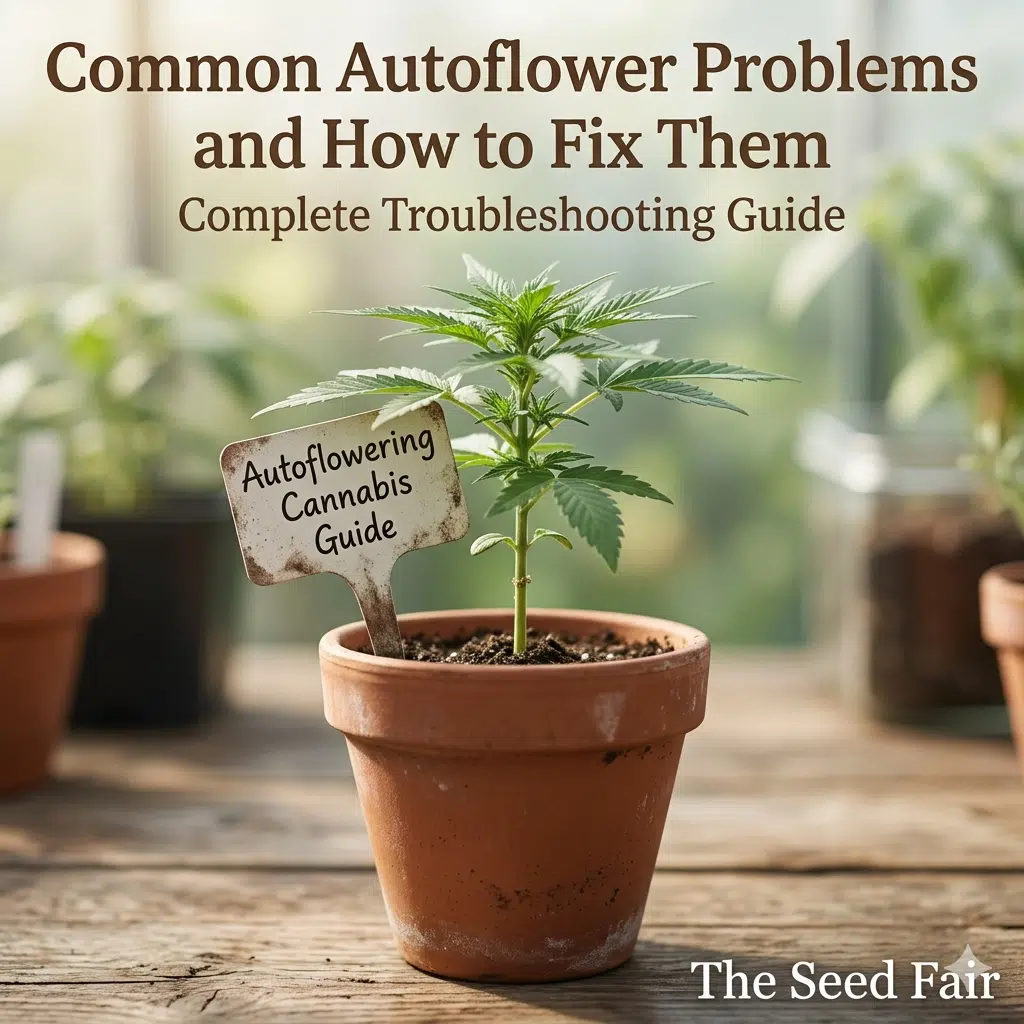
Mature stems become less flexible, making training more difficult. In some situations, growers may choose to top cannabis plants instead, depending on the plant’s stage of growth and training goals.
Ignoring Canopy Balance
If seedlings have become unstable, support stakes can help prevent stem damage.
Poor Tie Placement
Plant ties should support growth without restricting stem expansion.
Is LST Good for Autoflowers?
Yes.
In fact, LST is often considered the best training technique for autoflowers.
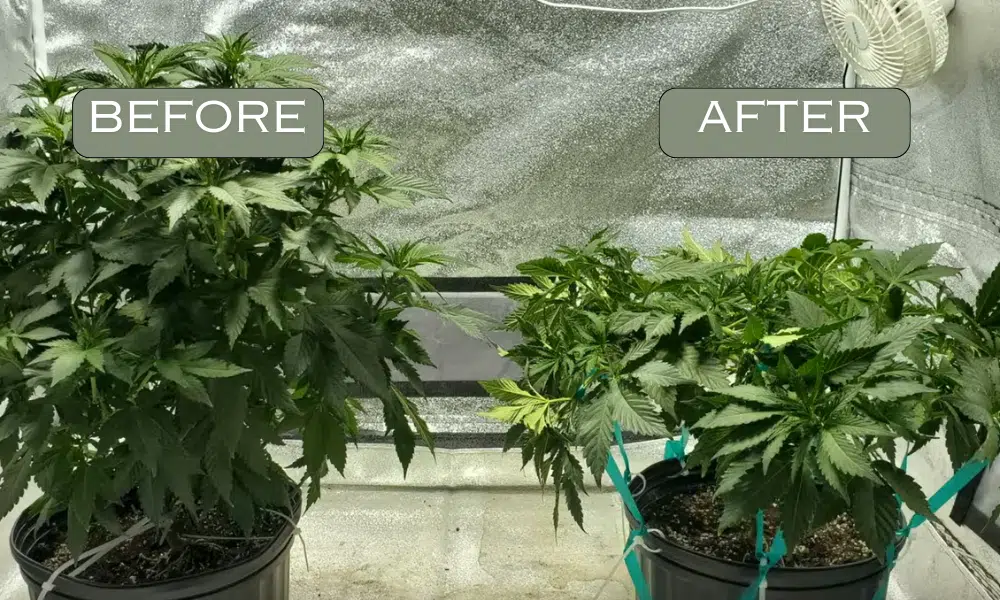
Because autoflowers have a limited vegetative period, they recover poorly from heavy stress.
LST allows growers to improve structure while maintaining steady growth.
Final Thoughts
Low Stress Training remains one of the safest and most effective yield-enhancing techniques available to cannabis growers.
By improving canopy structure and maximizing light exposure, LST helps plants direct more energy toward flower production without sacrificing vigor.
For a broader look at canopy management, plant training, and improving harvest potential, explore our complete guide to cannabis yield and training techniques.

Alexander Broodryk is a very skilled grower and has been writing about his experiences online for many years. With over 5 years in the Cannabis Industry Alexander is not only engaging with many of his audiences but also informational. Alex has a lot of writings about Cannabis all over online and we are very happy to have him here at The Seed Fair helping to contribute his well thorough content for our website. He is dedicated to educating readers on the latest developments and trends in this rapidly evolving market. Check out his biography under our Author pages at Alexander Broodryk, Author at The Seed Fair.