Topping Cannabis Plants: Pros, Cons, and Best Timing
Jun
Topping is one of the most widely used cannabis training techniques for increasing canopy size and improving overall yield potential.
By removing the plant’s primary growth tip, growers can redirect energy into multiple branches rather than a single dominant cola.
When performed correctly, topping creates a wider, more productive plant structure capable of supporting larger harvests.
What Is Topping?
Topping involves removing the newest growth tip at the top of the plant.
This interrupts apical dominance and encourages side branches to grow more aggressively.
Instead of one primary cola, the plant develops multiple main flowering sites.
Why Growers Top Cannabis
The primary goal of topping is improved canopy efficiency.
Benefits include:
- More flowering sites
- Better light distribution
- Increased horizontal growth
- Stronger branch development
- Improved indoor space utilization
Many indoor growers rely on topping as a foundation for additional training techniques. For growers who prefer a less aggressive approach, Low Stress Training (LST) can improve canopy shape without removing the plant’s growing tip.
Best Time to Top Cannabis
Timing is critical.
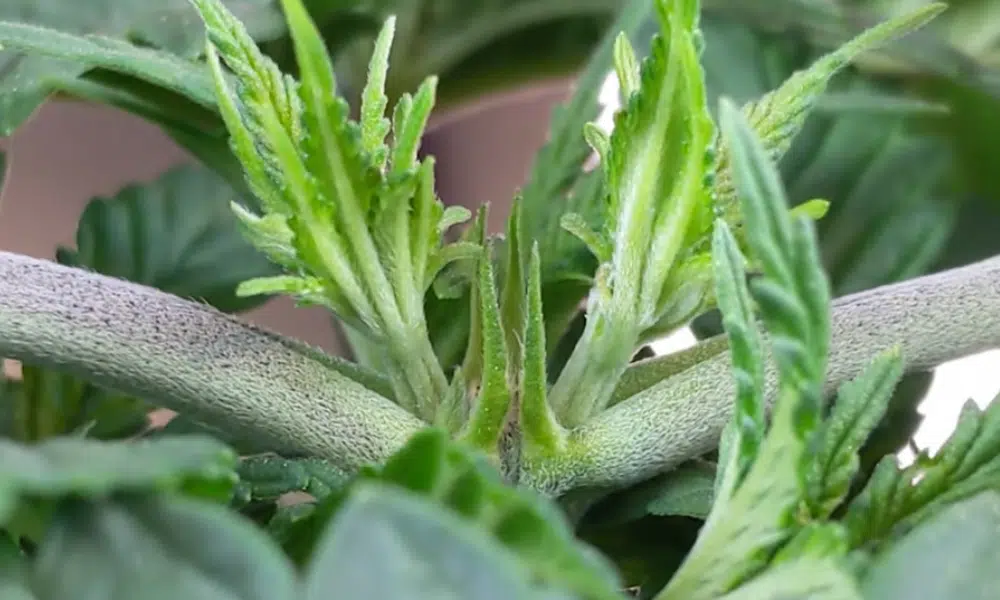
Most growers top after the plant has developed:
- 4–6 healthy nodes
- Strong root development
- Vigorous vegetative growth
Topping too early can slow development.
Topping too late may reduce training opportunities.
Healthy plants recover quickly and often show new growth within several days.
How to Top a Cannabis Plant
Using clean scissors or pruning shears:
- Locate the newest growth tip.
- Cut above a healthy node.
- Allow the plant time to recover.
- Continue training as new branches develop.
Clean cuts reduce stress and lower the risk of disease.
Pros of Topping
- Larger canopy
- Increased bud site count
- Better light penetration
- Improved yield potential
- Easier canopy management
Cons of Topping
- Temporary growth slowdown
- Recovery period required
- Increased stress compared to LST
- Not ideal for every autoflower
While photoperiod plants generally tolerate topping well, autoflowers require greater caution due to their shorter lifecycle.
Topping vs Not Topping
Untopped plants often grow taller and faster initially.
Topped plants typically produce:
- More even canopies
- Better light distribution
- Greater overall yield efficiency
The best choice depends on grow style, available space, and cultivation goals.
Final Thoughts
Topping is one of the most effective methods for reshaping cannabis structure and increasing productive flowering sites.
Combined with proper lighting and environmental control, topping can significantly improve harvest potential.
To learn how topping fits alongside other canopy management and yield-improvement methods, explore our complete guide to cannabis yield and training techniques.

Alexander Broodryk is a very skilled grower and has been writing about his experiences online for many years. With over 5 years in the Cannabis Industry Alexander is not only engaging with many of his audiences but also informational. Alex has a lot of writings about Cannabis all over online and we are very happy to have him here at The Seed Fair helping to contribute his well thorough content for our website. He is dedicated to educating readers on the latest developments and trends in this rapidly evolving market. Check out his biography under our Author pages at Alexander Broodryk, Author at The Seed Fair.