How Tall Does a Weed Plant Grow? (Indoor vs Outdoor Height Guide)
Jun
Cannabis plant height is one of the first things indoor growers underestimate. On paper, it seems simple—plants grow until they don’t—but in practice, height is one of the biggest controlling factors in indoor cultivation success.
When I first started growing indoors, I quickly learned that height is less about genetics alone and more about environment, timing, and canopy control. Two plants with identical genetics can end up completely different sizes depending on light distance, pot size, training, and when flowering is triggered.
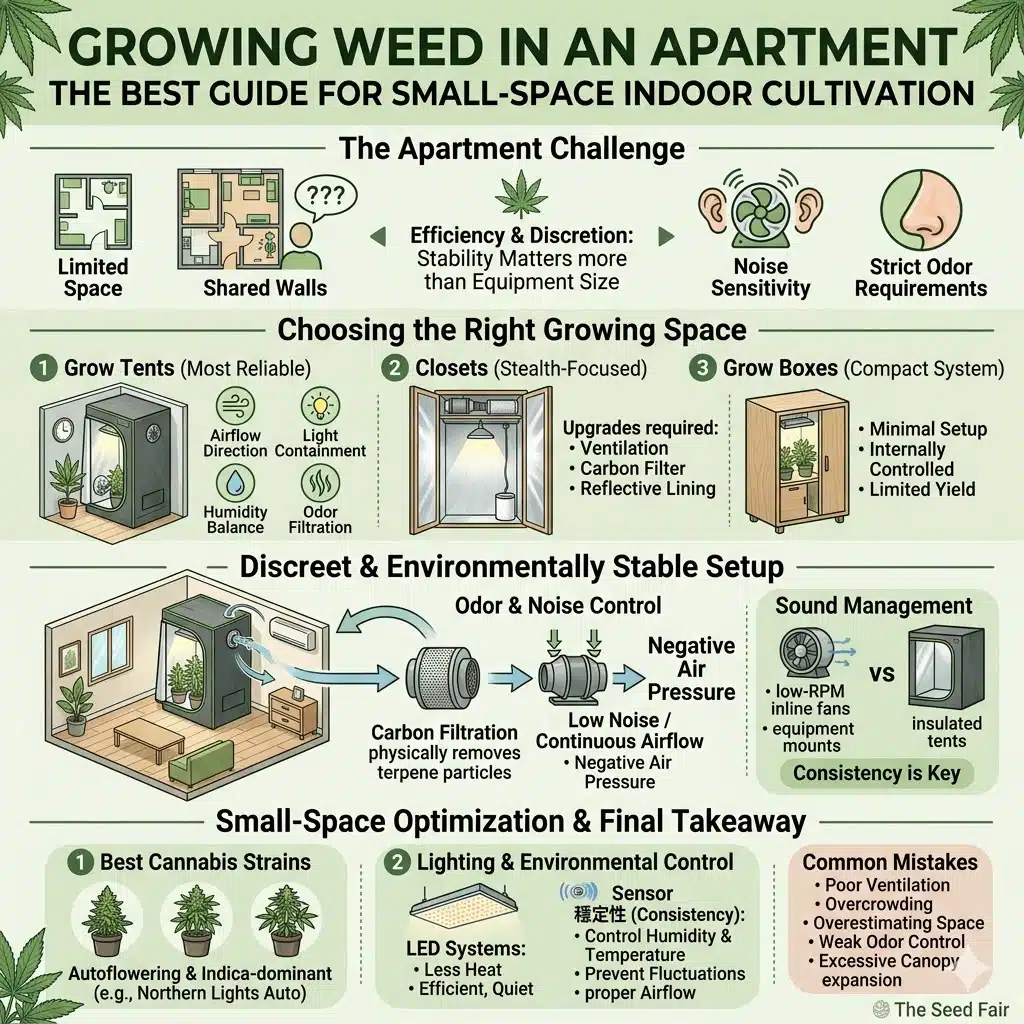
Understanding how tall a weed plant grows is essential when working inside tents, closets, or apartments where vertical space is limited. Our complete guide to indoor cannabis cultivation explains how plant height connects with lighting, ventilation, canopy management, and overall grow-space design.
What Determines How Tall Cannabis Grows?
Cannabis height is not random. It is a response to environmental pressure and genetic programming working together.
The main factors influencing plant height include:
- Genetics (Indica, Sativa, or hybrid structure)
- Vegetative growth duration
- Light intensity and distance
- Pot size and root restriction
- Training techniques (or lack of them)
- Indoor vs outdoor environment
These environmental differences become especially noticeable in confined indoor setups, where limited vertical clearance directly influences how long plants can remain in vegetative growth and how aggressively the canopy must be managed.
In controlled indoor setups, height becomes something you actively manage—not something you wait for.
How Tall Do Cannabis Plants Grow Indoors?
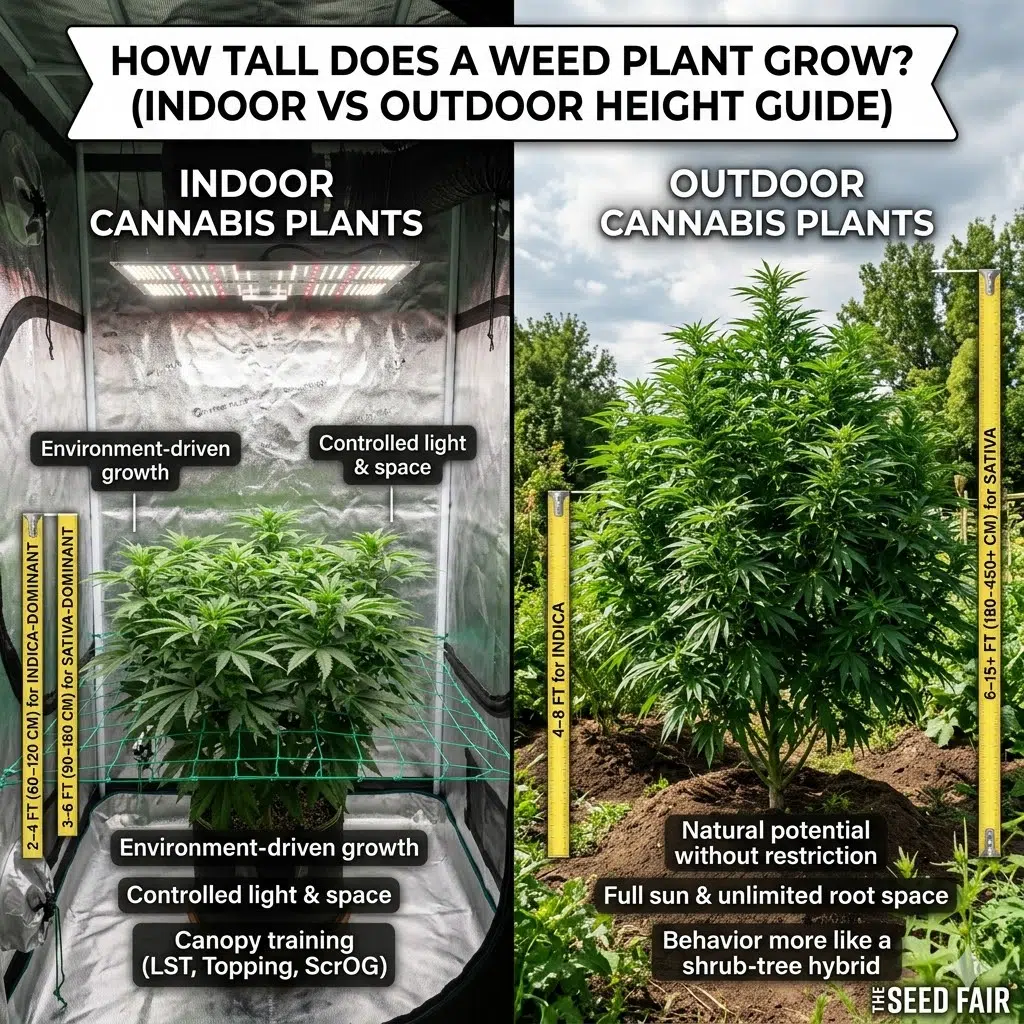
Indoors, cannabis plants are usually kept between:
- Indica-dominant strains: 2–4 ft (60–120 cm)
- Sativa-dominant strains: 3–6+ ft (90–180 cm if untrained)
However, these numbers are not fixed—they assume no aggressive training.
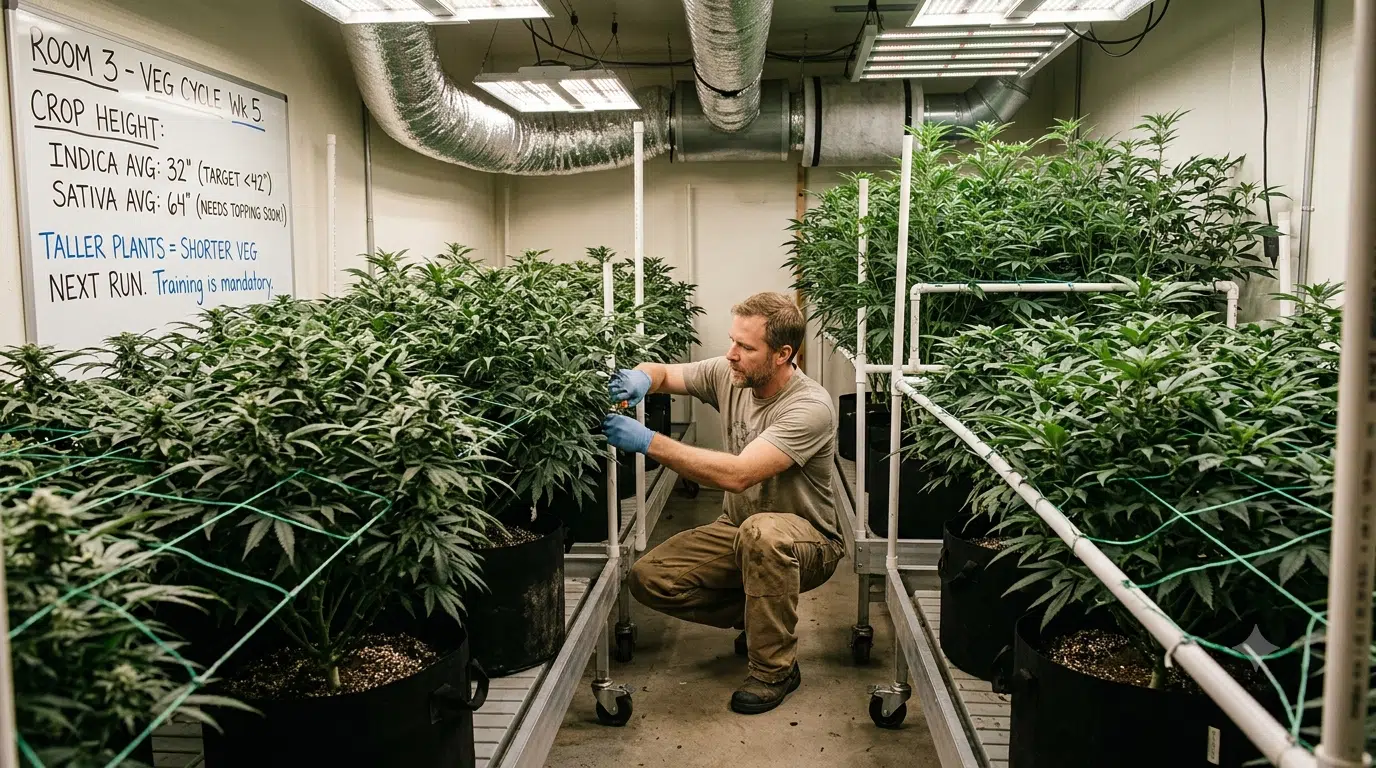
Indoors, growers often keep plants shorter by limiting vegetative time and shaping the canopy early. This becomes especially important in compact environments where available clearance between the container, canopy, and lighting system is limited.
What surprised me most early on was how quickly height can become a problem in small spaces. Even a 3–4 week extension in vegetative growth can double final plant height once flowering stretch begins.
Indica vs Sativa Height Differences
Indica Growth Structure (Short & Dense)
Indica-dominant cannabis plants typically:
- Grow shorter and bushier
- Develop tight node spacing
- Produce dense canopy structures
- Respond well to confined indoor spaces
They are commonly preferred for:
- Grow tents
- Closets
- Apartment setups
Compact genetics can be easier to manage in confined indoor environments where vertical clearance is limited and excessive flowering stretch may quickly reduce safe distance from the lighting system.
Sativa Growth Structure (Tall & Stretchy)
Sativa-dominant strains behave very differently:
- Taller vertical growth pattern
- Longer internodal spacing
- Significant “flower stretch” during bloom
- Can double in height after flowering begins
Indoors, unmanaged Sativa growth can quickly overwhelm a space if not trained properly.
This is why Sativa strains require earlier canopy management and tighter environmental control.
How Tall Do Cannabis Plants Grow Outdoors?
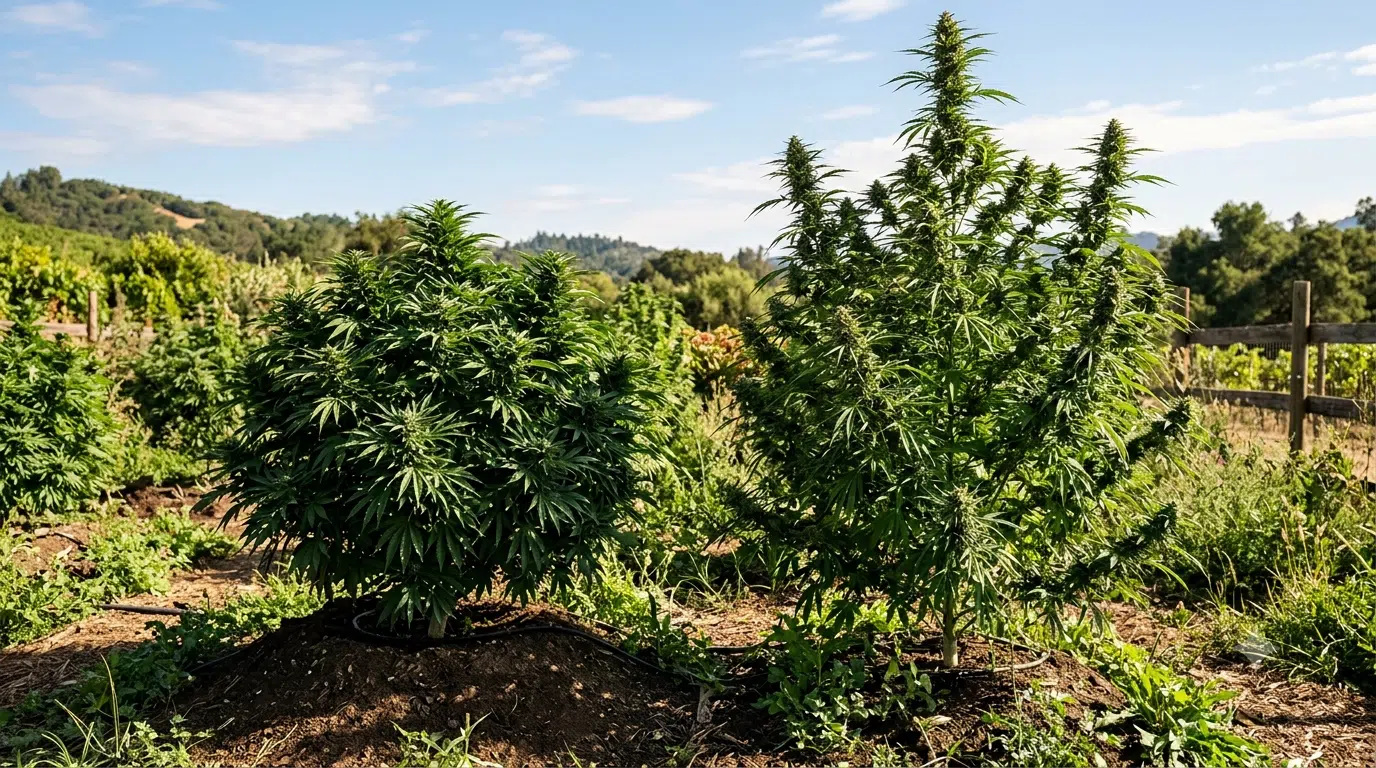
Outdoors, cannabis plants can reach their full genetic potential without restriction.
Typical outdoor ranges:
- Indica: 4–8 ft
- Sativa: 6–15+ ft (sometimes more in ideal conditions)
In unrestricted soil with full sun exposure, cannabis behaves more like a shrub-tree hybrid than a controlled indoor plant.
Why Plant Height Matters in Indoor Growing
Height is not just about space—it directly impacts plant performance.
If a plant grows too tall indoors, several problems appear:
- Upper canopy blocks light penetration
- Lower bud sites become weak or unproductive
- Airflow becomes restricted inside the canopy
- Humidity pockets increase mold risk
- Light distance stress can occur near the top
As the canopy becomes taller and denser, interior airflow may become less consistent, creating shaded areas and localized humidity pockets around crowded growth.
Poor canopy height management can reduce usable light penetration and create airflow problems even when nutrition and genetics are otherwise suitable.
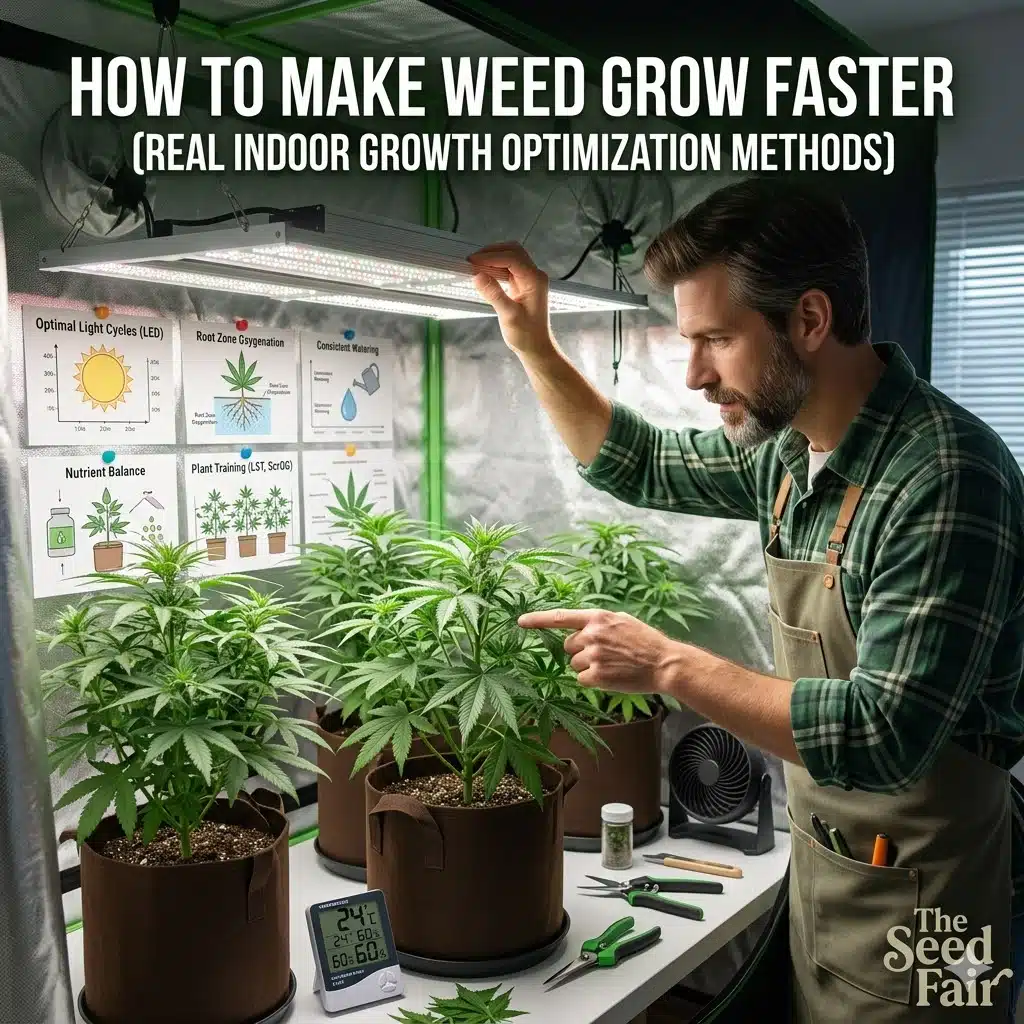
How to Control Cannabis Plant Height Indoors
This is where indoor growing becomes a controlled system instead of passive gardening.
Low-Stress Training (LST)
Low-stress training involves gently bending and shaping branches to:
- Spread the canopy horizontally
- Reduce vertical dominance
- Improve light distribution across all bud sites
Instead of one main cola, you create multiple evenly exposed tops.
Topping & Pruning
Topping removes the main growth tip early in vegetative stage.
This results in:
- More lateral branching
- Reduced vertical height
- Stronger canopy structure
Pruning also helps redirect energy away from unnecessary lower growth.
ScrOG (Screen of Green)
ScrOG uses a horizontal screen to:
- Flatten canopy growth
- Control plant height aggressively
- Maximize light efficiency per square foot
This is one of the most effective methods for small indoor spaces.
When Does Cannabis Grow the Tallest?
Most height development happens during two phases:
- Vegetative stage (structural buildup)
- Early flowering stretch (rapid vertical expansion)
The flowering stretch is where many beginners lose control of height. A plant can easily grow 30–100% taller in just a few weeks after switching light cycles.
In small indoor setups, rapid flowering stretch can push the canopy beyond the available space when final height is not planned before the light-cycle change.
If the plant has already exceeded the available grow space, our guide to recognizing and correcting overgrown cannabis plants covers the warning signs and practical options in more detail.
This is why experienced growers plan final height before flowering—not after.
Genetics vs Environment in Plant Height
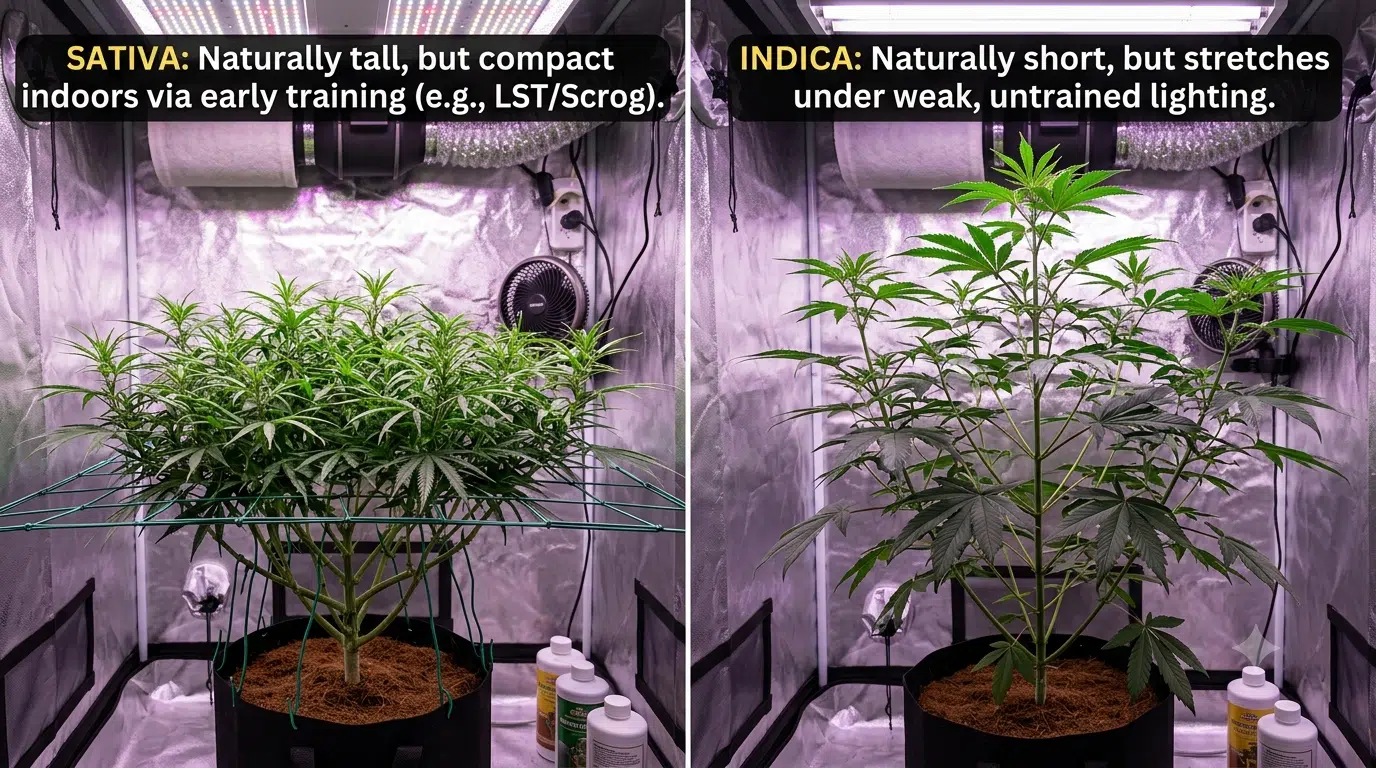
Genetics sets the potential range, but environment decides where within that range the plant ends up. Genetics set the potential range, but environmental conditions influence where within that range the plant ultimately develops.
For example:
- A Sativa can stay compact indoors if trained early
Height is therefore not fixed—it is responsive.
This ties directly into broader environmental control concepts covered in the main indoor guide (/grow-cannabis/), where light, airflow, humidity, and space all interact.
Best Practices for Managing Height Indoors
From practical experience, the most reliable height control methods are:
- Start training early (don’t wait until flowering)
- Limit vegetative time if space is small
- Keep consistent light distance
- Use reflective walls or grow tents for light efficiency
- Choose genetics that match your space first, not yield expectations
Most indoor failures happen when growers prioritize yield potential over spatial reality.
Final Takeaway
Cannabis plant height is not just a genetic trait—it is a result of how the entire growing environment is managed.
Indoors, you are not just growing plants—you are shaping structure.
Whether you’re working in a tent, closet, or apartment setup, controlling height is what separates a chaotic grow from a stable, productive canopy.
And once height is under control, everything else—light efficiency, airflow, and yield quality—naturally improves.

Alexander Broodryk is a very skilled grower and has been writing about his experiences online for many years. With over 5 years in the Cannabis Industry Alexander is not only engaging with many of his audiences but also informational. Alex has a lot of writings about Cannabis all over online and we are very happy to have him here at The Seed Fair helping to contribute his well thorough content for our website. He is dedicated to educating readers on the latest developments and trends in this rapidly evolving market. Check out his biography under our Author pages at Alexander Broodryk, Author at The Seed Fair.