Autoflower Light Schedule Guide: The Best Light Cycle for Bigger Yields
Jun
One of the most common questions growers ask is: What is the best light schedule for autoflowers?
Unlike photoperiod cannabis plants, autoflowers don’t rely on changes in light exposure to begin flowering. Instead, they transition from vegetative growth to flowering based on age and genetics. This unique characteristic gives growers much more flexibility with lighting schedules.
However, while autoflowers don’t require a 12/12 light cycle to flower, the amount of light they receive still has a major impact on growth, bud development, resin production, and final yields.
After growing autoflowers under various lighting schedules, most experienced growers agree on one thing: more light generally means more growth, provided the plant remains healthy and environmental conditions stay within range.
This guide explains the best light schedules for autoflowers, when to use them, and how to maximize yields from seed to harvest.
Do Autoflowers Need a Light Schedule?
Yes.
Autoflowers may flower automatically, but they still require light for photosynthesis.
Photosynthesis is how cannabis converts light energy into sugars that fuel growth, root development, flower production, and resin formation.
Without adequate light, autoflowers typically:
- Stay small
- Produce airy buds
- Yield less flower
- Develop slowly
- Show weaker cannabinoid production
While photoperiod plants need darkness to trigger flowering, autoflowers use light simply as fuel.
The more fuel available, the larger the plant can become before harvest.
Why Lighting Matters for Autoflower Yields
Autoflowers have a limited lifespan.
Most strains complete their entire life cycle within 8 to 12 weeks.
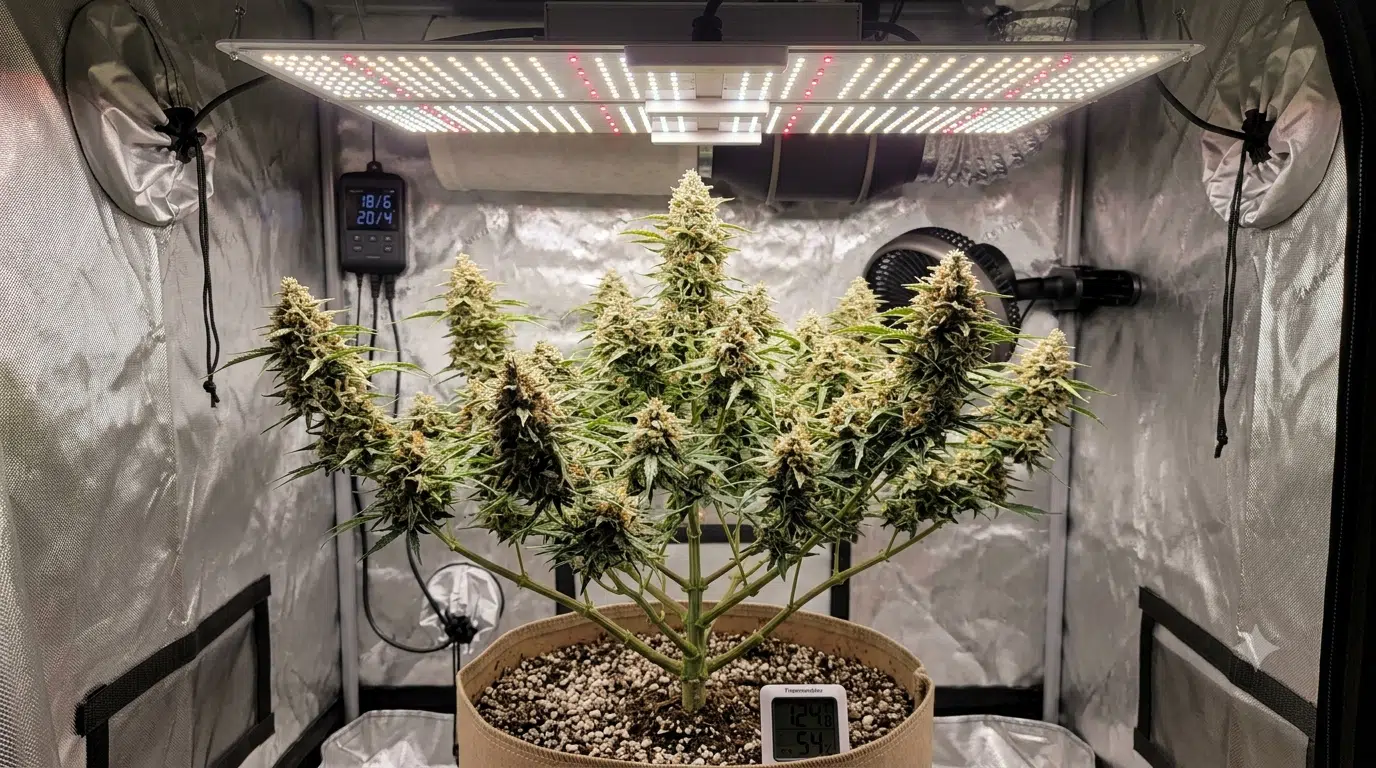
Unlike photoperiod plants, you cannot extend the vegetative stage if growth is slow. Because of that, understanding the autoflower grow stages week by week helps you make the right lighting adjustments as the plant progresses from seedling to flowering.
This means every day counts.
Strong lighting during the first few weeks helps establish:
- Larger root systems
- More branches
- Additional bud sites
- Greater flower production
One mistake many new growers make is treating autoflowers like photoperiod plants and reducing light hours unnecessarily.
Since autos flower based on age rather than darkness, giving them more light often leads to larger yields.
The Most Popular Autoflower Light Schedules
Most growers use one of four lighting schedules:
- 24/0
- 20/4
- 18/6
- 12/12
Each schedule has advantages and disadvantages.
Let’s look at each one.
24/0 Light Schedule
What It Means
- 24 hours of light
- 0 hours of darkness
The lights never turn off.
Benefits
Maximum light exposure.
Because autoflowers have such a short life cycle, some growers believe continuous lighting provides the greatest opportunity for photosynthesis.
Potential benefits include:
- Faster vegetative growth
- Larger plants
- Increased flower production
- Shorter overall grow time
Drawbacks
While cannabis can survive under continuous lighting, many growers report:
- Higher electricity costs
- Increased heat buildup
- Drooping leaves
- More environmental stress
Plants are living organisms and often benefit from a short rest period.
For most growers, the slight increase in growth rarely justifies the additional power consumption.
20/4 Light Schedule
What It Means
- 20 hours on
- 4 hours off
This is widely considered the ideal autoflower light schedule.
Why Many Growers Prefer It
The 20/4 schedule provides:
- Nearly maximum photosynthesis
- Reduced electrical costs
- Lower heat generation
- Short daily recovery period
Many growers find 20/4 delivers the best balance between plant performance and operating costs.
After comparing multiple grows, it’s common to see very similar yields between 20/4 and 24/0 schedules.
The difference in electricity usage, however, is substantial.
Best Use
Suitable for:
- Seedlings
- Vegetative growth
- Flowering
- Entire grow cycle
Many commercial autoflower growers run 20/4 from seed to harvest.
18/6 Light Schedule
What It Means
- 18 hours of light
- 6 hours of darkness
This schedule is extremely popular among home growers.
Benefits
The main advantages include:
- Lower power costs
- Reduced heat
- Less environmental stress
- Easier climate control
Many growers report excellent harvests using 18/6 throughout the entire grow cycle.
Drawbacks
The main downside is reduced daily photosynthesis compared to 20/4 or 24/0.
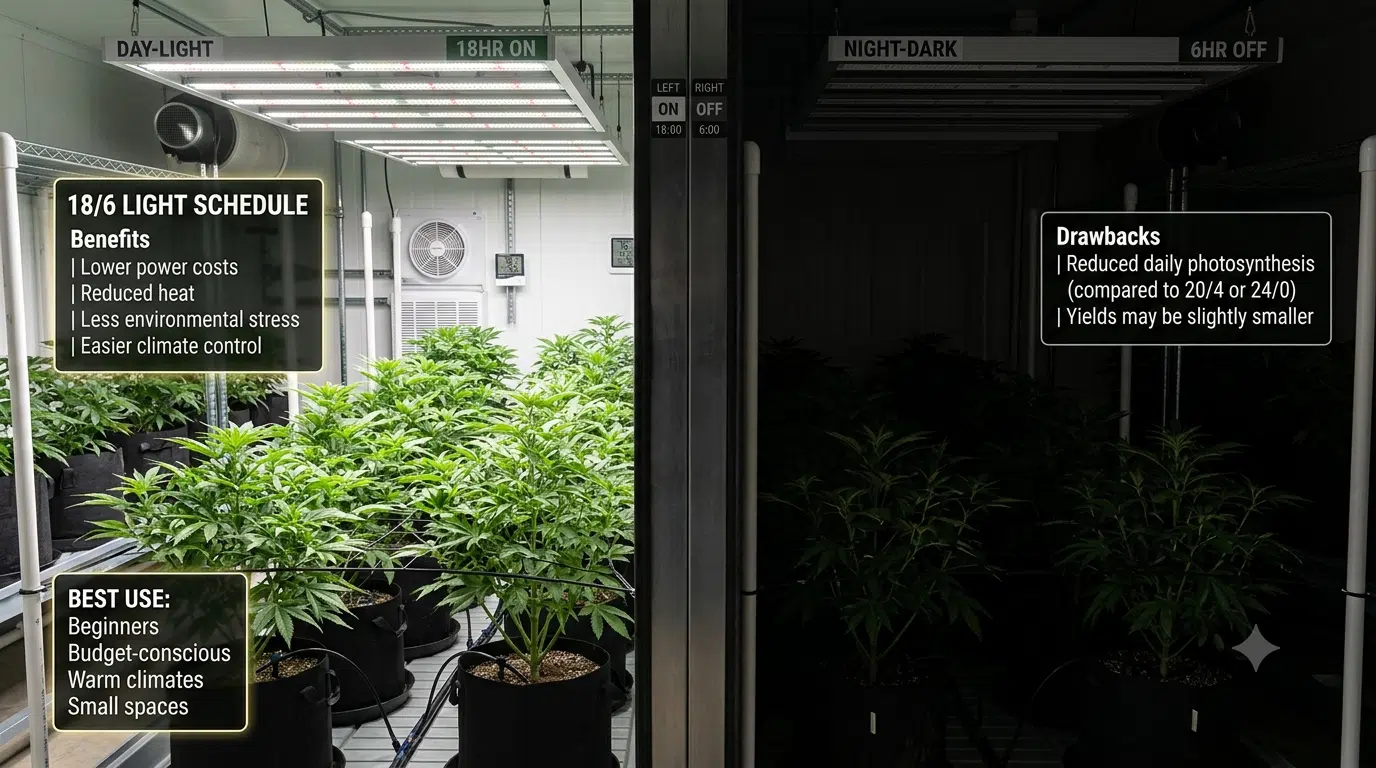
While plants remain healthy, yields may be slightly smaller under weaker lighting systems.
Best Use
Ideal for:
- Beginners
- Budget-conscious growers
- Warm climates
- Smaller grow spaces
12/12 Light Schedule
What It Means
- 12 hours of light
- 12 hours of darkness
This schedule is traditionally used for photoperiod cannabis.
Can Autoflowers Grow Under 12/12?
Yes.
Autoflowers will still flower because flowering is controlled by age rather than darkness.
Why It Isn’t Recommended
Twelve hours simply doesn’t provide enough daily light for optimal growth.
Common results include:
- Smaller plants
- Reduced yields
- Less branching
- Lower trichome production
The only time most growers use 12/12 is when growing autoflowers alongside flowering photoperiod plants.
Otherwise, higher-light schedules produce better results.
The Best Light Schedule for Autoflowers
For most growers, the best schedule is:
20 Hours On / 4 Hours Off
This schedule provides:
- Excellent yields
- Efficient electricity usage
- Strong vegetative growth
- Healthy flowering
- Lower stress levels
If your goal is maximizing autoflower yields without significantly increasing costs, 20/4 is usually the best choice.
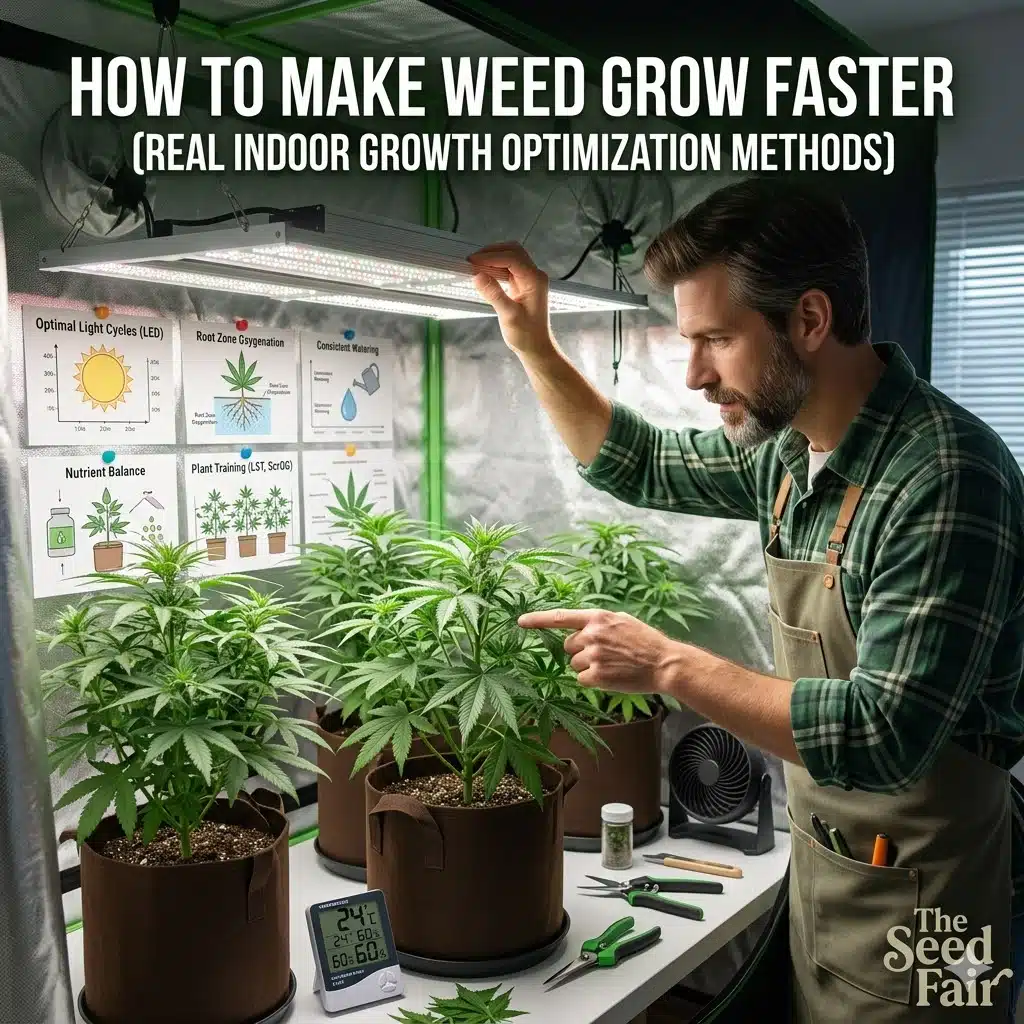
Lighting Requirements During Each Growth Stage
Germination
Seeds do not need light before sprouting.
Many growers germinate seeds in:
- Paper towels
- Starter plugs
- Seedling trays
Keep them warm and moist until the taproot appears.
Seedling Stage
Once seedlings emerge:
- 18/6 or 20/4
- Lower light intensity
- Greater distance from LEDs
Young seedlings can stretch if lighting is too weak or burn if lighting is too strong.
Vegetative Stage
This is the period where lighting has the greatest impact on final yields.
Aim for:
- 18/6 or 20/4
- Strong blue-spectrum lighting
- Consistent environmental conditions
Healthy vegetative growth creates the foundation for larger harvests.
Flowering Stage
Autoflowers continue benefiting from long light schedules during flowering.
Most growers maintain:
- 18/6
- 20/4
throughout bloom.
Unlike photoperiod plants, there is no need to switch schedules.
Understanding Light Spectrum
Light spectrum matters almost as much as light duration.
Different wavelengths influence plant growth in different ways.
Blue Light
Blue wavelengths dominate vegetative growth.
Benefits include:
- Compact structure
- Strong stems
- Short internodal spacing
- Increased leaf development
Most modern LED grow lights provide sufficient blue spectrum during vegetative growth.
Red Light
Red wavelengths become increasingly important during flowering.
Benefits include:
- Larger flowers
- Increased resin production
- Better bud density
- Improved flower development
Full-spectrum LEDs provide both blue and red wavelengths throughout the grow cycle.
LED vs HPS for Autoflowers
LED Grow Lights
LEDs have become the preferred option for most growers.
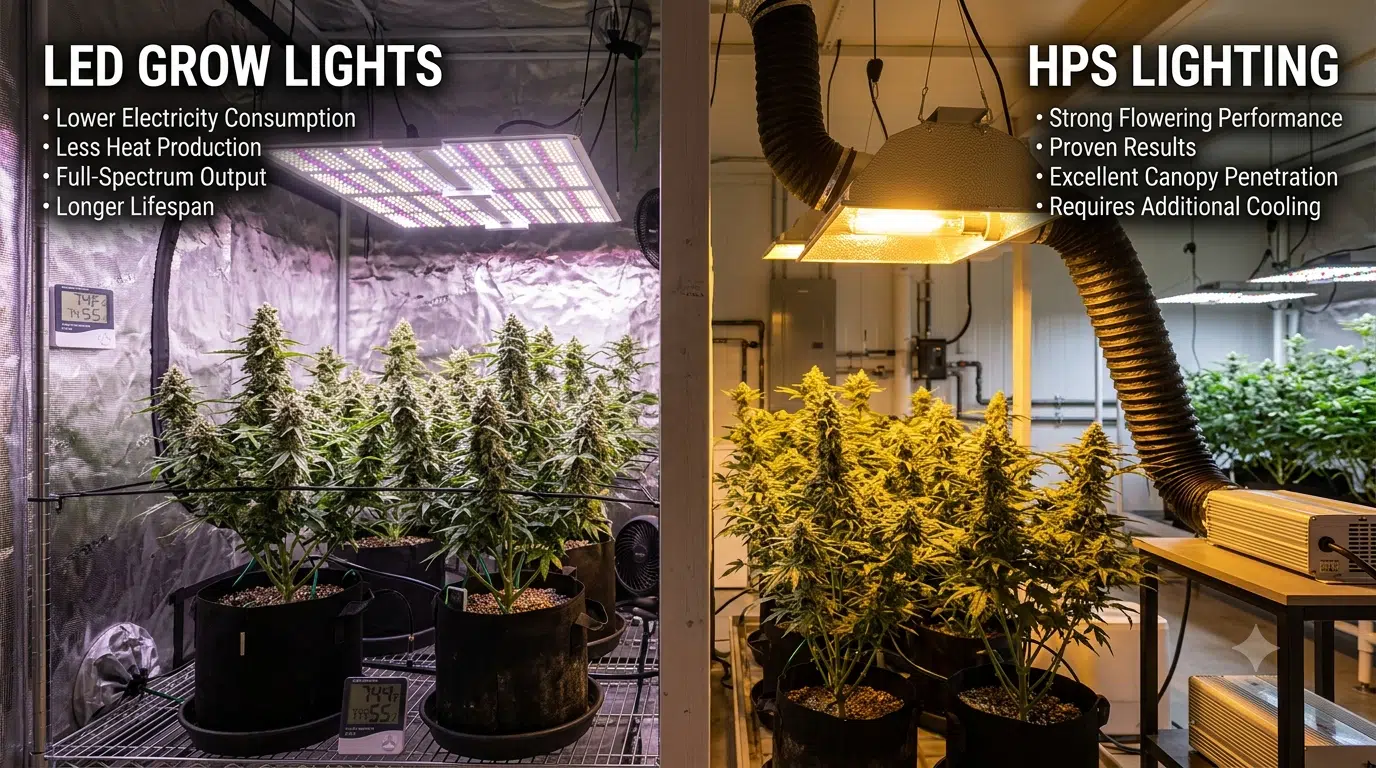
Benefits include:
- Lower electricity consumption
- Less heat production
- Full-spectrum output
- Longer lifespan
Most modern autoflower grows use LEDs.
HPS Lighting
High-pressure sodium lights remain effective but create more heat.
Benefits include:
- Strong flowering performance
- Proven results
- Excellent canopy penetration
However, HPS systems require additional cooling in many environments.
How Much Light Intensity Do Autoflowers Need?
Light duration is important, but intensity matters too.
Many growers focus solely on schedule while overlooking actual light output.
General guidelines:
Seedlings
200–300 PPFD
Vegetative Growth
400–600 PPFD
Flowering
600–900 PPFD
Providing too little intensity limits growth.
Providing too much can cause light stress and bleaching.
Common Autoflower Lighting Mistakes
Using Weak Lights
One of the biggest reasons growers get small autoflower yields is insufficient light intensity.
Even perfect genetics struggle under poor lighting.
Hanging LEDs Too Close
Signs include:
- Bleached tops
- Curling leaves
- Heat stress
- Slow growth
Always follow manufacturer recommendations.
Changing Light Schedules Mid-Grow
Autoflowers thrive on consistency.
Frequent schedule changes create unnecessary stress.
Ignoring Environmental Conditions
Light works together with:
- Temperature
- Humidity
- Airflow
- CO₂ levels
Increasing light without adjusting the environment can reduce performance.
Frequently Asked Questions
Do autoflowers need darkness?
Technically no, but many growers believe a short dark period improves overall plant health and reduces stress.
Is 24 hours of light better than 20/4?
Usually not enough to justify the additional electricity costs.
Most growers achieve similar yields with 20/4.
Can I flower autoflowers under 18/6?
Yes. Many growers use 18/6 from seed to harvest successfully.
Will 12/12 hurt autoflowers?
They will still flower, but yields are typically much smaller.
What’s the best light schedule for beginners?
18/6 or 20/4.
Both provide excellent results while keeping environmental management simple.
Final Thoughts
Autoflowers give growers flexibility that photoperiod strains cannot match. Since flowering is controlled by genetics rather than darkness, you can focus entirely on maximizing photosynthesis and plant health.
For most situations, a 20/4 light schedule provides the best balance of growth, yield, plant health, and operating costs. Combined with quality genetics, proper nutrients, and a stable environment, an optimized lighting schedule can significantly increase both harvest size and flower quality.
Autoflowers give growers flexibility that photoperiod strains cannot match. Since flowering is controlled by genetics rather than darkness, you can focus on providing consistent light, a stable environment, and healthy growth from start to finish.
To see how lighting fits alongside watering, nutrition, training, and harvest timing, explore our Autoflower Cannabis: The Complete Grow Guide From Seed to Harvest.

Alexander Broodryk is a very skilled grower and has been writing about his experiences online for many years. With over 5 years in the Cannabis Industry Alexander is not only engaging with many of his audiences but also informational. Alex has a lot of writings about Cannabis all over online and we are very happy to have him here at The Seed Fair helping to contribute his well thorough content for our website. He is dedicated to educating readers on the latest developments and trends in this rapidly evolving market. Check out his biography under our Author pages at Alexander Broodryk, Author at The Seed Fair.