Planting Marijuana Seeds Directly in Soil (The Most Natural Germination Method)
Jun
Planting marijuana seeds directly in soil is one of the oldest and most natural germination methods used by cannabis growers. Rather than germinating seeds in water, paper towels, or starter cubes, this approach places the seed directly into its final growing environment from the very beginning.
Many growers prefer direct soil germination because it minimizes handling of the exposed taproot and allows the seedling to establish immediately within a growing medium. When the seed is planted in the container where early development will continue, it also removes the need to transfer a freshly germinated seed from water or paper towels.
While the method may require slightly more patience than some faster germination techniques, it often results in healthier early development and fewer opportunities for accidental root damage.
From experience, direct soil germination works particularly well for fresh, high-quality cannabis seeds and growers looking for a simple, low-maintenance approach.
Like all germination methods, success depends on creating the right environment and avoiding common mistakes during the seed’s earliest stages of development.
Direct planting is one route through the larger process of seed activation and early development, where viability, moisture, oxygen, temperature, and seedling establishment all influence what happens next.
Why Planting Cannabis Seeds Directly in Soil Works
In nature, cannabis seeds germinate in soil without human intervention.
When moisture reaches the seed shell, the seed begins absorbing water and activating the biological processes needed for growth. As the shell softens, the embryo inside begins developing and eventually produces a taproot that grows downward into the surrounding medium.
Planting directly in soil allows this process to happen naturally without requiring transfers between containers or germination methods.
The main advantages include:
- Reduced handling of delicate seedlings
- Less risk of damaging the taproot
- Natural root establishment from day one
- Lower transplant stress
- A simple and beginner-friendly setup
Because the seed remains in the same environment throughout germination, root development can proceed without interruption.
When Direct Soil Germination Is the Best Option
While several germination methods can be successful, direct soil planting is particularly useful in certain situations.
This method works best when:
- Using fresh, high-quality cannabis seeds
- Growing in soil from the start
- You want to avoid transplanting germinated seeds
- Simplicity and minimal equipment are priorities
- The growing environment can be kept stable
From experience, growers who tend to over-handle seedlings often achieve better results by planting directly into soil and allowing nature to take its course.
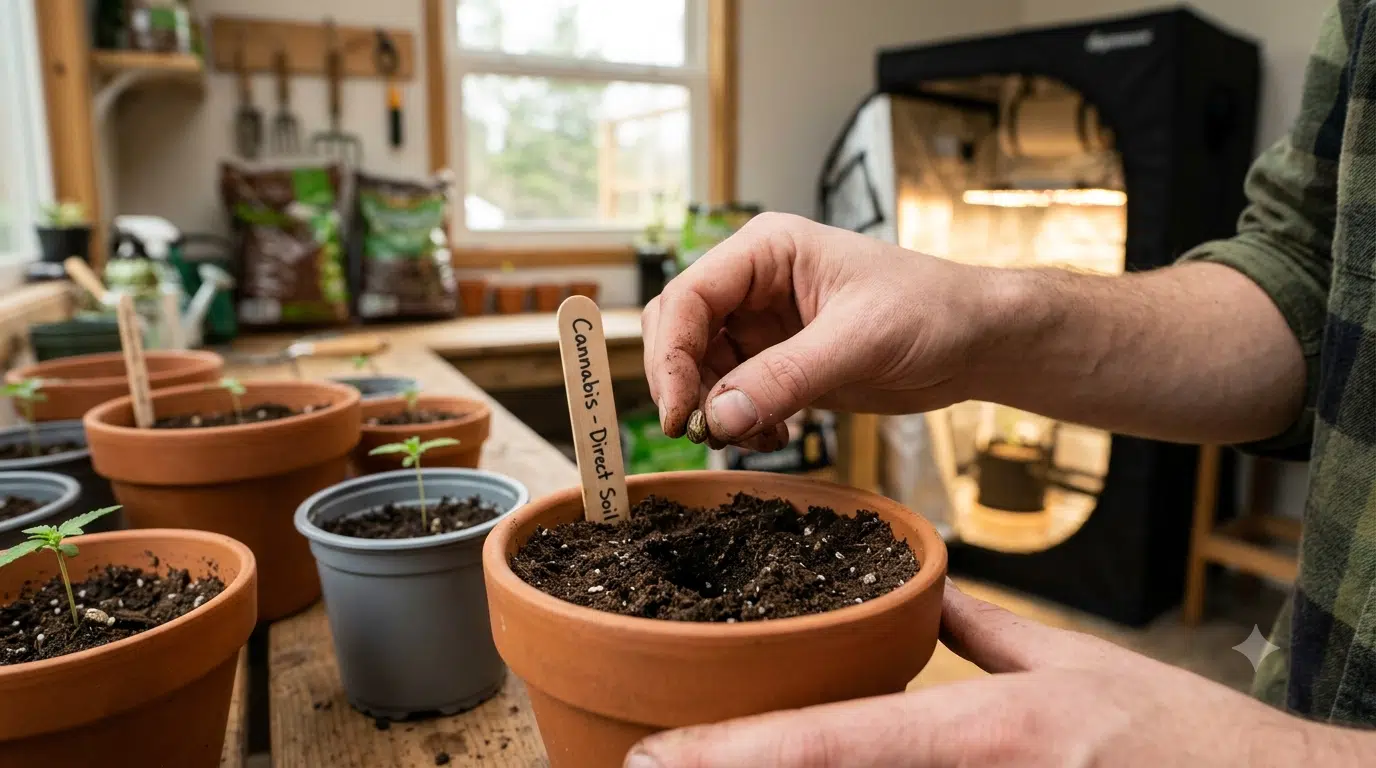
For beginners, this approach also removes the anxiety associated with transferring fragile taproots from paper towels or water containers.
Step-by-Step Guide to Planting Marijuana Seeds Directly in Soil
Although direct soil germination is simple, attention to detail can significantly improve success rates.
The objective is to create a stable environment that encourages the seed to activate naturally.
Step 1: Choose a Suitable Growing Medium
The soil used during germination should be light, airy, and capable of retaining moisture without becoming waterlogged.
Many growers make the mistake of using heavily fertilized soil mixes designed for mature plants. Young seedlings require very little nutrition and can be sensitive to excessive nutrients.
A quality seed-starting mix or lightly amended soil is often the safest choice.
The growing medium should provide:
- Good drainage
- Moderate moisture retention
- Adequate oxygen around developing roots
- Minimal nutrient intensity during early growth
Healthy root development begins with a balanced growing medium.
Step 2: Moisten the Soil Before Planting
Before placing the seed into the soil, moisten the growing medium evenly. The goal is consistent dampness around the planting area without leaving the soil saturated or waterlogged.
The goal is damp soil rather than saturated soil.
Overly wet conditions can reduce oxygen availability and increase the risk of damping-off or seed rot. On the other hand, soil that is too dry may prevent the seed from absorbing enough moisture to begin germination.
From experience, evenly moist soil provides the most reliable results.
Once the soil is prepared, avoid excessive watering immediately after planting.
Step 3: Plant the Seed at the Correct Depth
Depth is one of the most overlooked factors during direct soil germination.
A common guideline is to plant the seed approximately 1–1.5 cm (½ inch) below the soil surface.
Planting too shallow can expose the seed to drying conditions, while planting too deep may make it difficult for the seedling to reach the surface.
Place the seed gently into the hole and lightly cover it with loose soil.
The covering layer should remain soft enough to allow the emerging seedling to break through easily.
Step 4: Maintain Stable Environmental Conditions
After planting, environmental stability becomes the most important factor influencing success.
Cannabis seeds generally germinate best when exposed to:
- Consistent warmth
- Stable moisture levels
- Gentle airflow
- Moderate humidity
Large fluctuations in temperature or moisture can slow germination and increase failure rates.
From experience, growers often focus too heavily on lighting during this phase. In reality, moisture and temperature are usually far more important until the seedling emerges.
Patience is often the most valuable tool during this stage.
Step 5: Wait for Seedling Emergence
Once planted, the seed begins developing beneath the soil surface.
Unlike paper towel methods where progress is visible, direct soil germination requires trust in the process.
During this period, avoid:
- Digging up the seed to check progress
- Excessive watering
- Constant handling of containers
- Frequent environmental changes
Most viable seeds emerge within several days under favorable conditions, although timing can vary with seed age, temperature, moisture, planting depth, and other growing conditions. If nothing has appeared above the surface yet, the expected time for a marijuana seed to break soil can help determine whether continued patience or closer troubleshooting makes sense.
When the seedling breaks through the surface, the germination phase is complete and early vegetative growth begins.
Advantages of Planting Marijuana Seeds Directly in Soil
Direct soil germination remains popular because it closely mimics natural growing conditions.
Reduced Root Disturbance
The taproot develops directly into its growing environment without requiring transplantation.
Lower Risk of Physical Damage
There is no need to handle fragile germinated seeds or exposed roots.
Simplicity
The method requires very little equipment and minimal setup.
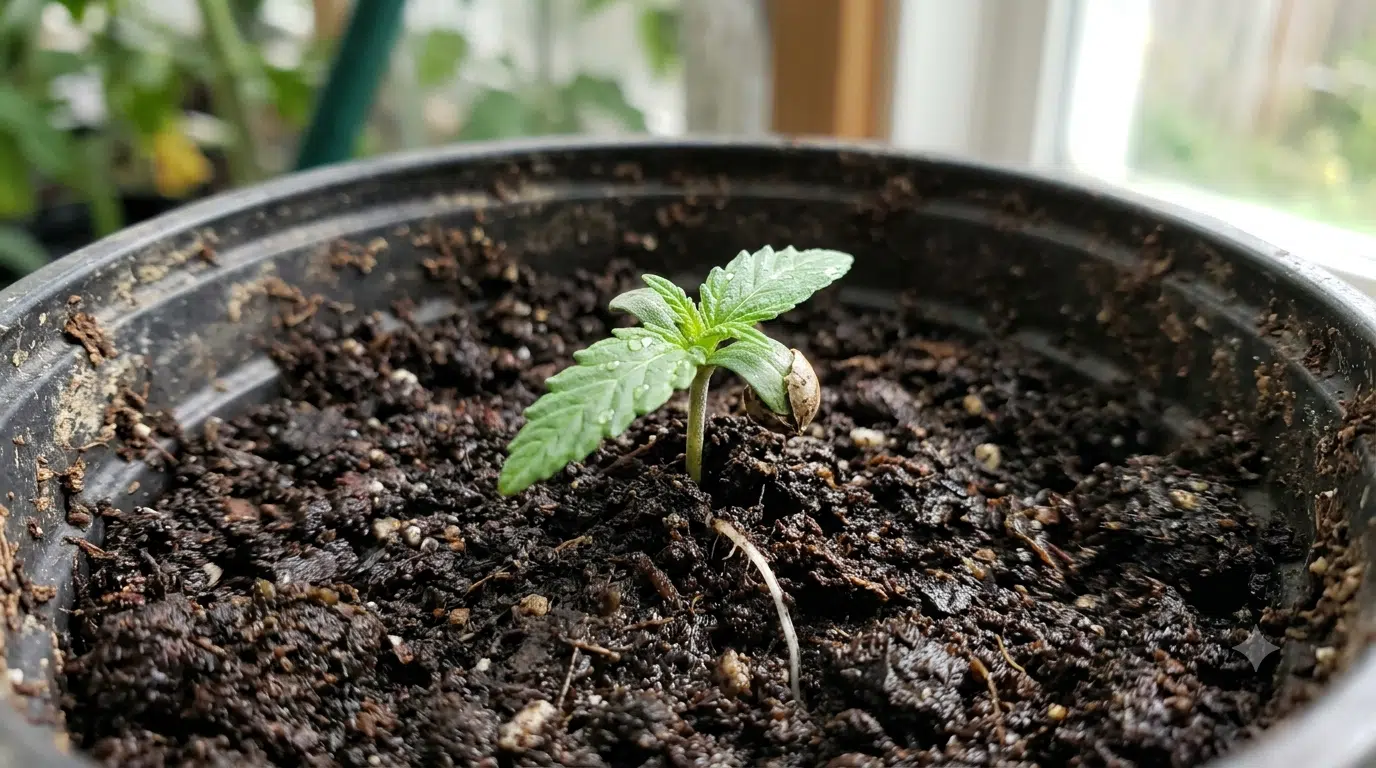
Natural Root Development
Roots establish themselves immediately within the surrounding soil structure.
Less Transplant Shock
Because the seedling never changes environments, growth often remains more consistent during early development.
Common Mistakes When Planting Cannabis Seeds Directly in Soil
Although straightforward, several common errors can reduce germination success.
The most frequent mistakes include:
- Overwatering the soil
- Planting seeds too deep
- Allowing the growing medium to dry out completely
- Using heavily fertilized soil
- Digging up seeds to check progress
- Exposing containers to unstable temperatures
Overwatering is one of the most common problems during direct soil germination because saturated conditions reduce oxygen around the seed and developing root zone.
Seeds require moisture, but they also require oxygen. Excessively wet soil can prevent healthy root development before the seedling even reaches the surface.
How Long Does It Take for Marijuana Seeds to Germinate in Soil?
Germination speed varies depending on genetics, seed quality, temperature, and moisture levels.
Under favorable conditions, most cannabis seeds emerge within several days.
Factors that can influence germination time include:
- Seed age
- Seed viability
- Soil temperature
- Moisture consistency
- Environmental stability
Fresh seeds grown in ideal conditions often emerge faster than older seeds or seeds exposed to fluctuating environments.
Patience is important because emergence time can vary even when conditions appear stable. Growers waiting for a planted seed to appear above the surface can look more closely at how long marijuana seeds typically take to break soil and which factors may delay emergence.
Direct Soil Germination vs Other Germination Methods
Every germination method has advantages and disadvantages.
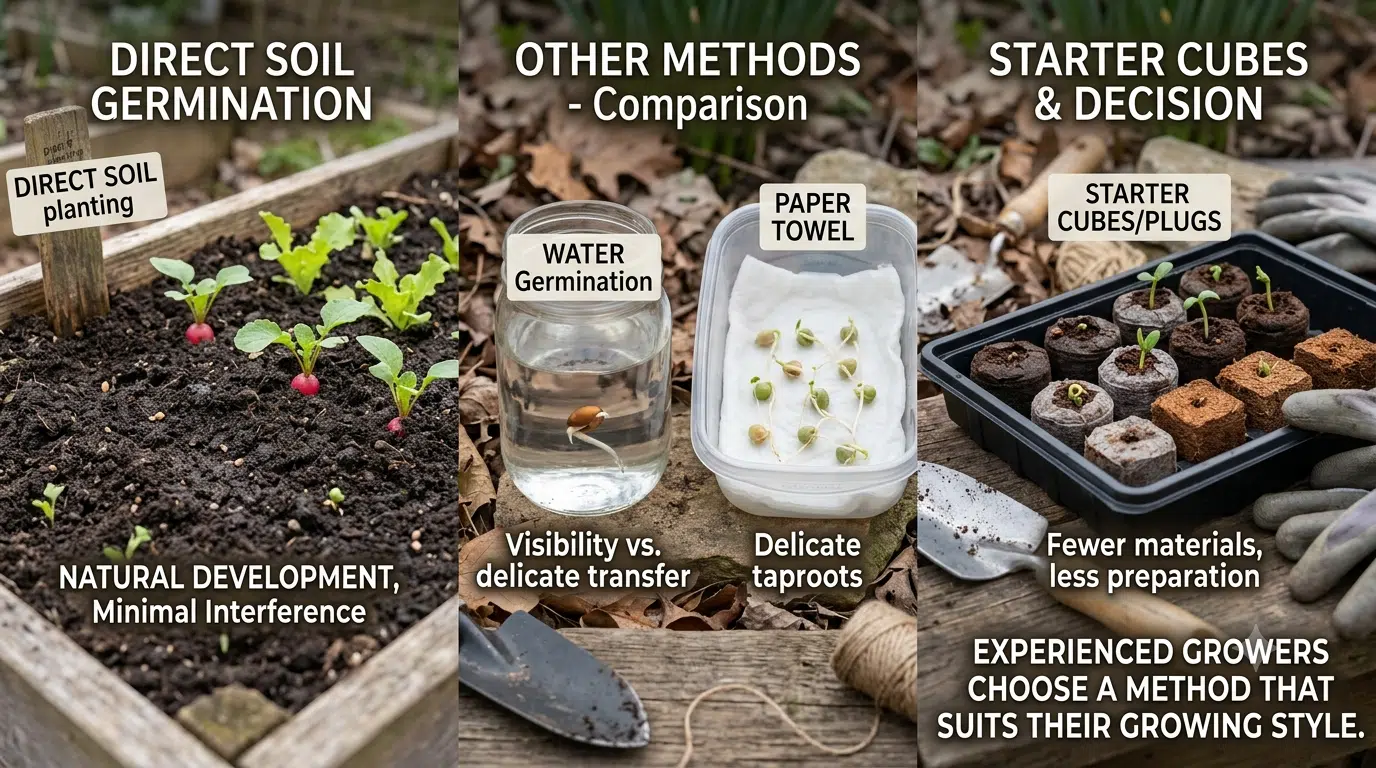
Compared to water germination, direct soil planting offers less visibility but more natural development.
Compared to paper towel germination, it eliminates the need to transfer delicate taproots.
Compared to starter cubes, it requires fewer materials and less preparation.
Many experienced growers ultimately choose the method that best suits their growing style rather than searching for a universally superior technique.
Direct soil germination remains popular because of its simplicity, reliability, and minimal interference with early root growth.
Final Takeaway
Planting marijuana seeds directly in soil is one of the most natural and beginner-friendly ways to germinate cannabis seeds.
By placing the seed directly into its growing environment, growers eliminate unnecessary handling and allow root development to occur naturally from the beginning.
While the method may require more patience than water or paper towel germination, it offers several advantages, including reduced transplant stress, healthier root establishment, and a simpler overall process.
In real cultivation environments, direct soil germination continues to be one of the most reliable methods for turning healthy cannabis seeds into strong, vigorous seedlings ready for successful growth.

Alexander Broodryk is a very skilled grower and has been writing about his experiences online for many years. With over 5 years in the Cannabis Industry Alexander is not only engaging with many of his audiences but also informational. Alex has a lot of writings about Cannabis all over online and we are very happy to have him here at The Seed Fair helping to contribute his well thorough content for our website. He is dedicated to educating readers on the latest developments and trends in this rapidly evolving market. Check out his biography under our Author pages at Alexander Broodryk, Author at The Seed Fair.