


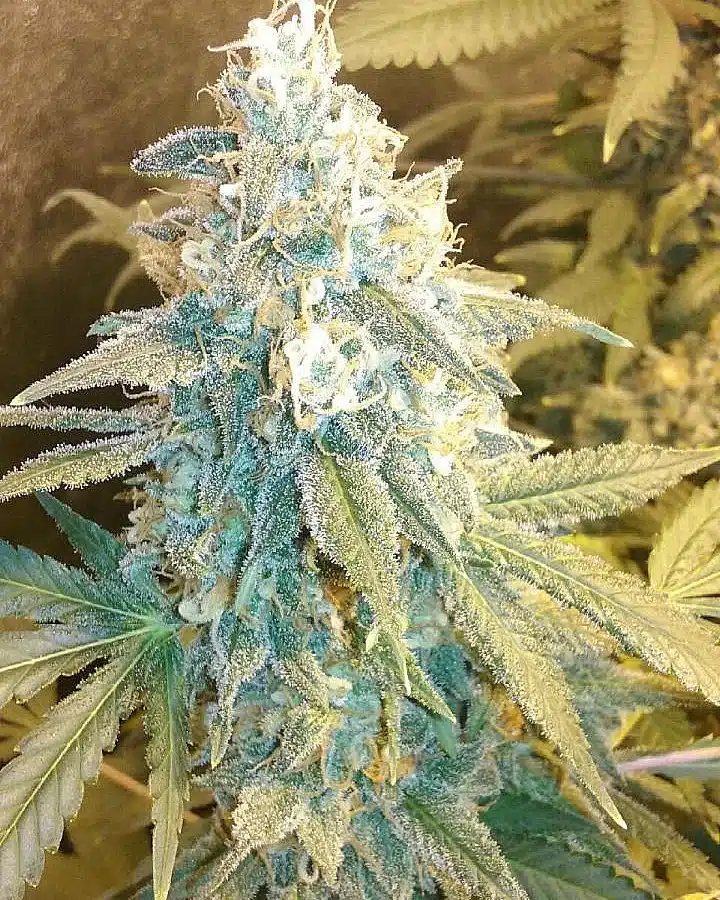
Holy Grail 69 Seeds
 Matanuska Tundra X Chronic X Haze

Holy Grail 69 Cannabis Seeds offer a mix of 35% Indica and 65% Sativa while flowering within 9-10 weeks. Expect yields of 450-800g/m² indoors and a plant that makes your grow room
smell like a citrus-pine forest. The 21% THC buds are so sticky, you’ll feel like you wrestled a pine tree. As for the high, it is an energizing jolt that gently tapers off as a relaxed good vibe moment.
Guaranteed Safe Checkout


 Free Shipping Over $99
 Germination Guaranteed*
 No Hassle Refunds
 See our Growers using our Seeds Today!
Holy Grail 69 Feminized Seeds
Holy Grail 69 Feminized Seeds combine productive photoperiod growth, strong sativa influence, and a sharp citrus-and-pine flavor profile in a cultivar built for growers who want both yield and character. With approximately 21% THC, this variety sits firmly in the high-potency range while maintaining the active growth and uplifting reported profile associated with sativa-dominant genetics.
The strain carries a genetic balance of 65% Sativa / 35% Indica and comes from a three-way cross of Matanuska Tundra, Chronic, and Haze. These genetics contribute vigorous branching, solid flower development, resin production, and a structure that can be trained efficiently indoors or allowed to expand outdoors.
One of the strongest reasons to consider Holy Grail 69 is its production potential. Growers comparing feminized marijuana seeds may appreciate indoor yields reaching approximately 800 g/m², while outdoor plants can produce up to 700 grams each under favorable conditions. Combined with a listed flowering time of 7–9 weeks, this makes the cultivar especially appealing to growers seeking substantial harvests without an unusually extended bloom cycle.
🌿 HOLY GRAIL 69 AT A GLANCE
THC Potential: Approximately 21%
CBD Content: Approximately 0%
Variety: 65% Sativa / 35% Indica
Seed Type: Feminized
Flowering Type: Photoperiod
Genetics: Matanuska Tundra × Chronic × Haze
Seed Bank: Cali Connection
Flowering Time: 7–9 Weeks
Environment: Indoor / Outdoor
Flavor Profile: Citrus • PineCannabinoid content, plant height, flowering time, aroma, structure, and final yields naturally vary according to phenotype and growing conditions.
Why Grow Holy Grail 69?
Holy Grail 69 is suited to growers who want a productive, high-THC hybrid with recognizable Haze influence and a cleaner citrus-pine profile.
🌲 Classic Pine Character
The aroma carries a fresh pine quality that gives the flowers a crisp, resinous identity.
🍋 Bright Citrus Flavor
Sharp citrus notes lift the heavier pine character and create a smoother, more balanced finish.
🌾 Very High Indoor Yield Potential
With listed indoor production reaching approximately 800 g/m², this cultivar offers excellent potential when the canopy is trained and illuminated evenly.
🧬 Three-Way Genetic Foundation
Matanuska Tundra, Chronic, and Haze contribute different strengths, including vigor, yield, resin formation, and sativa-dominant growth.
Is Holy Grail 69 Right for Your Grow?
Holy Grail 69 may be a good match for cultivators who are comfortable managing an active canopy and want to make efficient use of indoor lighting.
Although the chart lists plants at approximately 3–4 feet, the strong sativa influence means some stretch should still be expected after the flowering cycle begins. Growers working in tents should avoid allowing the plant to become too tall during vegetative growth.
The cultivar responds well to early topping, low-stress training, and SCROG. These techniques help spread the branches horizontally, improve light distribution, and reduce the risk of one dominant stem growing too close to the lights.
Outdoor growers can allow the plant to develop more naturally, although branch support may be useful later in the season. The listed yield suggests the plant can carry a substantial flower load when roots, light, and nutrition remain consistent.
This cultivar is better suited to growers who want to actively shape the plant rather than leave it completely untouched. The reward for that extra canopy work is stronger light use, more uniform flowers, and improved harvest potential.
Holy Grail 69 Genetics and Plant Characteristics
Holy Grail 69 combines Matanuska Tundra, Chronic, and Haze.
Matanuska Tundra contributes sturdy growth, broader structure, and indica support. Chronic is associated with productive flower development and helps reinforce the cultivar’s strong yield potential. Haze adds the dominant sativa character, including more active branching, narrower foliage, and a livelier growth pattern.
The resulting cultivar expresses a 65% Sativa / 35% Indica profile. Plants generally develop a medium frame with enough lateral growth to create a broad canopy when topped early.
The branches can remain flexible during vegetative growth, which makes shaping easier. As flowering progresses, they become more rigid and may need support if the upper buds gain significant weight.
The flowers are expected to develop a noticeable resin coating, with narrow orange pistils and a dense structure influenced by the indica side of the cross. Good airflow remains important, particularly late in flowering when the buds become heavier and more compact.
🧬 GENETIC PROFILE
Matanuska Tundra × Chronic × Haze
↓
65% Sativa / 35% Indica
↓
Feminized • Photoperiod • Sativa-Dominant Hybrid
Growing Holy Grail 69 Feminized Seeds
Holy Grail 69 can be cultivated indoors, outdoors, or in a greenhouse. It adapts to soil, coco coir, and hydroponic systems as long as the roots receive enough oxygen and the irrigation schedule matches the medium.
Indoor growers should begin canopy management early. Topping the main stem after the plant is well established can create several leading branches and reduce excessive vertical dominance.
Low-stress training works particularly well after topping. The branches can be pulled outward and secured to create a wider footprint. This allows lower flowering sites to receive more direct light and helps the plant use the available grow area more efficiently.
SCROG is one of the strongest options for this cultivar. The branches can be guided through a screen during vegetative growth and early flowering, creating a level canopy of productive tops. Because Holy Grail 69 has strong yield potential, a well-filled screen can help support the branches once flower weight increases.
The cultivar should be fed according to plant response rather than automatically receiving maximum nutrient strength. Healthy green foliage and steady growth are better signs than aggressive feeding.
If the leaves become overly dark, curl downward, or develop burned tips, nutrient concentration may be too high. Gradual adjustments are safer than making major changes at once.
The growing medium should drain freely. Constant saturation can reduce oxygen around the roots, slow nutrient uptake, and weaken overall plant performance. A regular wet-to-dry rhythm helps maintain healthier root activity.
Humidity should be controlled more carefully as flowering advances. The plant’s open sativa structure can help air movement, but dense flowers still need consistent ventilation. Removing weak lower shoots and a limited amount of crowded interior foliage can improve circulation.
Growers should avoid excessive defoliation. Healthy fan leaves continue to support growth and flower development, so pruning should focus on leaves that are severely shading productive sites or restricting airflow.
Outdoor plants benefit from direct sun, adequate spacing, and large containers or prepared soil beds. Supporting the major branches before late flowering can prevent leaning or breakage when the buds become heavy.
Flowering Time, Height, and Yield
Holy Grail 69 has a listed flowering period of approximately 7–9 weeks.
For a cultivar with 65% sativa genetics, this is a practical flowering window. It allows growers to benefit from sativa vigor without committing to the very long bloom cycle associated with some Haze-dominant varieties.
Plants are expected to finish around 3–4 feet under standard conditions. Final size depends on phenotype, vegetative duration, container volume, training, light intensity, and environmental stability.
Indoor yields may reach approximately 800 g/m², placing Holy Grail 69 among the more productive cultivars in the catalog. Achieving that level requires a full, even canopy, strong lighting, healthy roots, and stable environmental control.
Outdoor plants can produce up to approximately 700 grams each when grown in sufficient sunlight with generous root space and a long enough season.
🌱 GROW PROFILE
Difficulty: Intermediate
Flowering Period: 7–9 Weeks
Expected Height: Medium, Approximately 3–4 Feet
Cultivation Setting: Indoor / Outdoor
Growth Habit: Vigorous, Sativa-Dominant Branching
Recommended Techniques: Topping, LST, SCROG, Selective Pruning, Branch Support
How Potent Is Holy Grail 69?
Holy Grail 69 carries a listed THC potential of approximately 21%, placing it in the high-potency category.
Its cannabinoid level is supported by a strong overall profile that includes productive growth, resinous flower formation, and a mix of reported cerebral and body-focused effects.
Actual THC content can vary from one harvest to another. Lighting quality, phenotype selection, plant nutrition, temperature control, harvest timing, drying, curing, and laboratory testing all influence the final percentage.
The listed figure should be viewed as expected genetic potential rather than a guaranteed result from every plant.
Flavor, Aroma, and Terpenes
Holy Grail 69 develops a direct, familiar profile built around citrus and pine.
🍋 Citrus — bright lemon-like notes create the first aromatic impression and sharpen the flavor.
🌲 Pine — fresh pine and resinous forest-like qualities provide depth and remain noticeable on the finish.
🌿 Incense-Like Undertones — some phenotypes may show a dry herbal character that complements the citrus and pine.
🔥 Smooth Finish — a proper dry and cure can help soften the sharper notes and create a cleaner overall profile.
A verified laboratory terpene analysis was not provided. Testing would be required to identify the dominant terpene compounds accurately.
Reported Effects
Holy Grail 69 is commonly associated with an energetic and uplifting beginning, followed by a more balanced combination of mental activity and physical relaxation.
Consumers commonly report feeling happy, euphoric, and more engaged during the earlier portion of the experience. A body-focused sensation may become more noticeable later without completely removing the cultivar’s active sativa character.
Increased appetite is also included among the reported effects.
Individual experiences vary according to serving size, tolerance, body chemistry, cannabinoid concentration, and phenotype.
⚡ COMMONLY REPORTED PROFILE
Energetic • Uplifted • Happy • Euphoric • Relaxed • Body-Focused • Hungry
Reported effects are based on consumer experiences and should not be interpreted as medical claims or guaranteed outcomes.
Who Should Choose Holy Grail 69?
Holy Grail 69 is a strong option for growers who want productive photoperiod genetics, sativa influence, and a clean citrus-pine profile.
This cultivar may suit your collection when you are looking for:
- Approximately 21% THC potential
- 65% Sativa / 35% Indica genetics
- Matanuska Tundra, Chronic, and Haze lineage
- Citrus and pine flavor
- Medium-height plants
- Strong response to SCROG and canopy training
- A 7–9 week flowering period
- Indoor yields reaching approximately 800 g/m²
- Outdoor production up to 700 grams per plant
FREQUENTLY ASKED QUESTIONS
Its Chronic lineage supports heavy flower production, while the Haze influence encourages enough branching to create a broad, productive canopy.
Growers can install stakes or a trellis before the flowers become heavy. Early support is easier than trying to lift mature branches late in bloom.
Its active lateral growth makes it well suited to SCROG. The screen should be filled gradually during vegetative growth and the beginning of flowering.
It can, but removing weak lower shoots and crowded interior growth generally improves airflow and helps direct energy toward better-lit flower sites.
Monitor the distance between the canopy and the lights. Branches should be redirected early if they begin rising above the rest of the canopy.
The supplied chart confirms citrus and pine as the main flavor notes, but no laboratory terpene report was provided to identify the compounds responsible.
| Choose Seeds Here | 3 Seeds $39.00, 5 Seeds $60.00, 10 Seeds $110.00, 20 Seeds $200.00 |
|---|---|
| Variety | Sativa Dominant |
| THC Content | Moderate (15–25%) |
| Flowering Time | 7-9 Weeks |
| Height Indoors | 3-4 Ft. Medium |
| Effects | Creative, Energetic, Euphoric, Focused, Giggly, Motivate, Talkative, Uplifted |
| Flowering Type | Photoperiod |
| Sex | Feminized |
| CBD Content | Very Low (0-1%) |

- Flowering Type
Photoperiod

- Sex
- Feminized

- Variety
- 35% Indica and 65% Sativa

- Seed Bank
- Cali Connection

- THC Content
- 21% THC

- CBD Content
- 0% CBD

- Yield Outdoor
- 700 grams

- Yield Indoor
- 800 gr/m²

- Flowering Time
- 7 – 9 Weeks

- Plant Height
- 3-4 Feet Medium

- Type / Outdoor
Indoor/Outdoor

- Genetic Background
- Matanuska Tundra X Chronic X Haze

- Effect
- Energetic, Uplifted, Relaxation, Happy, Body High, Euphoric, Hungry

- Flavour
- Mix of Citrus and Pine
1 review for Holy Grail 69 Seeds
You must be logged in to post a review.
Jully E –
An incredible cannabis variety to invest in. I have no regrets of having bought it. I’m happy