
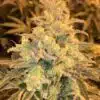
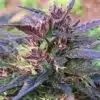
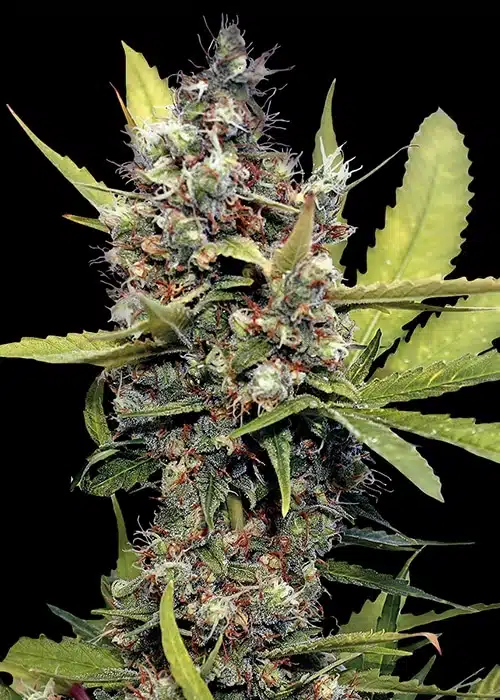
Honey B Seeds
 By Barney’s Farm

Honey B Seeds are the easy-peasy, lemon-squeezy solution to your beginner growing worries, with buds that dazzle like disco balls. Its aroma is a bear trap for your nose, sweet with a kick that says, “Surprise!” This strain is so Sativa-dominant, it turns every session into a brainstorming meeting for how to fix everything in your life
Guaranteed Safe Checkout


 Free Shipping Over $99
 Germination Guaranteed*
 No Hassle Refunds
 See our Growers using our Seeds Today!
Honey B Feminized Seeds
Honey B Feminized Seeds bring together vigorous sativa growth, smooth smoke, and a naturally sweet flavor shaped by honey, earth, and a lightly spicy finish. With approximately 18% THC, this photoperiod cultivar offers moderate potency and a lively reported profile without relying on the extreme cannabinoid percentages found in many newer varieties.
The strain carries a genetic balance of 90% Sativa / 10% Indica, giving it an energetic growth pattern with flexible branches and active vertical development. Despite its strong sativa influence, the supplied specifications place mature plants at approximately 3–4 feet, making Honey B more manageable indoors than many long-flowering sativa cultivars.
Honey B also offers notable indoor production, with potential yields reaching approximately 600 g/m². Its sweet, earthy aroma, medium stature, and adaptable indoor or outdoor performance make it an appealing option for growers who want a sativa-dominant plant without committing to excessive height or an unusually long flowering cycle.
🍯 HONEY B AT A GLANCE
THC Potential: Approximately 18%
CBD Content: Approximately 0%
Variety: 90% Sativa / 10% Indica
Seed Type: Feminized
Flowering Type: Photoperiod
Genetic Background: Specific Parent Strains Not Provided
Breeder Attribution: Barney’s Farm
Seed Bank: DNA Genetics
Flowering Time: 7–9 Weeks
Environment: Indoor / Outdoor
Flavor Profile: Sweet Honey • Earthy • Spicy FinishThe supplied chart lists DNA Genetics as the seed bank and separately attributes the cultivar to Barney’s Farm. Specific parent strains were not provided. Plant structure, cannabinoid content, aroma, flowering time, and yields vary by phenotype and growing conditions.
Why Grow Honey B?
Honey B is suited to cultivators who appreciate sativa-dominant growth, distinctive sweetness, and productive plants that remain manageable in a range of gardens.
🍯 Natural Honey Sweetness
The leading flavor is smooth and sweet, with a honey-like character that separates Honey B from sharper citrus, fuel, and Skunk cultivars.
🌿 Strong Sativa Influence
Its 90% sativa profile encourages vigorous branching, an open canopy, and the active growth pattern many cultivators look for in sativa genetics.
🪴 Manageable Medium Height
Although strongly sativa dominant, Honey B is listed at approximately 3–4 feet, making it suitable for tents and indoor rooms with reasonable height control.
🌾 Productive Indoor Performance
Indoor gardens may reach approximately 600 g/m² when the canopy is trained evenly and receives consistent light from edge to edge.
Is Honey B Right for Your Grow?
Honey B may be a good match for growers who want sativa characteristics without dealing with an extremely tall plant or a flowering period that stretches far beyond the average indoor schedule.
The cultivar is particularly well suited to growers who enjoy training feminized cannabis seeds into a wider canopy. Its flexible branches can be shaped outward during vegetative growth, allowing the plant to use horizontal space instead of concentrating its energy in one tall central stem.
Indoor growers should still plan for some flowering stretch. Switching the light cycle before the plants completely fill the available vertical space gives the branches room to extend without crowding the lights.
Honey B may also appeal to cultivators who prefer sweet but grounded flavor profiles. The honey-like opening is balanced by earthy depth and a slightly spicy aftertaste, producing a more natural character than candy-heavy dessert cultivars.
Honey B Genetics and Plant Characteristics
The supplied product chart identifies Honey B as a 90% Sativa / 10% Indica cultivar. It also lists DNA Genetics as the seed bank while including “By Barney’s Farm” in the genetic-background field.
Because specific parent strains were not supplied, it would be inaccurate to assign a confirmed lineage. The plant should instead be evaluated through its documented characteristics: strong sativa dominance, medium height, productive flowering, and a sweet honey-and-earth flavor.
Honey B generally develops narrower leaves, flexible lateral branches, and a more open structure than compact indica cultivars. This spacing can improve light movement and airflow through the plant when the branches are properly arranged.
During flowering, the stems support clusters of resinous buds rather than forming one extremely dense central mass. Providing support before the flowers become heavy can help maintain an even canopy late in bloom.
🧬 GENETIC PROFILE
Specific Parent Strains Not Provided
↓
90% Sativa / 10% Indica
↓
Feminized • Photoperiod • Sativa-Dominant Hybrid
Growing Honey B Feminized Seeds
Honey B can be grown indoors, outdoors, or in a greenhouse. It adapts to soil, coco coir, and hydroponic systems provided the roots receive enough oxygen and the irrigation schedule is adjusted to the growing medium.
Because of its sativa influence, Honey B benefits from early canopy planning. Topping above a healthy node can divide the main growth into several leading branches. Once those branches begin extending, low-stress training can guide them outward and expose more developing sites to direct light.
SCROG is another useful option, especially indoors. The branches can be worked through a screen during vegetative growth and the beginning of the flowering transition. This helps control height while creating a level surface of flowering tops.
The cultivar should not be crowded with unnecessary interior growth. Removing thin shoots that remain heavily shaded can improve circulation and allow the plant to focus on branches with better access to light.
Honey B is listed as medium height, but container size and vegetative duration still matter. A longer vegetative period in a large container may produce a much broader plant than the listed average suggests. Growers working in small tents should switch to flowering before the canopy becomes completely full.
A moderate feeding program is generally more sensible than immediately using maximum nutrient strength. Healthy leaf color and steady growth are better indicators than a fixed feeding chart. If the leaf tips begin to burn or the foliage becomes unnaturally dark, nutrient concentration may need to be reduced.
Allowing some moisture to leave the medium between irrigations helps protect the root zone from constant saturation. The goal is not to let the plant wilt, but to maintain a healthy wet-to-dry rhythm appropriate for the chosen substrate.
During flowering, airflow should reach both the top and underside of the canopy. Oscillating air movement, sensible plant spacing, and controlled humidity become increasingly important as flower density increases.
Flowering Time, Height, and Yield
Honey B has a listed flowering period of approximately 7–9 weeks. This is relatively manageable for a cultivar with 90% sativa genetics and allows indoor growers to complete the flowering stage without the extended schedule associated with some traditional sativas.
Plants are expected to finish around 3–4 feet under typical conditions. Training, container size, vegetative time, lighting intensity, and phenotype selection may all influence the final size.
Indoor yields may reach approximately 600 g/m² when the branches are trained into an evenly illuminated canopy. Outdoor plants can produce up to approximately 400 grams each with suitable weather, direct sunlight, and adequate root space.
The difference between the listed indoor and outdoor figures makes this cultivar particularly interesting for controlled environments. Indoor growers who manage the canopy carefully may be able to make better use of its branching pattern and productive sativa growth.
🌱 GROW PROFILE
Difficulty: Easy to Moderate
Flowering Period: 7–9 Weeks
Expected Height: Medium, Approximately 3–4 Feet
Cultivation Setting: Indoor / Outdoor
Growth Habit: Sativa-Dominant with Flexible, Open Branching
Recommended Techniques: Topping, LST, SCROG, Selective Pruning, Branch Support
How Potent Is Honey B?
Honey B carries a listed THC potential of approximately 18%, placing it in the moderate-potency range by current standards.
This level may appeal to consumers and growers who value a balanced overall profile rather than selecting exclusively by the highest available THC number. The cultivar’s identity is built as much around its sativa dominance, sweetness, and reported energetic character as its cannabinoid percentage.
Actual THC production can vary significantly. Lighting quality, root health, temperature stability, plant nutrition, harvest timing, drying conditions, curing, and phenotype expression all influence the final result.
The listed 18% should therefore be viewed as expected genetic potential rather than a guaranteed laboratory result from every harvested plant.
Flavor, Aroma, and Terpenes
Honey B develops a natural, layered profile that moves from sweetness into deeper earthy and spicy notes.
🍯 Sweet Honey — a soft honey-like sweetness forms the main aromatic and flavor impression.
🌱 Earthy Undertones — grounded, soil-like qualities add depth and prevent the sweetness from becoming candy-like.
🌶️ Spicy Aftertaste — a mild spice appears toward the finish and may linger after the sweeter notes fade.
🌿 Phenotype Variation — some plants may lean more heavily toward sweetness, while others may express a stronger earthy or spicy character.
A verified laboratory terpene analysis was not provided. Testing would be required to identify the dominant terpene compounds accurately.
Reported Effects
Honey B is commonly associated with an energetic and euphoric beginning that reflects its strong sativa influence.
Consumers commonly report feeling happy, mentally engaged, and more active during the earlier portion of the experience. A milder body-focused sensation may become noticeable later without completely replacing the more uplifting character.
Increased appetite is also included among the reported effects. Experiences vary according to serving size, tolerance, individual body chemistry, cannabinoid concentration, and the chemical profile of the harvested phenotype.
⚡ COMMONLY REPORTED PROFILE
Energetic • Euphoric • Happy • Body-Focused • Hungry
Reported effects are based on consumer experiences and should not be interpreted as medical claims or guaranteed outcomes.
Who Should Choose Honey B?
Honey B is a strong candidate for growers who want sativa-dominant genetics, manageable plant height, sweet natural flavor, and particularly good indoor yield potential.
This cultivar may fit your garden when you are looking for:
- Approximately 18% THC potential
- 90% Sativa / 10% Indica genetics
- Sweet honey and earthy flavor
- A lightly spicy finish
- Medium-height photoperiod plants
- Flexible branches suited to canopy training
- A 7–9 week flowering period
- Indoor yields reaching approximately 600 g/m²
- Outdoor production of approximately 400 grams per plant
FREQUENTLY ASKED QUESTIONS
Its listed height and flowering period are more manageable than those of many heavily sativa-dominant varieties. Plants are expected to finish around 3–4 feet with a flowering window of approximately 7–9 weeks.
Early topping can be useful because it divides the plant’s vertical growth into several productive branches. Growers should allow the plant to become established before making the first cut.
Indoor growers should avoid filling all available vertical space during vegetative growth. Leaving clearance above the canopy gives the branches room to extend after the flowering light cycle begins.
Branch support may be helpful when the flowers gain weight. Stakes, ties, or a second trellis layer can keep the canopy stable and prevent productive branches from leaning outward.
Honey B’s branching pattern may perform especially well under an evenly managed indoor canopy. Outdoor results depend more heavily on season length, direct sunlight, weather, root space, and regional growing conditions.
No specific parent strains appear in the supplied chart. It identifies the cultivar as 90% sativa and 10% indica, lists DNA Genetics as the seed bank, and separately includes a Barney’s Farm breeder attribution.
| Choose Seeds Here | 3 Seeds $39.00, 5 Seeds $60.00, 10 Seeds $110.00, 20 Seeds $200.00 |
|---|---|
| Variety | Sativa Dominant |
| THC Content | Moderate (15–25%) |
| Flowering Time | 7-9 Weeks |
| Height Indoors | 3-4 Ft. Medium |
| Effects | Creative, Energetic, Euphoric, Focused, Giggly, Motivate, Talkative, Uplifted |
| Flowering Type | Photoperiod |
| Sex | Feminized |
| CBD Content | Very Low (0-1%) |

- Flowering Type
Photoperiod

- Sex
- Feminized

- Variety
- 10% Indica and 90% Sativa

- Seed Bank
- DNA Genetics

- THC Content
- 18% THC

- CBD Content
- 0% CBD

- Yield Outdoor
- 400 grams

- Yield Indoor
- 600 gr/m²

- Flowering Time
- 7 – 9 Weeks

- Plant Height
- 3-4 Feet Medium

- Type / Outdoor
Indoor/Outdoor

- Genetic Background
- By Barney’s Farm

- Effect
- Energetic, Euphoric, Happy, Hungry, Body High

- Flavour
- Sweet Honey and Earthy Undertones, Slightly Spicy Aftertaste
1 review for Honey B Seeds
You must be logged in to post a review.
Isabella K –
I got more than I expected from the few Honey B crops that I grew in my backyard. I want to try more next time and see what happens.