How To Grow Marijuana Indoors Without Smell
Jun
One of the biggest challenges indoor growers face is controlling cannabis odor during the flowering stage. Even a small grow setup can produce a surprisingly strong smell once terpene production increases, especially inside apartments, closets, or shared living spaces.
For many growers, odor control is not just about privacy — it is part of maintaining a stable indoor environment. Strong lingering smells are often signs of poor airflow, excessive heat buildup, or inadequate ventilation inside the grow space.
Odor control works best as part of the broader indoor environment rather than as a separate fix. Airflow, humidity, temperature, and canopy density all influence how easily terpene-rich air escapes the grow space. Our complete guide to indoor cannabis cultivation explains how these systems work together throughout the grow cycle.
Most experienced indoor growers eventually realize that odor control works best when it is built into the setup from the beginning rather than added later after smells become noticeable.
Why Cannabis Plants Produce Strong Odors
Cannabis plants naturally produce aromatic compounds called terpenes. These compounds are formed inside the trichomes of the plant and become increasingly concentrated during flowering.
Some of the most recognizable cannabis terpenes include:
- Myrcene
- Limonene
- Pinene
- Caryophyllene
- Linalool
Different strains produce different scent profiles. Some plants develop fruity or citrus aromas, while others create skunky, earthy, or fuel-like smells that become extremely noticeable indoors.
Dense, poorly managed canopies can trap warm, humid air around flowering sites and reduce circulation through the interior of the plant. As airflow declines, odor-rich air may linger inside the grow space rather than moving efficiently toward the exhaust and filtration system.
Why Proper Odor Control Matters Indoors
Indoor cannabis odor control is important for far more than discretion alone.
A properly ventilated and filtered grow environment often produces healthier plants because airflow, humidity, and temperature remain more stable throughout the cultivation cycle.
Strong unmanaged smells are frequently associated with:
- Poor air circulation
- Excess humidity
- Heat accumulation
- Inadequate exhaust systems
- Stagnant grow room conditions
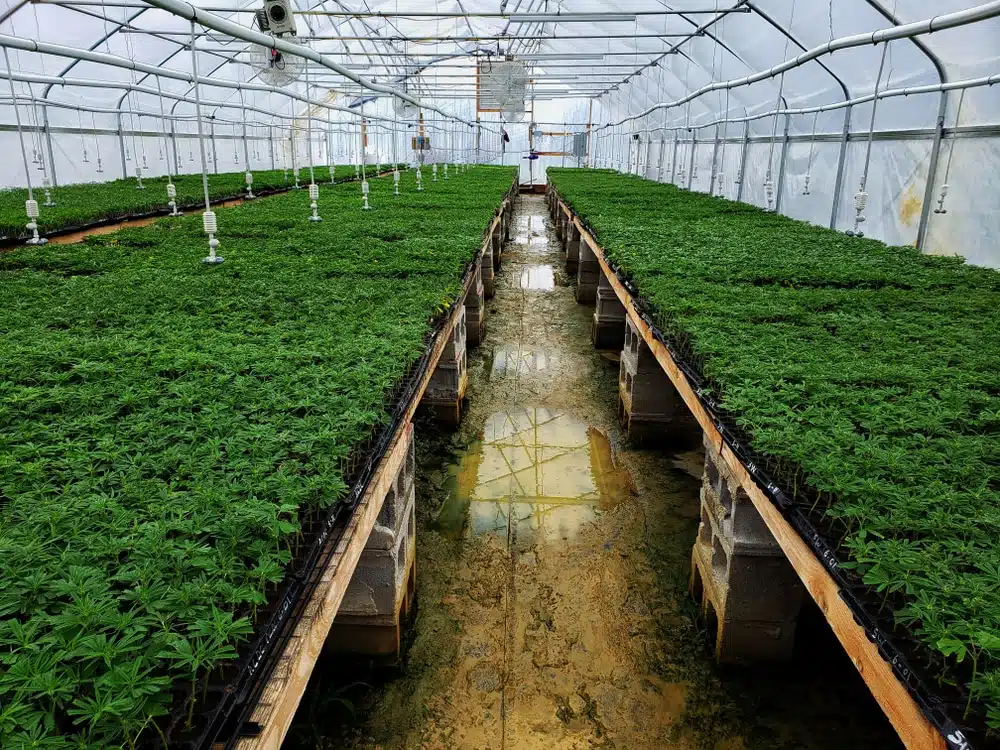
When growers focus on optimizing the entire environment — not just odor control — they typically achieve more stable and predictable results. This includes balancing airflow, humidity, temperature, and plant density as one interconnected system rather than treating each factor separately. These problems become more noticeable in compact grow spaces, where limited air volume allows heat and humidity to change quickly.
Odor control also becomes especially important in:
- Apartments
- Condos
- Shared housing
- Closets
- Dense residential neighborhoods
In apartments, odor control can be more difficult because the grow space may share walls, hallways, ventilation pathways, and living areas with the rest of the building. Our guide to growing cannabis in an apartment covers these space-specific ventilation, noise, and discretion challenges in more detail.
The Most Effective Way to Control Cannabis Smell
The single most effective odor control method for indoor cannabis cultivation is combining:
- A sealed grow environment
- Inline exhaust ventilation
- Activated carbon filtration
- Negative air pressure
This combination removes terpene-rich air before it escapes into surrounding spaces.
Many new growers waste money on odor sprays and neutralizers while ignoring airflow design. In reality, proper ventilation solves most odor problems before they start.
A well-designed grow tent with balanced airflow usually produces far less detectable smell than an open grow room with weak ventilation.
Activated Carbon Filters
Carbon filters remain the industry standard for cannabis odor removal because activated carbon physically traps airborne terpene molecules as air passes through the filtration system.
Inside most indoor grow setups, the carbon filter connects directly to:
- Inline fans
- Exhaust ducting
- Ventilation systems
As warm air exits the grow tent, the activated carbon captures much of the odor before the air is exhausted outside the room.
The effectiveness of a carbon filter depends heavily on:
- Proper fan sizing
- Airflow balance
- Tent sealing
- Filter quality
- Humidity levels
One issue many growers encounter is oversized exhaust fans pulling air too quickly through the filter. When airflow moves too fast, odor molecules may not remain in contact with the activated carbon long enough for full filtration.
Balanced airflow is usually more important than raw fan power.
Negative Pressure Systems
Negative pressure is one of the most overlooked aspects of indoor odor control.
A grow tent operates under negative pressure when more air is being exhausted than passively entering the enclosure. This causes the tent walls to slightly pull inward.
When negative pressure is maintained:
- Air leaks inward instead of outward
- Unfiltered odor is less likely to escape
- Airflow becomes easier to control
Many experienced growers test their negative pressure simply by observing whether the grow tent walls slightly contract while the exhaust fan runs.
If the tent balloons outward instead, odor leaks usually become much more likely.
Choosing Low-Odor Cannabis Strains
Genetics also play a major role in indoor cannabis smell.
Some cannabis strains naturally produce less intense terpene profiles than others, making them easier to manage in smaller indoor environments.
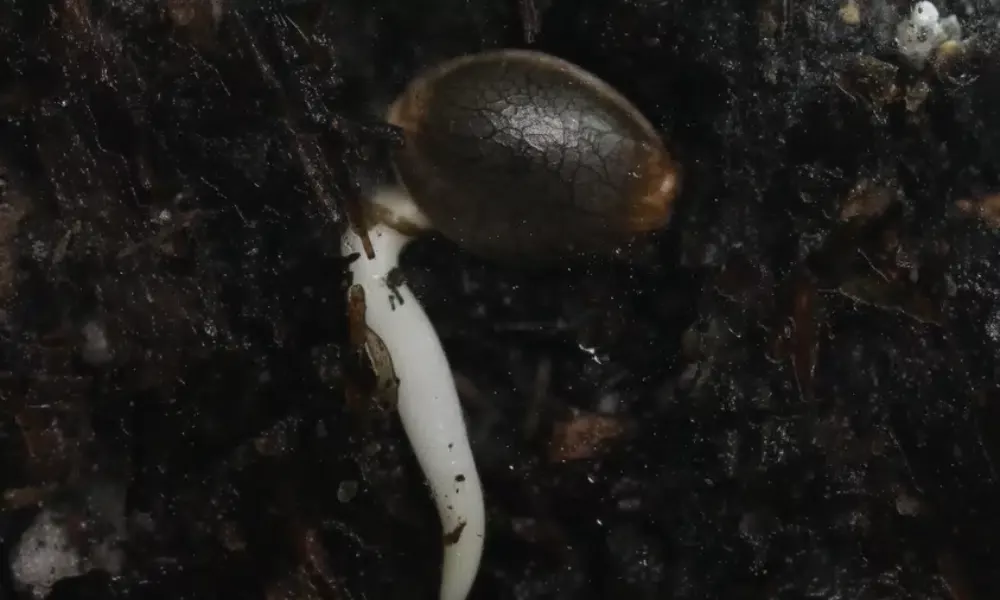
Lower-odor strains often include:
Highly pungent strains with diesel or skunk-heavy terpene profiles are usually much harder to conceal indoors, especially during late flowering.
That said, even lower-odor strains still require proper ventilation and filtration systems. No cannabis plant is truly odorless once flowering begins.
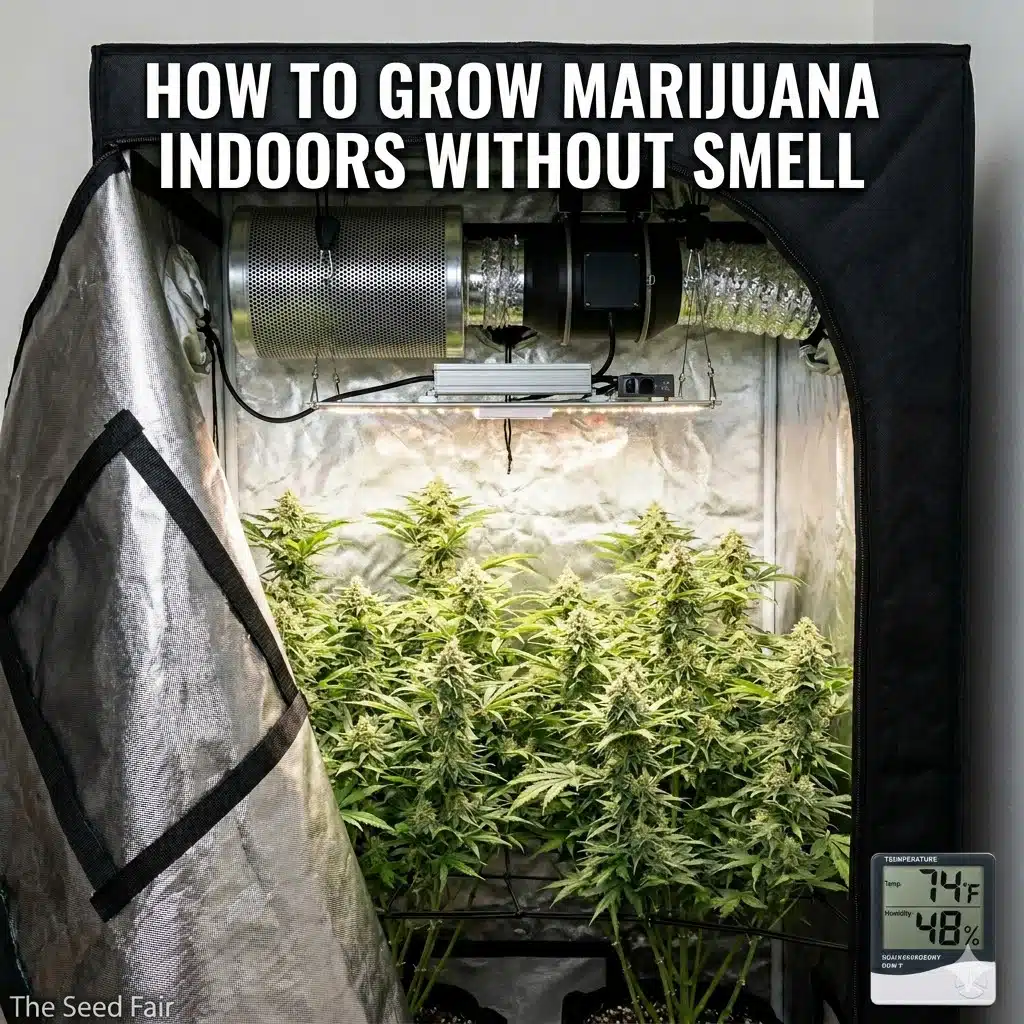
Grow Tent Setup for Odor-Free Indoor Growing
A properly configured grow tent creates the foundation for effective smell control.
Grow tents help isolate:
- Airflow
- Humidity
- Heat
- Lighting
- Odor
Most indoor growers find tents far easier to manage than open-room cultivation because environmental variables remain contained inside one controlled area.
An effective odor-controlled grow tent setup typically includes:
- Inline exhaust fan
- Carbon filter
- Oscillating airflow fan
- Sealed ducting
- Passive air intake
- LED grow lighting
LED lighting has become especially popular because it produces less heat than older HID systems. Lower heat output often helps reduce excessive terpene dispersion throughout the grow environment.
Smaller tents also tend to maintain negative pressure more efficiently than large open grow spaces.
Managing Humidity and Temperature to Reduce Odor
Environmental conditions heavily influence how aggressively cannabis odors spread indoors.
High temperatures increase terpene volatility, causing smells to travel faster through the air. Excess humidity can also trap stale air inside the canopy and intensify lingering odors.
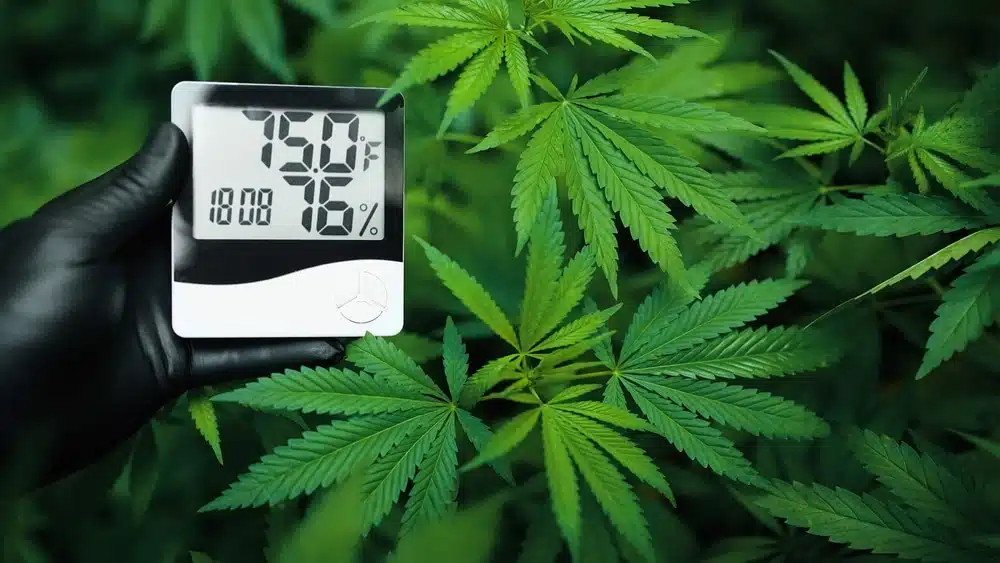
Most experienced growers focus heavily on stabilizing:
- Temperature
- Relative humidity
- Air exchange rates
During flowering, many growers gradually lower humidity levels while maintaining strong airflow through the canopy.
Stable environments often smell less overwhelming than hot, stagnant grow rooms with poor circulation.
One common issue during flowering is overcrowded canopies trapping moist air between bud sites. This not only increases odor intensity but also raises the risk of mold and bud rot.
Proper pruning and canopy management can significantly improve airflow while reducing trapped terpene-heavy air pockets.
Odor Control During Harvesting and Drying
Many growers discover that harvesting and drying produce even stronger smells than flowering itself.
Freshly cut cannabis releases large amounts of moisture and terpenes into the air very quickly. Without proper ventilation, the smell can become overwhelming inside enclosed spaces.
To reduce odor during harvest:
- Keep exhaust fans running continuously
- Maintain carbon filtration during drying
- Avoid overcrowding drying rooms
- Use sealed containers for trim storage
- Maintain steady airflow without excessive heat
Drying cannabis too quickly can damage terpene preservation, while drying too slowly may increase stale odors and mold risk.
Most growers aim for slow, stable drying conditions with moderate airflow and controlled humidity.
Odor management during drying is often easier when the drying environment remains separate from the main flowering area.
Common Odor Control Mistakes
Many odor problems come from setup mistakes rather than the cannabis plants themselves.
Some of the most common mistakes include:
- Poorly sealed grow tents
- Weak exhaust airflow
- Incorrect carbon filter sizing
- Excessive humidity
- Hot grow room temperatures
- Overcrowded plant canopies
- Using odor sprays inside the grow space
One mistake newer growers often make is spraying odor neutralizers directly near flowering plants. This can affect terpene quality and potentially alter the final aroma of the buds.
Most experienced cultivators keep odor neutralizers outside the grow environment rather than inside it.
Another common issue is neglecting maintenance on carbon filters. Activated carbon loses effectiveness over time and eventually requires replacement to maintain proper filtration.
Advanced Odor Control Systems
Larger indoor grows sometimes use advanced odor management systems beyond standard carbon filtration.
These may include:
- HEPA filtration
- Ozone generators
- Negative ion generators
- Sealed-room environmental systems
However, these systems are usually unnecessary for smaller home grows if airflow and filtration are already optimized.
Ozone generators require particular caution because excessive ozone exposure can damage both plants and human respiratory systems. Most growers avoid using ozone directly inside grow tents for this reason.
For most indoor cultivators, a properly sealed tent with balanced airflow and carbon filtration remains more than sufficient.
Final Thoughts on Growing Marijuana Indoors Without Smell
Successful odor control comes down to environmental management more than masking scents.
When airflow, filtration, humidity, and temperature are properly balanced, cannabis smells become far easier to control throughout the growing cycle.
The growers who struggle most with odor are usually dealing with unstable environments:
- poor ventilation,
- excessive heat,
- overcrowded canopies,
- or improperly sealed grow spaces.
By building odor control directly into the grow setup from the beginning, indoor cultivation becomes far more manageable and discreet.
Over time, most experienced growers realize that the cleanest-smelling grow rooms are usually the healthiest grow rooms as well.

Alexander Broodryk is a very skilled grower and has been writing about his experiences online for many years. With over 5 years in the Cannabis Industry Alexander is not only engaging with many of his audiences but also informational. Alex has a lot of writings about Cannabis all over online and we are very happy to have him here at The Seed Fair helping to contribute his well thorough content for our website. He is dedicated to educating readers on the latest developments and trends in this rapidly evolving market. Check out his biography under our Author pages at Alexander Broodryk, Author at The Seed Fair.