Growing Weed in an Apartment | The Best Guide for Small-Space Indoor Cultivation
Jun
Growing cannabis in an apartment is one of the most common entry points into indoor cultivation today. Limited space, shared walls, and ventilation constraints make it more challenging than traditional grow rooms, but with the right setup, apartment cultivation can still produce healthy, high-quality plants.
Most apartment growers are not trying to scale large harvests — they are trying to create a stable, discreet indoor environment that fits within real-world living conditions. That usually means working inside a closet, a corner room, or a compact grow tent system where environmental control becomes more important than plant quantity.
Successful apartment growing is less about size and more about control. Smell, equipment noise, humidity, airflow, heat, and light leakage can all become more noticeable when the grow space shares walls and living areas with the rest of the apartment.
Apartment cultivation still relies on the same environmental principles as any other indoor setup. Our complete guide to indoor cannabis cultivation explains how lighting, airflow, humidity, odor control, and canopy management work together across the full grow cycle.
The Reality of Growing Cannabis in an Apartment Environment
Apartment cultivation forces growers to think differently compared to traditional grow spaces. Instead of optimizing for scale, everything revolves around efficiency and discretion.
The biggest constraints in apartment growing include:
- Limited square footage
- Shared ventilation systems
- Noise sensitivity from neighbors
- Heat buildup in small rooms
- Strict odor control requirements
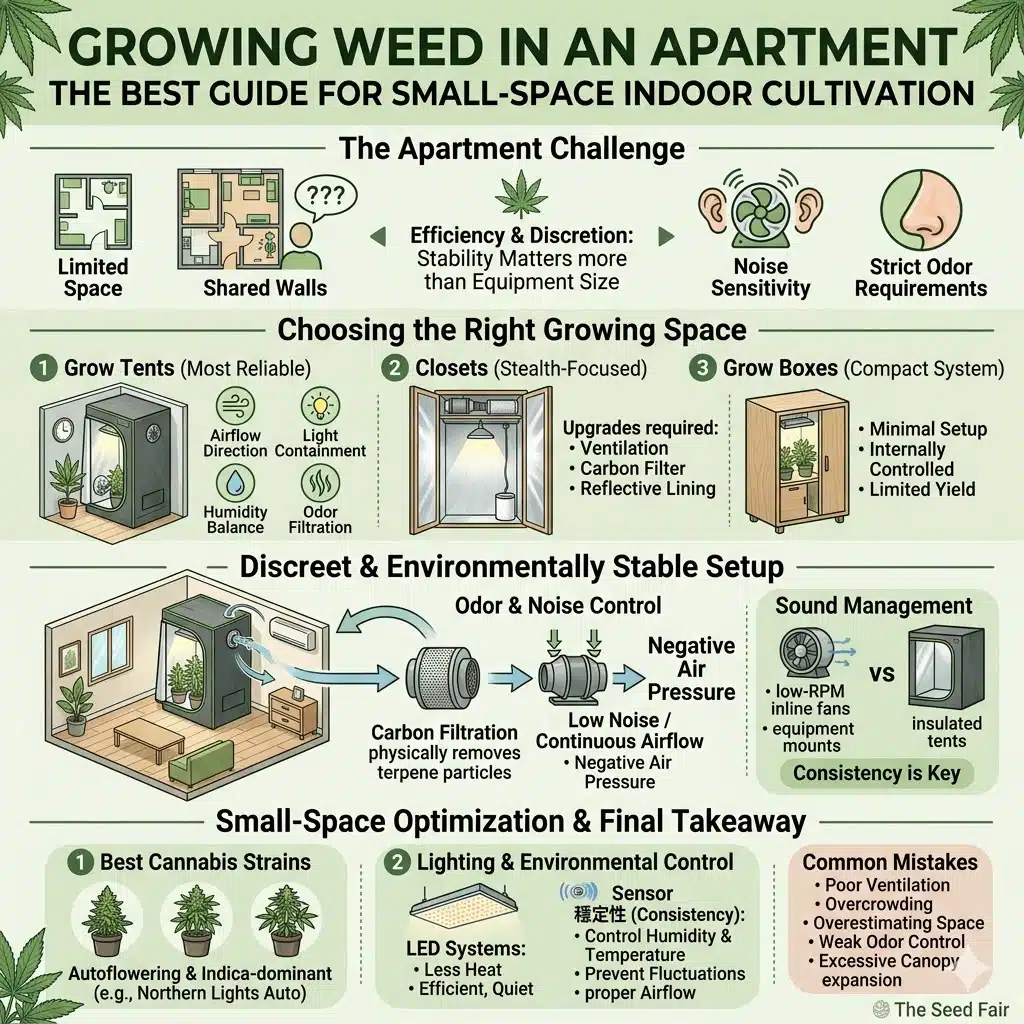
In practice, most growers quickly realize that environmental stability matters far more than equipment size. A small, well-managed grow tent in an apartment almost always performs better than a poorly controlled open space setup.
One of the biggest mistakes beginners make is underestimating how quickly heat and humidity accumulate in small rooms. Even a few plants can significantly alter the room’s environment if airflow is not properly managed.
Choosing the Right Growing Space in an Apartment
Selecting the right location is one of the most important decisions in apartment cultivation. The space you choose determines how easy it will be to control odor, temperature, and noise.
Most apartment growers typically choose between three main options:
Grow Tents (Most Reliable Option)
Grow tents are the most commonly used solution in apartment setups because they create a fully controlled micro-environment.
They allow growers to manage:
- Airflow direction
- Light containment
- Humidity balance
- Odor filtration
- Temperature stability
A properly sealed tent also prevents light leaks and helps maintain negative pressure, which is essential for odor control.
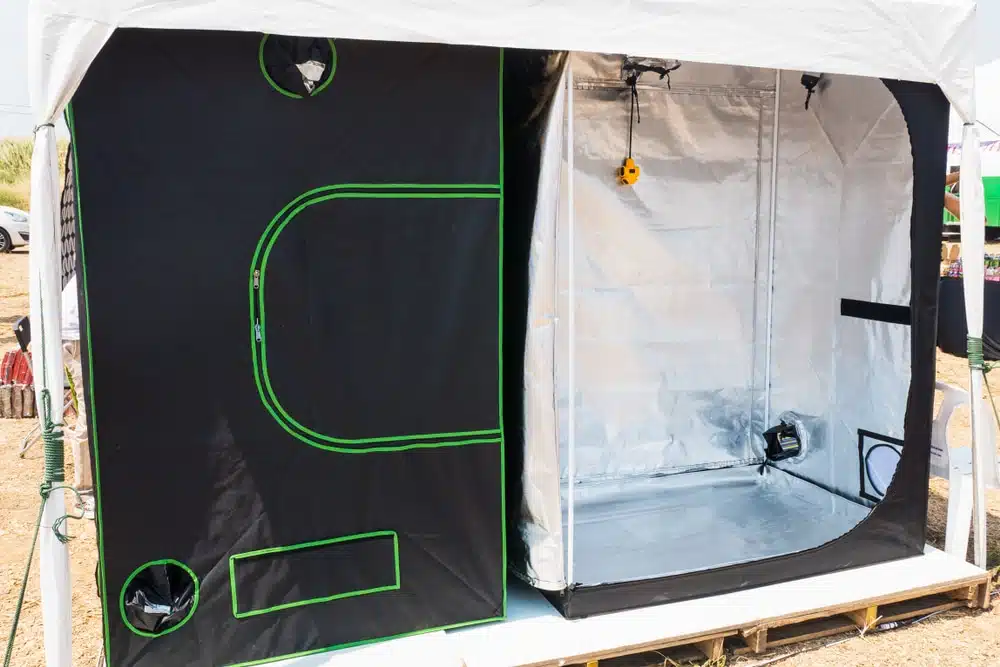
In most apartment environments, grow tents offer the best balance between discretion and performance.
Closets (Stealth-Focused Option)
Closet grows are popular for growers who prioritize concealment. A closet naturally provides a sealed space, which helps with light control and privacy.
However, closets often require additional upgrades:
- Ventilation systems
- Carbon filtration
- Reflective lining
- Temperature monitoring
Without adequate air exchange, closets can become hot and stagnant quickly. Growers considering this type of setup can use our guide to growing cannabis in a closet for more detailed planning around ventilation, lighting, reflective surfaces, and height control.
Grow Boxes (Compact System)
Grow boxes are small, self-contained systems designed for micro cultivation.
They are useful for beginners because they:
- Require minimal setup
- Control environment internally
- Reduce external odor leakage
However, they are limited in plant size and yield potential. They are best suited for very small-scale cultivation.
Odor Control in Apartment Cannabis Growing
Odor is one of the most important challenges in apartment cultivation. Even small plants can produce strong terpene-based aromas during flowering.
Cannabis odor comes from natural compounds called terpenes, which become more concentrated as flowering progresses.
Without proper filtration, these smells can travel through vents, hallways, and shared walls.
Why odor control is critical
Odor management in apartments is not just about discretion. It also reflects environmental stability.
Strong uncontrolled smells often indicate:
- Poor ventilation
- Heat buildup
- Stagnant airflow
- High humidity pockets
When airflow is balanced correctly, odor intensity naturally becomes more manageable.
Best odor control methods
Most successful apartment growers rely on a combination of:
- Activated carbon filters
- Inline exhaust fans
- Sealed grow environments
- Negative pressure airflow systems
Carbon filtration is especially important because activated carbon adsorbs many odor-causing compounds from the air before it exits the grow space.
A properly balanced exhaust system ensures that air always flows outward through the filter rather than leaking into the room.
If odor remains noticeable outside the grow area, our guide to growing marijuana indoors without smell covers carbon filtration, negative pressure, room leakage, and common ventilation failures in greater depth.
Noise Control and Discreet Operation
Noise is another overlooked challenge in apartment cultivation. Even if the plants are hidden, mechanical equipment can reveal the presence of a grow setup.
Common noise sources include:
- Inline fans
- Air pumps
- Water circulation systems
- Oscillating fans
Many growers only realize this issue after installation.
How to reduce grow noise
Experienced apartment growers often reduce noise by:
- Using low-RPM inline fans
- Mounting equipment with vibration dampeners
- Placing systems inside insulated tents
- Running fans at steady, lower speeds instead of spikes
The goal is not silence, but consistency. Constant low noise is less noticeable than fluctuating mechanical sound patterns.
Best Cannabis Strains for Apartment Growing
Strain selection plays a major role in apartment cultivation because available height is often limited by the container, lighting system, and required clearance above the canopy. Compact genetics are generally easier to manage than cultivars with aggressive flowering stretch.
Most apartment growers prefer:
- Autoflowering strains
- Indica-dominant hybrids
- Short flowering cycle varieties
Autoflowering genetics are especially popular because they do not rely on strict light cycles and typically remain smaller in size.
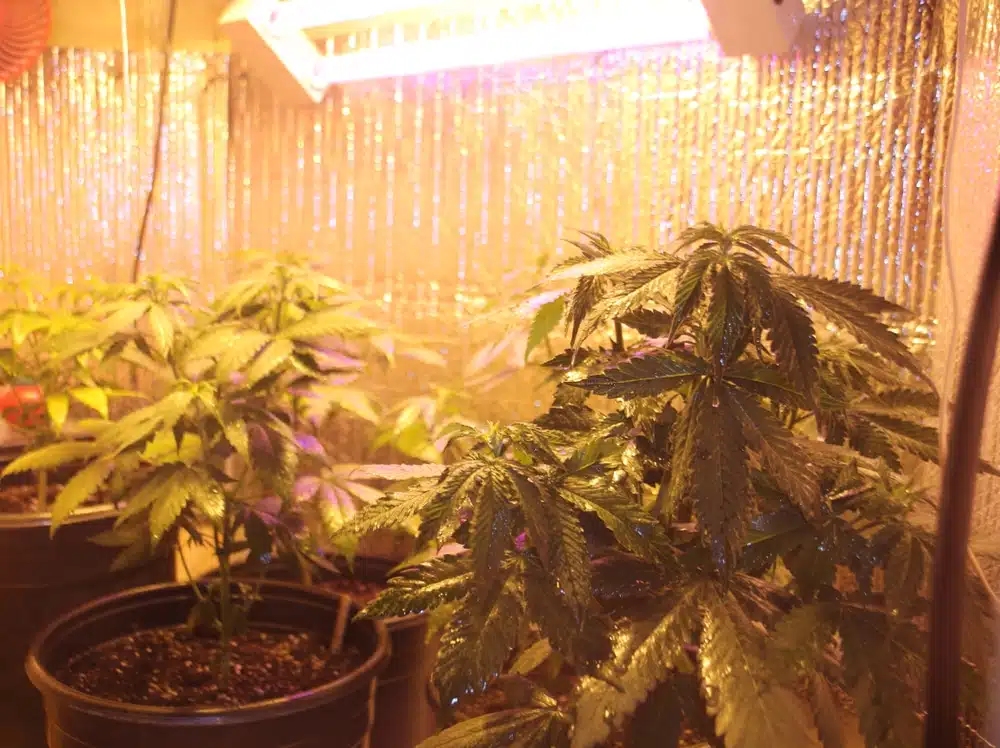
Examples of compact or commonly selected indoor options may include:
These strains tend to stay compact while still producing strong yields in controlled environments.
Growers working with strict vertical limits can use our guide to cannabis plant height to compare how genetics, vegetative time, and flowering stretch affect final size.
Lighting for Apartment Cannabis Cultivation
Lighting plays a major role in both plant health and environmental control.
Most modern apartment growers use LED systems because they:
- Produce less heat
- Consume less electricity
- Operate quietly
- Offer adjustable spectrum control
Heat reduction is especially important in small spaces, where temperature buildup can quickly become a problem.
LED lighting also allows growers to maintain stable environmental conditions without overloading their ventilation systems.
Managing Humidity and Temperature in Small Spaces
Humidity control is one of the most critical aspects of apartment growing. Small enclosed environments can quickly become too humid, especially during flowering.
Excess humidity can lead to:
- Mold formation
- Bud rot
- Reduced terpene quality
- Poor airflow inside the canopy
Most indoor growers aim for moderate humidity during vegetation and lower humidity during flowering.
Maintaining Stability
In small apartment setups, consistency matters more than precision. Large fluctuations in humidity or temperature can stress plants more than slightly imperfect numbers.
Air circulation plays a key role here. Proper airflow ensures moisture does not accumulate in stagnant pockets inside the grow space.
Common Apartment Growing Mistakes
Many beginners face similar challenges when starting apartment cultivation.
The most common mistakes include:
- Poor ventilation planning
- Overcrowding the grow space
- Ignoring heat buildup
- Weak odor control systems
- Choosing overly large strains for small spaces
Most of these problems begin when growers scale too quickly instead of stabilizing the environment first. Too many plants, long vegetative periods, or unmanaged branch growth can create a crowded canopy that restricts airflow and reduces usable light.
If the canopy is already crowding the light or restricting airflow, our guide to recognizing and correcting overgrown cannabis plants explains the warning signs and practical options in more detail.
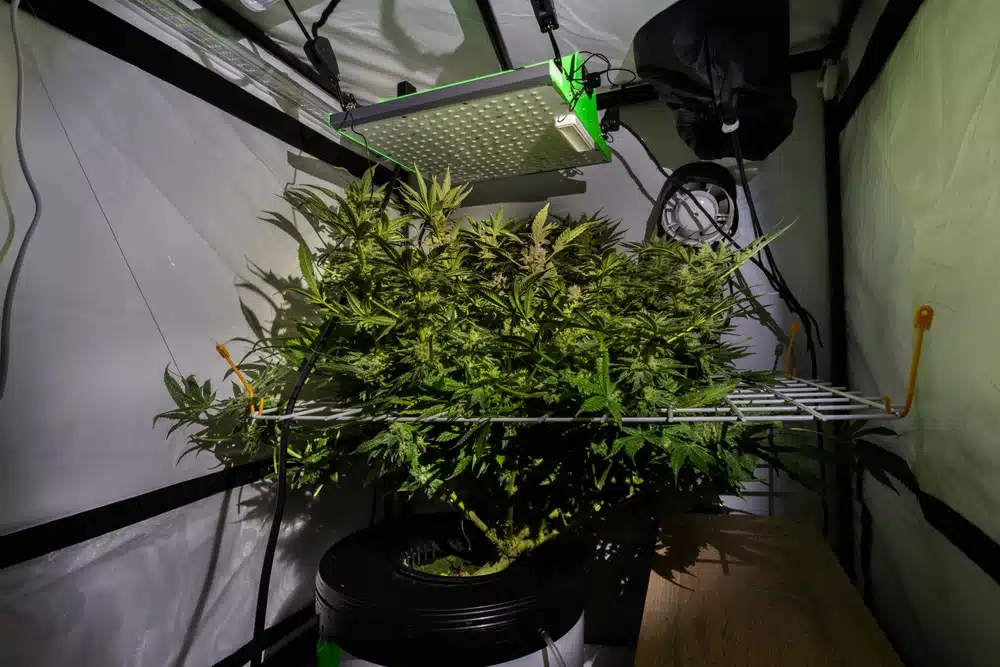
Experienced growers usually start small, refine airflow and environmental control, then expand gradually.
Final Thoughts
Growing cannabis in an apartment is absolutely possible when environmental control is prioritized over scale.
The most successful growers focus on:
- Stable airflow
- Proper odor filtration
- Compact plant selection
- Consistent humidity and temperature
- Quiet, low-impact equipment
Once these systems are balanced, apartment cultivation becomes a predictable and highly efficient way to grow indoors.
Rather than trying to replicate large grow rooms, the key is building a controlled micro-environment that fits within real living conditions while maintaining plant health and discretion.

Alexander Broodryk is a very skilled grower and has been writing about his experiences online for many years. With over 5 years in the Cannabis Industry Alexander is not only engaging with many of his audiences but also informational. Alex has a lot of writings about Cannabis all over online and we are very happy to have him here at The Seed Fair helping to contribute his well thorough content for our website. He is dedicated to educating readers on the latest developments and trends in this rapidly evolving market. Check out his biography under our Author pages at Alexander Broodryk, Author at The Seed Fair.