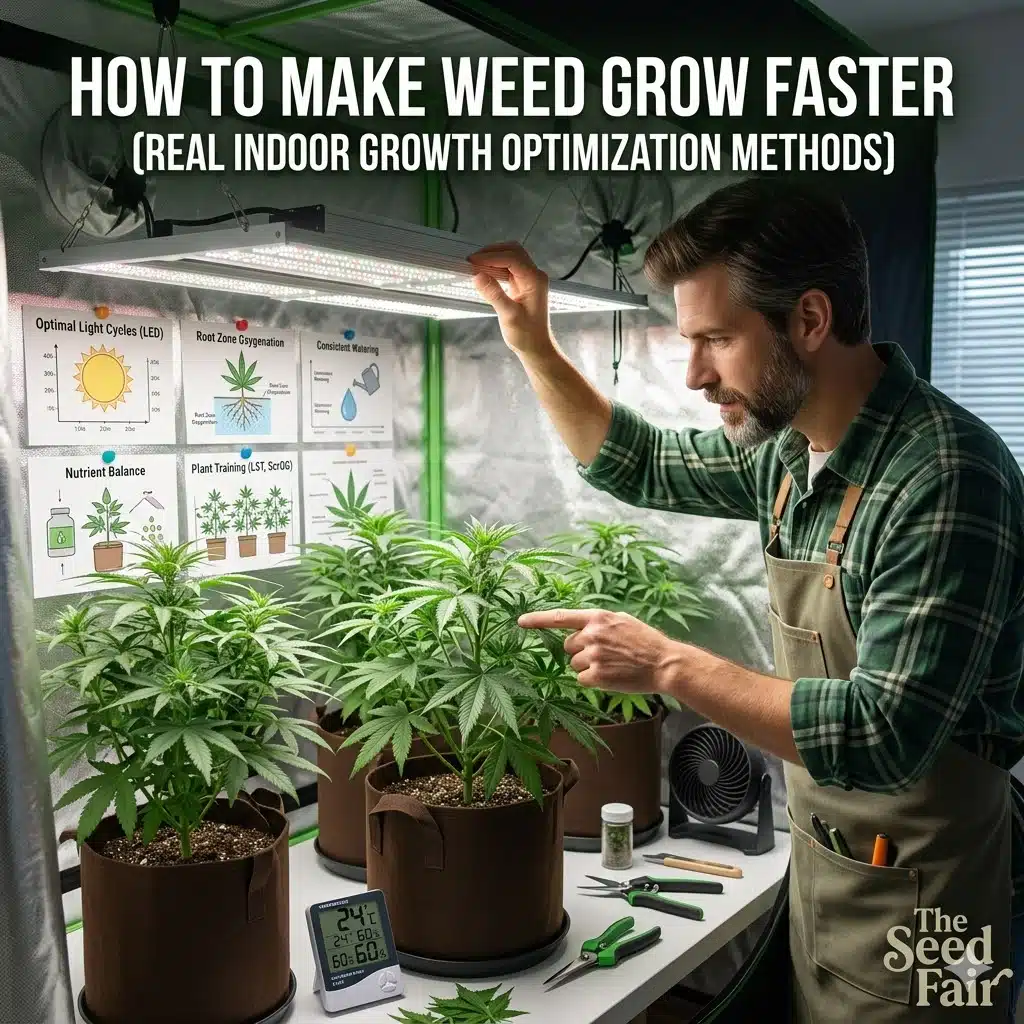
How to Make Weed Grow Faster (Real Indoor Growth Optimization Methods)
Jun
Speeding up cannabis growth is possible, but it’s important to understand what “faster” actually means in practice. You are not changing the plant’s genetics — you are optimizing the environment so the plant spends less time under stress and more time in active growth.
From real indoor cultivation experience, the fastest plants are not the ones pushed the hardest — they are the ones grown under the most stable conditions.
Growth rate is closely tied to the broader indoor environment. Our complete guide to indoor cannabis cultivation explains how lighting, temperature, airflow, humidity, root health, and canopy management work together across the full grow cycle.
What Actually Controls Cannabis Growth Speed?
Cannabis growth rate is influenced by genetics, light availability, temperature, root-zone conditions, water management, nutrition, and the plant’s current stage of development. When one of these factors becomes limiting, overall growth may slow even if the rest of the environment appears healthy.
Genetics establish the plant’s baseline vigor and development pattern, while environmental conditions determine how closely it can approach that potential. Indoors, many correctable growth problems come from weak light, saturated root zones, temperature instability, or nutrient stress.
The main growth-limiting factors include:
- Light intensity and consistency
- Root oxygen availability
- Temperature swings
- Overwatering or poor drainage
- Weak airflow or CO₂ exchange
- Nutrient imbalance or buildup
Correcting the limiting factor often improves development without increasing every input at once.
When light, nutrition, and environmental conditions are already adequate, adding more input can create additional stress rather than faster growth.
Growing Indoors vs Outdoors (Speed Difference Explained)
Indoor cultivation is generally faster than outdoor growing because conditions are controlled.
Outdoors, cannabis depends on seasonal sunlight, weather changes, and unpredictable humidity shifts. Even healthy plants experience slowdowns during cloudy periods or temperature drops.
Indoors, growers can maintain:
- Fixed light schedules
- Stable temperature ranges
- Controlled humidity
- Continuous airflow systems
The main indoor advantage is predictability. Light schedules, temperature, humidity, and air exchange can be managed without waiting for seasonal conditions to improve. However, controlled conditions do not automatically guarantee faster growth; poor root-zone management, excessive heat, or weak lighting can still slow an indoor plant significantly.
However, speed indoors still depends heavily on how well the system is managed.
How to Make Cannabis Grow Faster Indoors
If your goal is faster cannabis growth indoors, the focus should be on reducing stress and increasing metabolic efficiency — not simply “feeding more” or increasing light blindly.
1. Optimize your light cycle (most important factor)
Light is the engine of cannabis growth. In indoor environments, inconsistent lighting is one of the most common reasons plants stall.
For vegetative growth:
- An 18/6 schedule is commonly used during vegetative growth
- Stable daily timing matters more than intensity spikes
From experience, plants grow noticeably faster when light schedules never shift, even by small amounts.
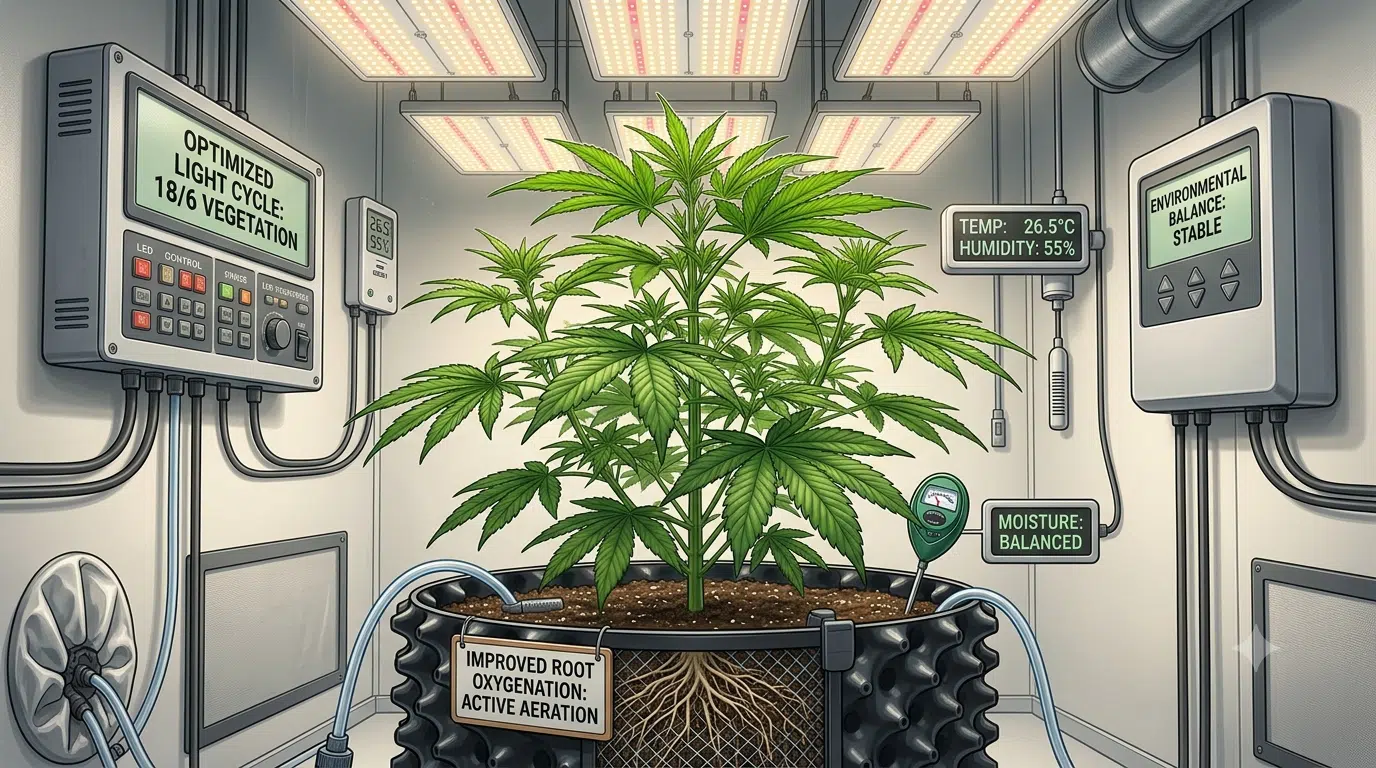
LED systems are commonly used indoors because they can provide efficient, stable output while producing less radiant heat than many traditional HID setups.
2. Maintain stable temperature and humidity
Excessive heat, low humidity, or repeated environmental swings can reduce growth by disrupting transpiration and increasing plant stress.
Ideal ranges:
- Vegetative stage: warm and moderately humid
- Flowering stage: slightly cooler and drier
Repeated temperature swings can disrupt transpiration and increase stress, particularly when daytime and nighttime conditions vary sharply.
3. Improve root oxygenation
Healthy roots = fast growth.
This is one of the most underestimated factors in indoor cultivation.
Roots need:
- Oxygen
- Proper drainage
- Balanced moisture (not constant saturation)
Overwatering is one of the most common causes of slow growth in small indoor setups.
Improving drainage and avoiding prolonged saturation can help restore healthier root-zone conditions when excess moisture is limiting development.
Choosing Genetics That Grow Faster
Genetics set the baseline for vigor, flowering duration, final size, and overall life-cycle speed. A cultivar that finishes quickly is not necessarily one that produces the fastest vegetative growth, so these traits should be considered separately.
Fast-growing cannabis types include:
- Autoflowering cultivars with relatively short seed-to-harvest timelines
- Photoperiod cultivars selected for shorter flowering periods
- Hybrids bred specifically for reduced finishing times
Autoflowering plants begin flowering according to age rather than a 12/12 light-cycle change, while some photoperiod cultivars are specifically selected for shorter flowering periods. These are different traits, so growers should compare total life-cycle length rather than assuming every compact or Indica-dominant plant will finish quickly.
However, faster does not always mean lower quality. Many modern autoflowers produce strong terpene profiles when grown in stable environments.
Training Techniques That Speed Up Growth
Plant training does not directly “speed up genetics,” but it improves how efficiently the plant uses energy.
This often creates the appearance of faster growth because development becomes more structured and efficient.
Effective training methods:
- Low-stress training (LST)
- Topping early in vegetative stage
- Canopy leveling (ScrOG style)
- Strategic defoliation
Training can improve canopy shape and light distribution, especially in smaller indoor environments where unmanaged vertical growth and branch crowding can become difficult to control.
If the canopy has already exceeded the available grow space, our guide to recognizing and correcting overgrown cannabis plants covers the warning signs and practical options in more detail.
Hydroponics vs Soil (Which is Faster?)
Hydroponic systems can accelerate cannabis growth because nutrients are delivered directly to the roots in a controlled way.
Why hydroponics can be faster:
- Direct nutrient availability
- Higher oxygen exposure in root zone
- Faster nutrient uptake cycles
- More precise environmental control
However, hydroponics is less forgiving. Small mistakes in pH or nutrient balance can slow growth quickly.
Soil systems are slower but more stable, especially for beginners.
Hydroponic systems can support faster development when they are managed precisely, while soil-based systems may provide more buffering against short-term feeding or pH fluctuations.
Nutrient Balance and Growth Acceleration
One of the biggest misconceptions is that more nutrients = faster growth.
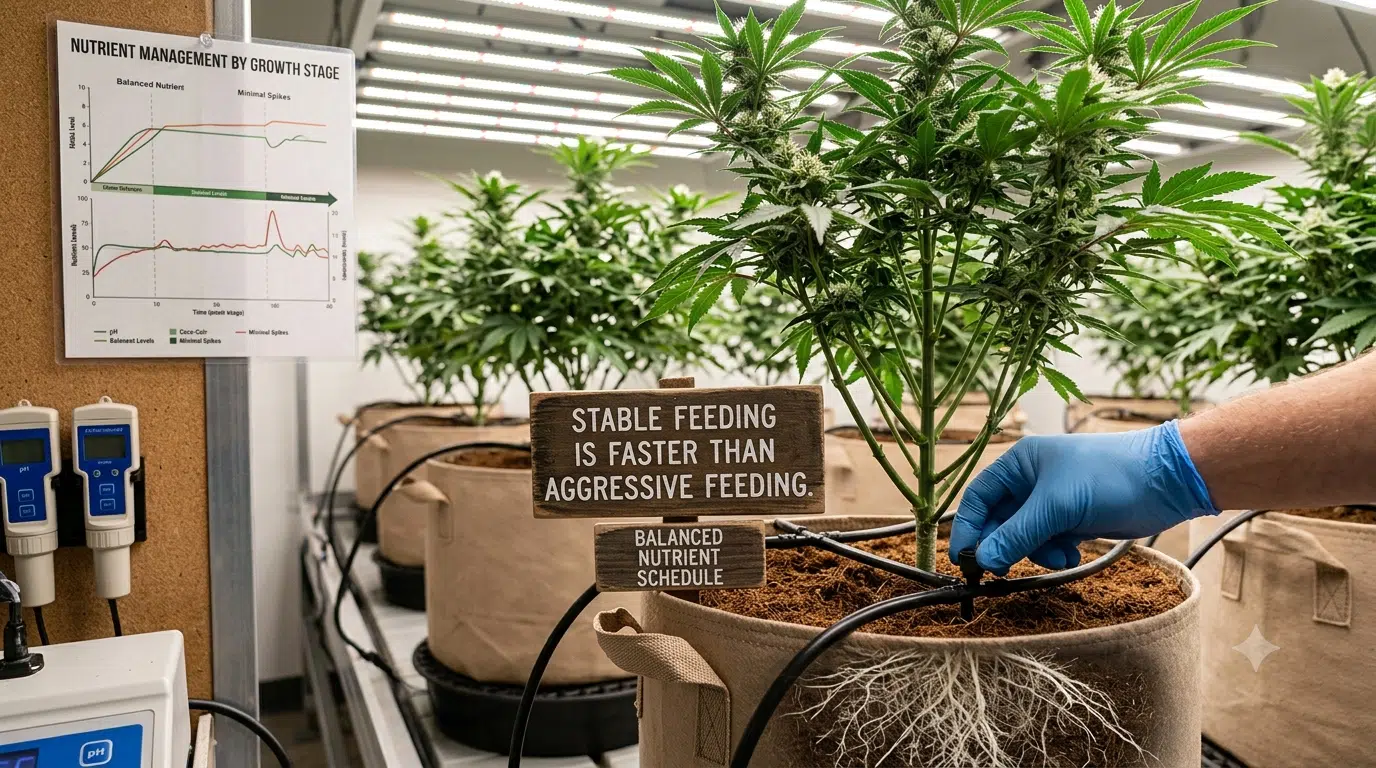
In reality, excess nutrients often slow plants down.
What actually works:
- Balanced feeding schedule
- Avoiding salt buildup
- Adjusting nutrients by growth stage
- Keeping root zone clean and active
Cannabis growth slows immediately when the plant has to spend energy recovering from nutrient stress.
Stable feeding is faster than aggressive feeding.
Pruning and Energy Redistribution
Pruning is not just about shaping the plant — it directly affects growth efficiency.
By removing unnecessary or damaged leaves, the plant redirects energy toward healthy growth points.
Benefits of pruning:
- Better light penetration
- Improved airflow
- Reduced energy waste
- Faster canopy development
From real cultivation experience, pruning often triggers a noticeable “growth surge” within a few days because the plant reallocates resources efficiently.
Ideal Temperature and Humidity for Faster Growth
Environmental consistency is one of the strongest predictors of growth speed.
When conditions remain stable, cannabis does not need to recover from stress and can grow continuously.
Recommended ranges:
- Temperature: ~21–27°C (70–80°F)
- Humidity:
- Seedlings: 65–70%
- Vegetative: 40–70%
- Flowering: 30–50%
These ranges align with the indoor environmental control principles in the main cannabis cultivation pillar page.
Common Mistakes That Slow Growth
Most growers trying to speed up cannabis unintentionally slow it down.
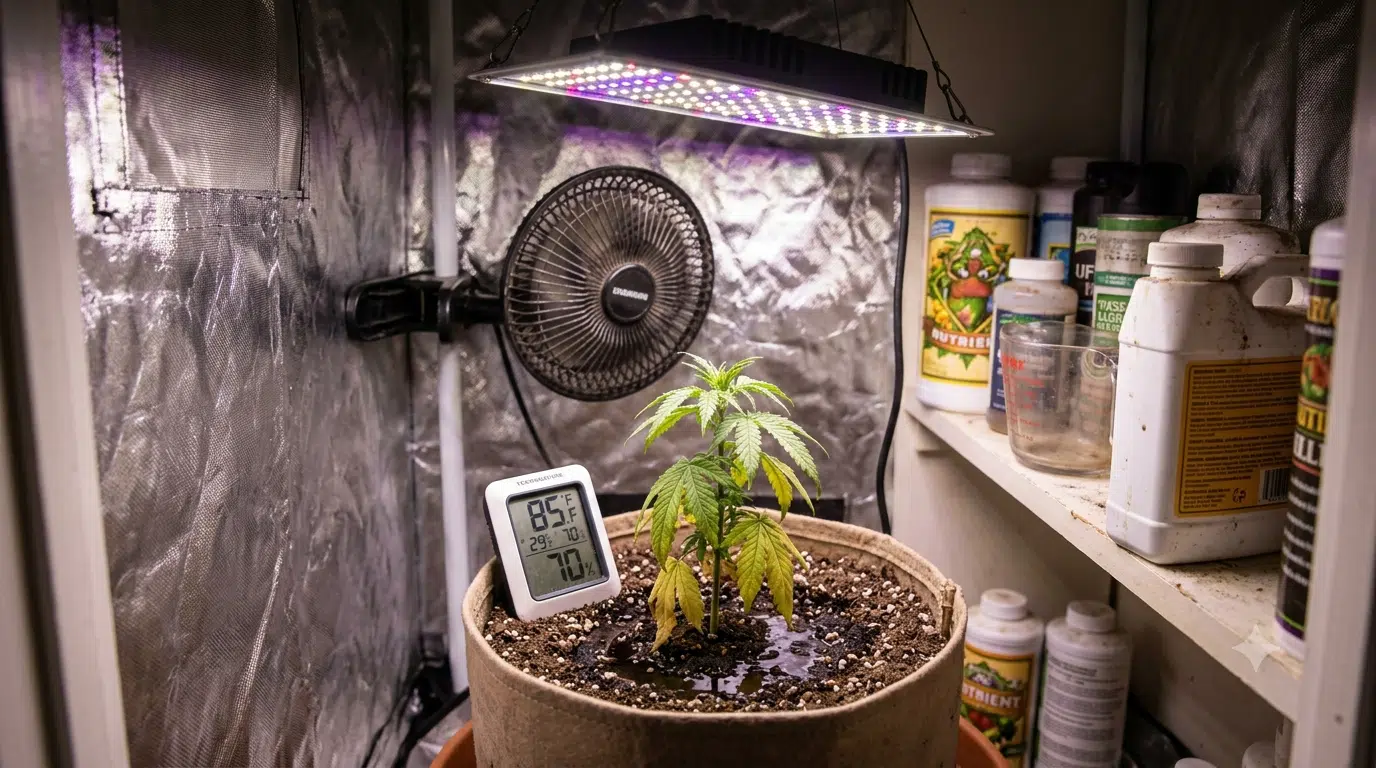
Common issues include:
- Overwatering small plants
- Inconsistent light schedules
- Heat stress in confined spaces
- Poor airflow and stagnant air
- Nutrient overfeeding
Many of these mistakes become even more common in confined environments where airflow, humidity, and plant size are harder to manage.
In practice, fixing these issues alone often results in faster growth without changing anything else.
Final Takeaway
Making cannabis grow faster is not about forcing the plant — it is about removing friction from its environment.
When lighting, airflow, temperature, humidity, and root health are stable, cannabis naturally accelerates its growth cycle.
From real indoor cultivation experience, the fastest results always come from simplicity and consistency, not aggressive manipulation.

Alexander Broodryk is a very skilled grower and has been writing about his experiences online for many years. With over 5 years in the Cannabis Industry Alexander is not only engaging with many of his audiences but also informational. Alex has a lot of writings about Cannabis all over online and we are very happy to have him here at The Seed Fair helping to contribute his well thorough content for our website. He is dedicated to educating readers on the latest developments and trends in this rapidly evolving market. Check out his biography under our Author pages at Alexander Broodryk, Author at The Seed Fair.