Can You Overgrow Marijuana? (Causes, Risks & How to Fix It)
Jun
Overgrowth in cannabis is something almost every indoor grower runs into at some point. It usually doesn’t happen overnight—it builds slowly when plant growth is left unchecked, environmental balance is slightly off, or the canopy is not managed early enough.
In indoor cultivation, overgrowth is less about plants “getting too big” and more about losing control of structure inside a limited space.
When I first dealt with it, I didn’t realize the issue wasn’t just plant size—it was airflow, light distribution, and canopy density breaking down all at once. Once those systems fail, plant health starts declining quickly. These interconnected factors are covered in our comprehensive indoor cannabis cultivation guide, which explains how environmental control affects every stage of plant growth.
This is why overgrowth is not just a visual problem—it’s a full environmental imbalance inside your grow space.
What Does Overgrowth in Cannabis Actually Mean?
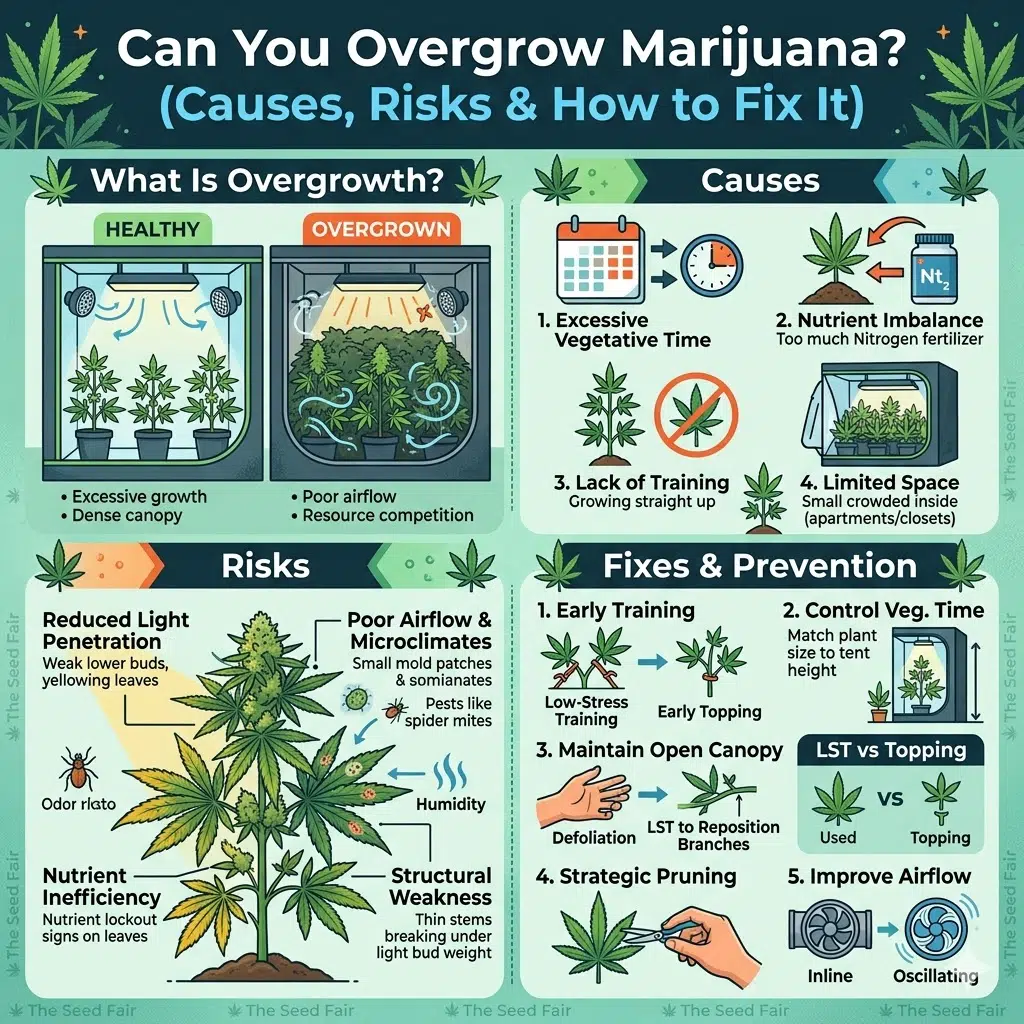
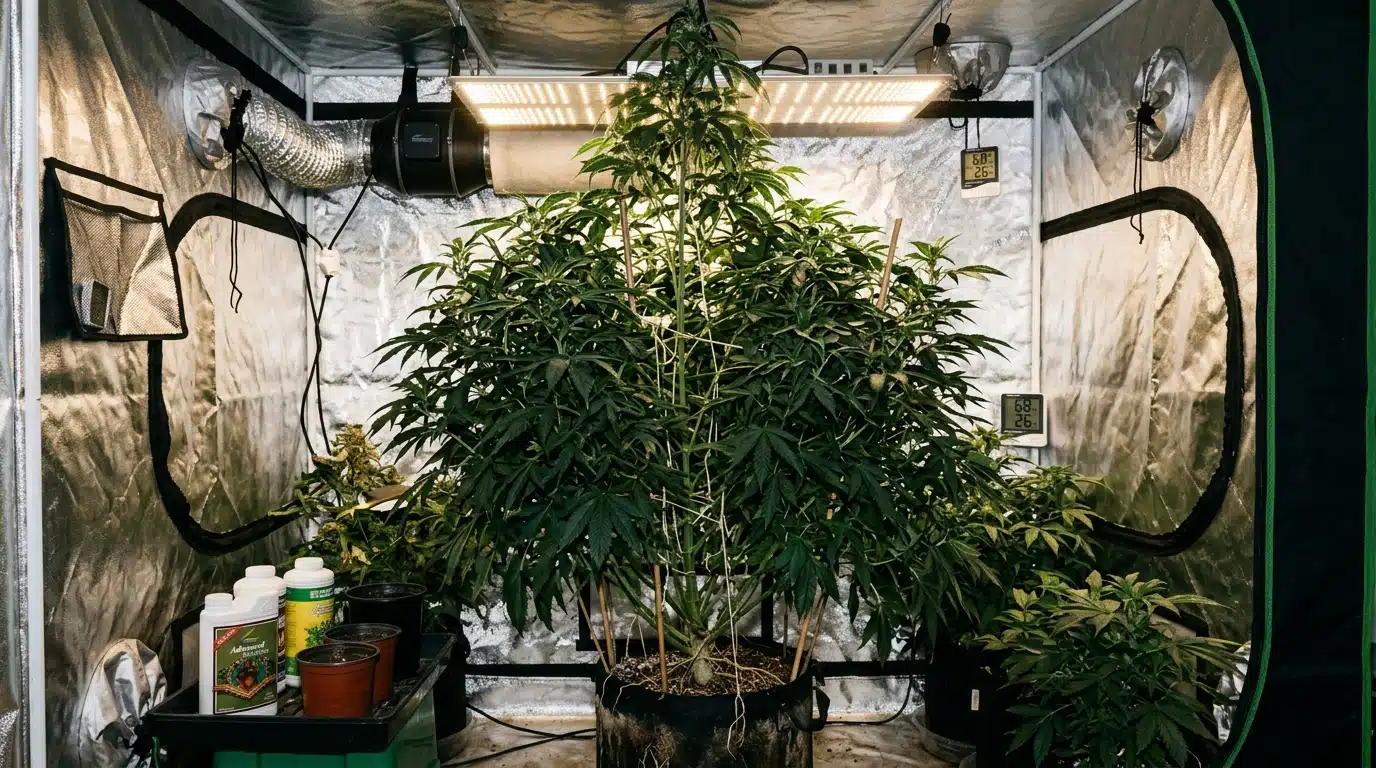
Overgrowth refers to a condition where cannabis plants exceed the manageable structure of their environment, leading to:
- Excessive vertical or horizontal growth
- Dense, unmanageable canopy formation
- Light not reaching lower bud sites
- Poor airflow inside the plant structure
- Competition between branches for resources
In indoor systems, overgrowth usually happens when vegetative growth is allowed to continue too long without canopy shaping or space planning.
It is closely tied to the principles of indoor environmental control, where space, light, and airflow must stay balanced across the entire grow system.
What Causes Cannabis Overgrowth?
Overgrowth is rarely caused by a single mistake. It is usually a combination of environmental and structural decisions that compound over time.
1. Excessive Vegetative Growth Time
The longer cannabis stays in vegetative stage, the more structure it builds.
Without training, this leads to:
- Tall, unstable plants
- Overlapping branches
- Dense canopy layers
2. Overfeeding or Nutrient Imbalance
Too much nitrogen during early growth can push excessive leaf and stem development.
This often results in:
- Weak structural balance
- Rapid but uncontrolled vertical growth
- Delayed flowering transition
3. Lack of Training or Canopy Control
Indoor cannabis must be shaped intentionally.
Without training techniques like topping or LST, plants naturally grow upward and compete for light.
4. Limited Space (Small Grow Environments)
Overgrowth is extremely common in:
- Grow tents
- Closets
- Apartment setups
Once the canopy fills the available space, airflow and light distribution can deteriorate quickly. This is especially common in compact grow tents and closet setups, where small planning mistakes leave little room for flowering stretch or canopy expansion.
Effects of Overgrowth on Cannabis Plants
Once overgrowth begins, the plant’s internal environment starts breaking down.
Reduced Light Penetration
Upper leaves block light from reaching lower bud sites, resulting in:
- Weak lower buds
- Uneven ripening
- Lower overall yield efficiency
Poor Airflow and Microclimates
Dense canopies can trap humidity and heat within the plant structure, creating stagnant microclimates around interior leaves and flowers. As air movement declines, the risk of moisture-related problems increases.
This increases risk of:
- Mold development
- Bud rot
- Pest infestations
Nutrient Inefficiency
Overcrowded plants compete internally for resources, leading to:
- Slower growth rates
- Nutrient lockout symptoms
- Reduced flowering performance
Structural Weakness
Overgrown plants often develop:
- Thin, stretched stems
- Poor bud support
- Branch breakage under weight
How to Prevent Cannabis Overgrowth Indoors
Preventing overgrowth is always easier than correcting it later.
From experience, the best prevention strategy is not one technique—it is a combination of early control + consistent canopy management.
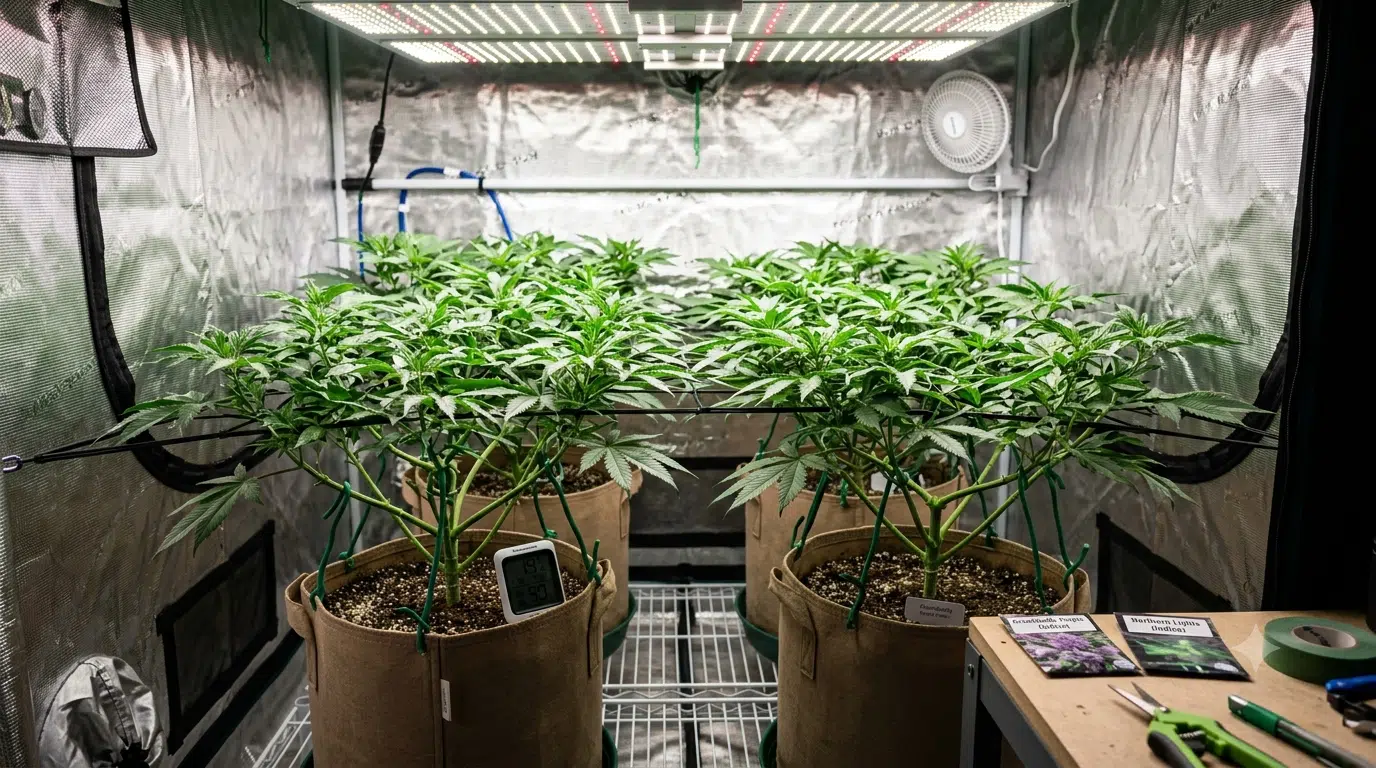
Start Training Early
The earlier you begin shaping the plant, the easier it is to control final structure.
Common early-stage techniques include:
- Low-stress training (LST)
- Early topping
- Branch spreading techniques
Control Vegetative Duration
Vegetative duration should always match the available grow space. Extending this stage gives the plant more time to build height and branch structure, which can leave insufficient room for additional stretch after flowering begins.
A common mistake is allowing plants to grow “just a bit more” until suddenly they outgrow the entire setup.
Maintain Open Canopy Structure
The goal is not maximum leaf mass—it is light accessibility.
Healthy indoor canopies should allow light and airflow to pass through multiple layers.
Match Genetics to Space
Some cultivars are naturally easier to manage in restricted spaces than others. Genetics influence branching structure, final height, internodal spacing, and the amount of stretch that occurs after flowering begins.
Growers planning around limited vertical clearance can use our guide to cannabis plant height for a deeper look at genetics, vegetative duration, and flowering stretch.
- Indica-dominant strains: compact and easier to control
- Sativa-dominant strains: stretch-heavy and space-demanding
Genetics must match your indoor environment—not the other way around.
How to Fix Overgrown Cannabis Plants
If overgrowth has already happened, recovery is still possible—but the goal shifts from expansion to correction.
1. Strategic Pruning (Defoliation)
Removing selected lower or shaded growth helps:
- Restore airflow
- Improve light penetration
- Reduce canopy congestion
But it must be done gradually to avoid stressing the plant.
2. Low-Stress Training (LST)
LST can be used mid-growth to:
- Reposition branches horizontally
- Reopen light pathways
- Reduce vertical dominance
This is one of the most effective recovery tools in indoor growing.
3. Topping for Structural Reset
Topping removes the main growth point to redistribute energy.
It helps:
- Reduce height pressure
- Create multiple colas
- Rebalance canopy structure
However, it should only be done when the plant is healthy enough to recover.
4. Improve Airflow Immediately
Once overgrowth appears, airflow becomes urgent.
Add or adjust:
- Inline fans
- Oscillating fans
- Exhaust ventilation
The goal is to eliminate stagnant air pockets inside the canopy.
LST vs Topping for Overgrowth Control
Both methods are useful, but they solve different structural problems:
- LST (Low-Stress Training): reshapes existing growth without heavy stress
- Topping: resets vertical dominance and creates branching structure
In most real indoor grows, combining both methods produces the most stable canopy long-term.
Key Insight — Overgrowth Is a Planning Issue, Not a Plant Issue
One of the biggest shifts in mindset indoor growers eventually make is this:
Overgrowth is not caused by “bad plants.”
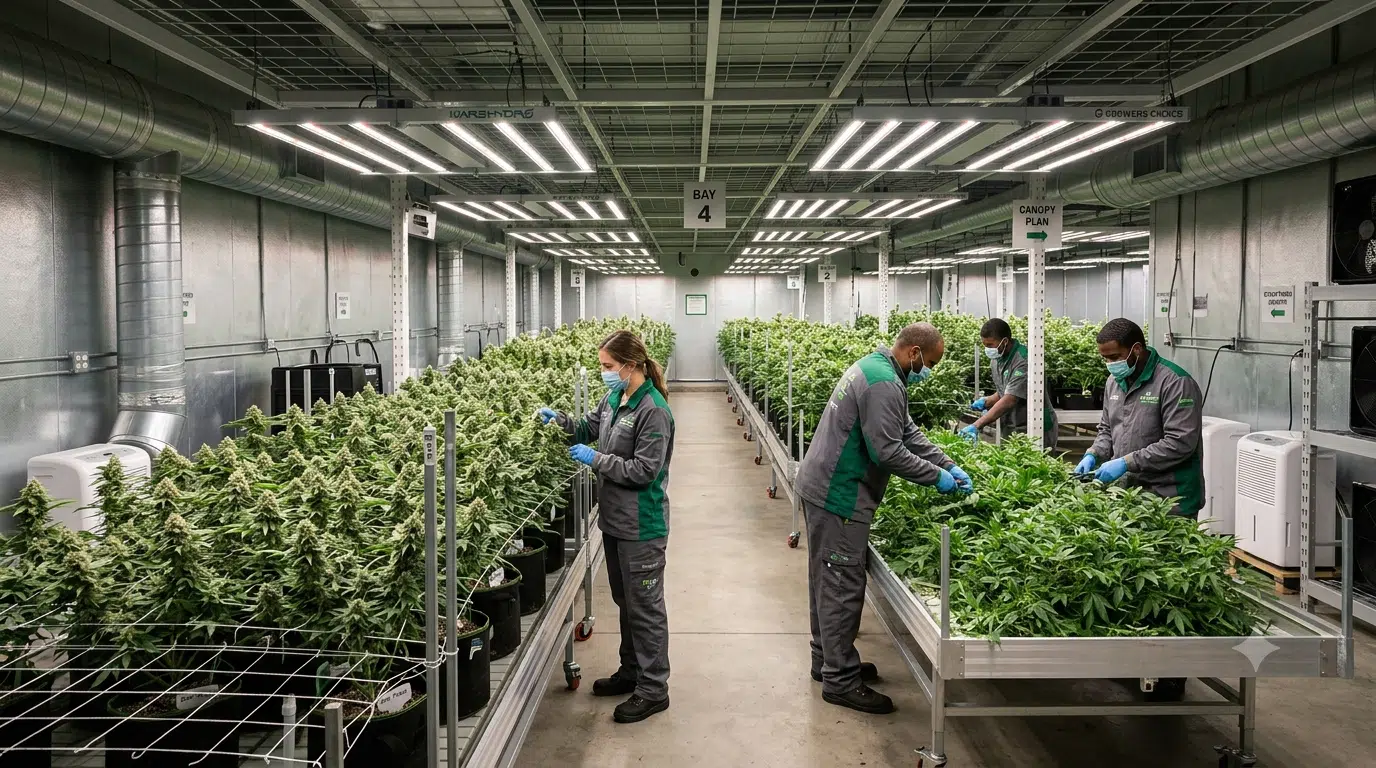
It is caused by:
- Lack of early canopy planning
- Poor space-to-plant ratio
- Inconsistent training
- Environmental imbalance
Once you treat cannabis growth as a structured system instead of natural growth, overgrowth becomes largely preventable.
Final Takeaway
Cannabis overgrowth is one of the most common indoor cultivation challenges, but it is also one of the most preventable.
When canopy structure, vegetative timing, airflow, and training techniques are aligned, plants stay balanced and productive throughout their entire lifecycle.
In controlled indoor environments, success is not about letting plants grow freely—it is about guiding growth from the beginning.

Alexander Broodryk is a very skilled grower and has been writing about his experiences online for many years. With over 5 years in the Cannabis Industry Alexander is not only engaging with many of his audiences but also informational. Alex has a lot of writings about Cannabis all over online and we are very happy to have him here at The Seed Fair helping to contribute his well thorough content for our website. He is dedicated to educating readers on the latest developments and trends in this rapidly evolving market. Check out his biography under our Author pages at Alexander Broodryk, Author at The Seed Fair.