ScrOG Method Explained: Complete Screen of Green Guide for Bigger Cannabis Yields

Jun
The Screen of Green (ScrOG) method is one of the most effective cannabis training techniques for maximizing yield in limited grow spaces.
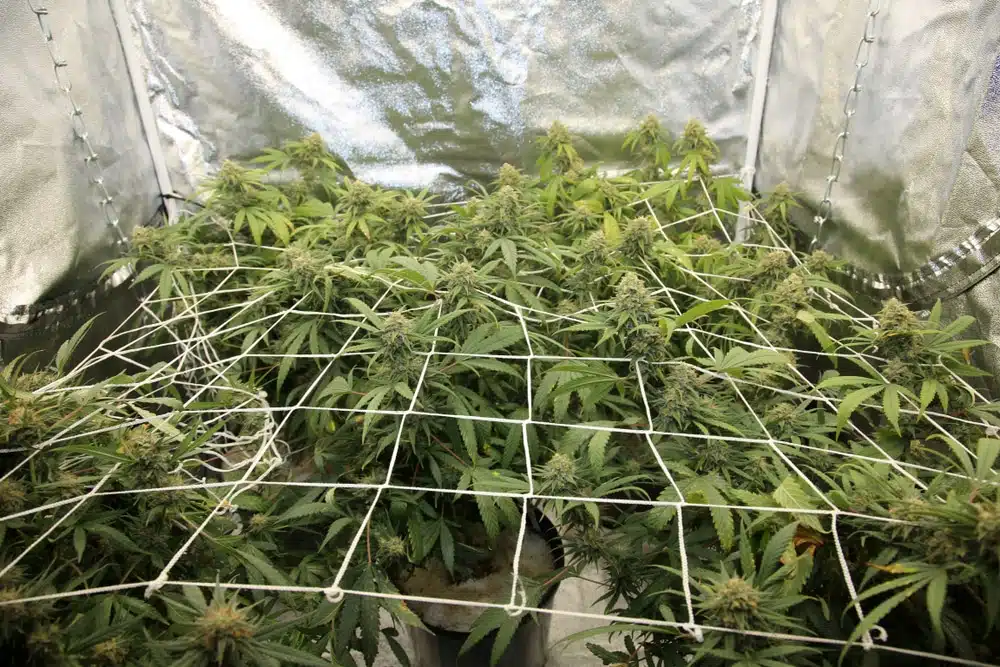
Rather than allowing plants to grow naturally upward, ScrOG uses a screen or net to train branches horizontally across the canopy. This creates an even layer of flowering sites that receive consistent light exposure.
For indoor growers looking to maximize production per square foot, ScrOG remains one of the most efficient yield optimization methods available.
What Is the ScrOG Method?
ScrOG stands for Screen of Green.
The technique uses a mesh screen, trellis net, or similar support structure positioned above the plant canopy.
As branches grow through the screen, they are gently guided sideways rather than upward.
This forces the plant to spread horizontally and fill available growing space with productive flowering sites.
The goal is simple:
Create a flat, even canopy where every bud receives similar light intensity.
Why ScrOG Increases Cannabis Yield
Cannabis plants naturally focus energy on a dominant central cola.
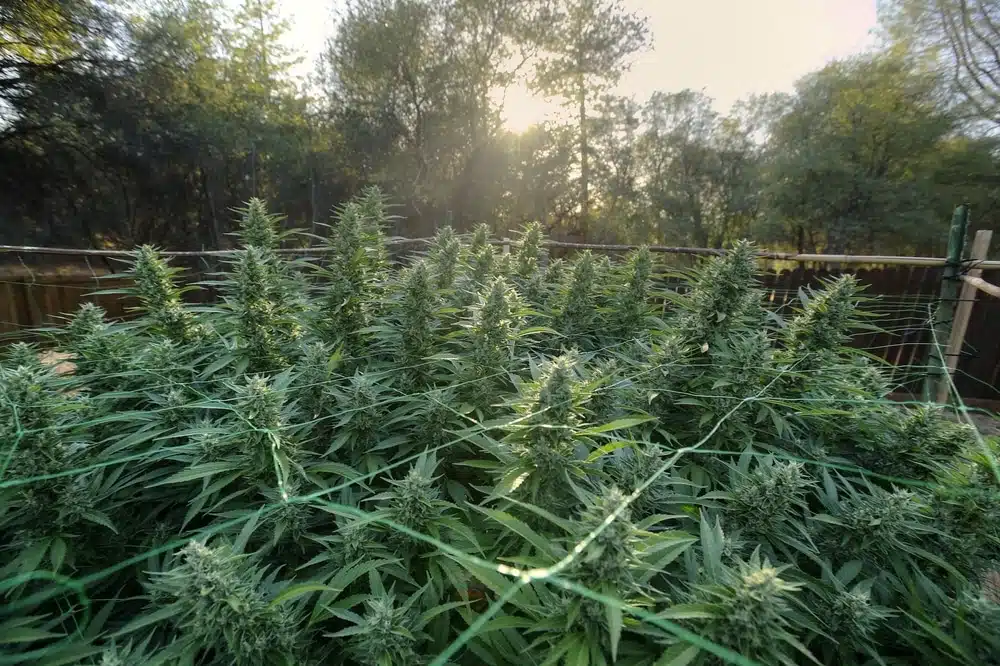
While this works well outdoors, indoor grow lights often struggle to penetrate deep into uneven canopies.
As a result:
- Top buds receive most of the light
- Lower branches become shaded
- Smaller buds develop below the canopy
- Overall efficiency decreases
ScrOG solves this problem by distributing growth evenly across the entire growing area.
Benefits include:
- Better light distribution
- Increased bud site exposure
- Improved canopy efficiency
- More consistent flower development
- Higher yields per square foot
Many growers report significantly larger harvests after implementing a properly managed ScrOG system.
How ScrOG Works
The screen acts as a training guide.
When branches grow through the mesh, they are tucked back under and redirected toward open areas.
This process continues throughout vegetative growth.
Instead of growing vertically, the plant develops laterally.
Over time, dozens of flowering sites become positioned at roughly the same height.
When flowering begins, these sites develop into a uniform canopy of buds.
When to Start ScrOG Training
ScrOG works best when started during vegetative growth.
Most growers install the screen after plants have established:
- Healthy root systems
- Multiple growth nodes
- Strong branch development
The screen is typically positioned 8–12 inches above the container, although exact placement varies depending on plant size and growing style.
Training should begin as soon as branches reach the screen.
How to Set Up a ScrOG System
A basic ScrOG setup requires:
- Trellis net or screen
- Support frame
- Plant ties (optional)
The process involves:
- Install the screen above the plant canopy.
- Allow branches to grow into the mesh.
- Gently tuck branches under the screen.
- Guide growth toward empty spaces.
- Continue filling the canopy evenly.
The objective is to maximize horizontal coverage before flowering begins.
A fully developed ScrOG canopy often resembles a living carpet of future bud sites.
ScrOG During Flowering
Training usually continues during the early flowering stretch.
Cannabis plants often double in size after flowering begins.
This period allows growers to continue filling empty sections of the screen.
Once vertical growth slows, branch movement should be minimized.
At this point, the canopy structure is largely established.
The plant can focus its energy on flower production.
ScrOG vs Low Stress Training (LST)
The two techniques are closely related.
LST focuses on bending and tying branches individually.
ScrOG uses a physical screen to achieve similar goals on a larger scale.
LST:
- Simpler setup
- Easier plant access
- Good for smaller grows
ScrOG:
- Better canopy control
- Higher space efficiency
- Often produces larger yields indoors
Many growers combine both techniques for maximum effectiveness. If you’re learning branch training for the first time, Low Stress Training (LST) is often the easiest place to start before progressing to a full ScrOG system.
ScrOG vs Sea of Green (SOG)
ScrOG and Sea of Green are often confused.
They are very different cultivation strategies.
ScrOG
- Fewer plants
- Larger individual plants
- Extensive training
- Longer vegetative period
SOG
- More plants
- Minimal training
- Short vegetative period
- Faster harvest cycles
Growers with plant count limitations often prefer ScrOG because it maximizes production from fewer plants.
Common ScrOG Mistakes
Starting Flowering Too Early
A partially filled screen wastes valuable growing space.
Many growers wait until approximately 70–80% of the screen is filled before initiating flowering.
Poor Canopy Distribution
Allowing branches to cluster in one area reduces efficiency.
The screen should be filled as evenly as possible.
Excessive Defoliation
Removing too many leaves can slow growth and reduce energy production.
Defoliation should be selective and purposeful.
Neglecting Airflow
Dense canopies can trap moisture.
Proper ventilation helps prevent mold, mildew, and humidity-related issues.
Is ScrOG Good for Autoflowers?
ScrOG can work with autoflowers, but it requires careful timing.
Because autoflowers have a limited vegetative period, there is less opportunity to recover from mistakes.
Many growers find that:
- LST is safer for beginners
- ScrOG works best with vigorous autoflower genetics
- Photoperiod plants generally respond better to extensive ScrOG training
Success depends on early canopy management and minimal stress.
How Much Yield Can ScrOG Increase?
There is no universal number because results depend on:
- Genetics
- Lighting quality
- Environmental conditions
- Grower experience
However, ScrOG consistently improves canopy efficiency, which often translates into significantly higher yields compared to untrained plants.
The greatest advantage is not necessarily larger individual buds, but a greater number of fully developed flowering sites receiving optimal light. ScrOG is one of several canopy management techniques that contribute to higher yields, alongside topping and other plant-training methods covered in our complete guide to cannabis yield and training techniques.
Final Thoughts
The Screen of Green method remains one of the most effective training systems for maximizing cannabis yields indoors.
By creating a flat, highly efficient canopy, ScrOG allows growers to make better use of available light, improve bud development, and increase overall harvest potential.
While it requires more planning and canopy management than basic training methods, the yield gains often make the extra effort worthwhile.
For more techniques on increasing yields, improving bud density, and optimizing plant structure, explore our Yield & Training Techniques guide.

Alexander Broodryk is a very skilled grower and has been writing about his experiences online for many years. With over 5 years in the Cannabis Industry Alexander is not only engaging with many of his audiences but also informational. Alex has a lot of writings about Cannabis all over online and we are very happy to have him here at The Seed Fair helping to contribute his well thorough content for our website. He is dedicated to educating readers on the latest developments and trends in this rapidly evolving market. Check out his biography under our Author pages at Alexander Broodryk, Author at The Seed Fair.