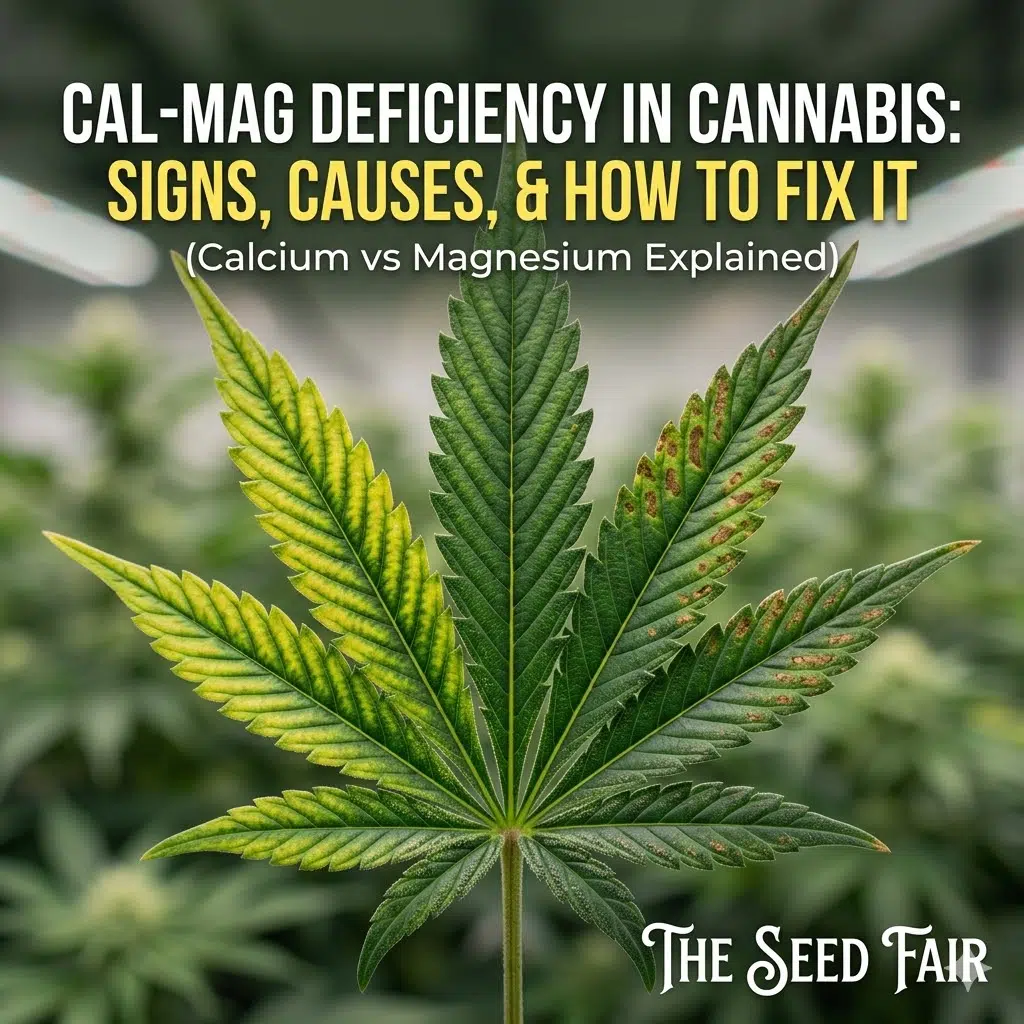
Cal-Mag Deficiency in Cannabis: Signs, Causes, and How to Fix It (Calcium vs Magnesium Explained)
Jun
Cal-Mag deficiency is one of the most frequently discussed nutrient issues in cannabis cultivation, and also one of the most misunderstood. Many growers treat it as a single problem, but in reality it involves two closely connected nutrients: calcium and magnesium.
These two nutrients support different but closely connected functions inside the plant, which is why deficiencies often appear together. When one becomes unavailable, the other is usually affected shortly after. Because the symptoms often overlap, growers commonly refer to them collectively as “Cal-Mag issues” even though calcium and magnesium perform different roles within the plant.
Understanding how calcium and magnesium function in cannabis is essential for maintaining healthy growth, strong cell structure, and efficient nutrient uptake throughout the grow cycle. These nutrients are just one part of a balanced feeding program covered in our complete guide to cannabis nutrients and feeding.
What Is Cal-Mag in Cannabis?
Cal-Mag refers to calcium (Ca) and magnesium (Mg), two secondary macronutrients that play a structural and metabolic role in plant development.
Even though they are not required in the same quantities as nitrogen, phosphorus, or potassium, they are still critical for healthy growth.
Calcium is responsible for:
- Strengthening cell walls
- Supporting root development
- Improving structural integrity of stems and leaves
- Helping regulate nutrient movement within the plant
Magnesium is responsible for:
- Chlorophyll production (green leaf pigment)
- Photosynthesis efficiency
- Energy transfer within plant cells
- Enzyme activation for growth processes
Without these two nutrients working properly, cannabis plants lose both structural strength and photosynthetic efficiency at the same time.
Why Cal-Mag Deficiencies Are So Common in Cannabis
Cal-Mag problems are especially common in indoor grows because modern cultivation systems often remove or reduce natural sources of these nutrients.
The most common causes include:
-
Reverse Osmosis (RO) Water Use
RO water is extremely pure, which is beneficial for precision feeding, but it also removes naturally occurring minerals like calcium and magnesium.
When growers rely exclusively on RO water without supplementing Cal-Mag, deficiencies can appear quickly.
-
Coco Coir Growing Medium
Coco coir naturally binds calcium and magnesium ions, making them less available to the plant unless properly supplemented.
This is why coco growers often see Cal-Mag issues earlier than soil growers.
-
Overfeeding or Nutrient Imbalance
Excess potassium, ammonium, or repeated heavy feeding can interfere with calcium and magnesium uptake. Nutrient imbalances caused by overfeeding—particularly excessive nitrogen—may contribute to these uptake problems over time. Learn more about recognizing nitrogen toxicity in cannabis and how it affects plant health.
This creates a situation where nutrients exist but remain partially inaccessible.
-
Incorrect pH Levels
pH imbalance is one of the most common indirect causes of Cal-Mag deficiency. When pH drifts outside the optimal range, calcium and magnesium may become unavailable to the roots even when they are present in the growing medium. This is a common example of cannabis nutrient lockout, where uptake problems mimic a true deficiency.
Calcium Deficiency vs Magnesium Deficiency (Key Differences)
Although they are often grouped together, calcium and magnesium deficiencies show slightly different patterns in cannabis plants.
Understanding the difference helps prevent misdiagnosis and unnecessary feeding adjustments.
Calcium Deficiency Symptoms
Calcium issues usually appear in newer growth because calcium is immobile within the plant.
Common symptoms include:
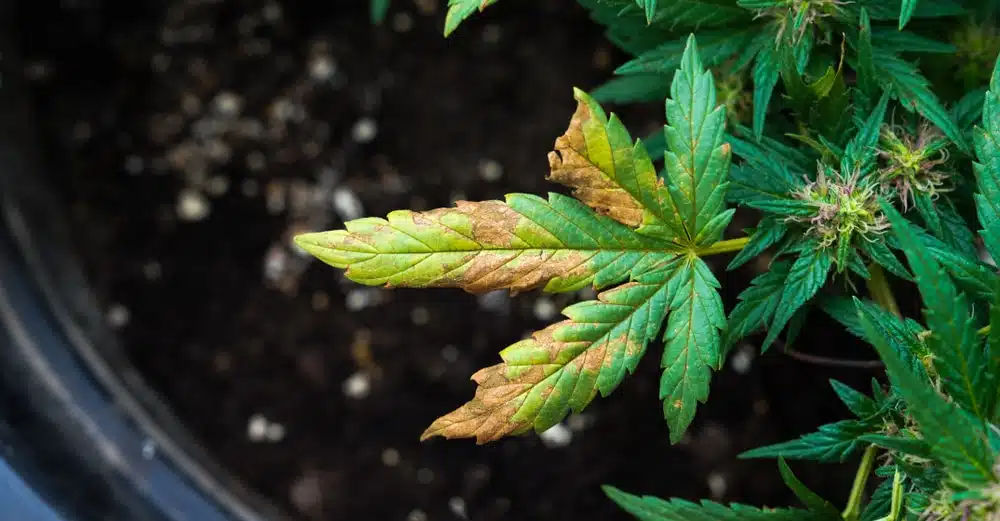
- Distorted or curled new leaves
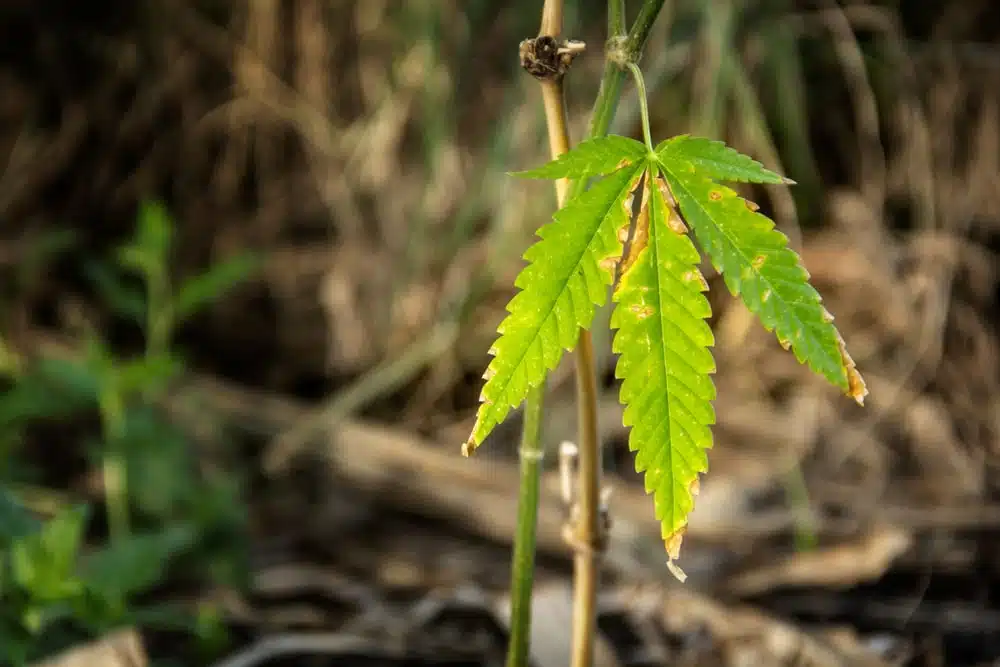
- Brown or rust-colored spotting
- Weak or hollow stems
- Stunted root development
- Slow vertical growth
Calcium problems often affect structural integrity first, meaning plants may look physically weaker even before severe discoloration appears.
Magnesium Deficiency Symptoms
Magnesium is a mobile nutrient, so the plant moves it from older leaves to support new growth.
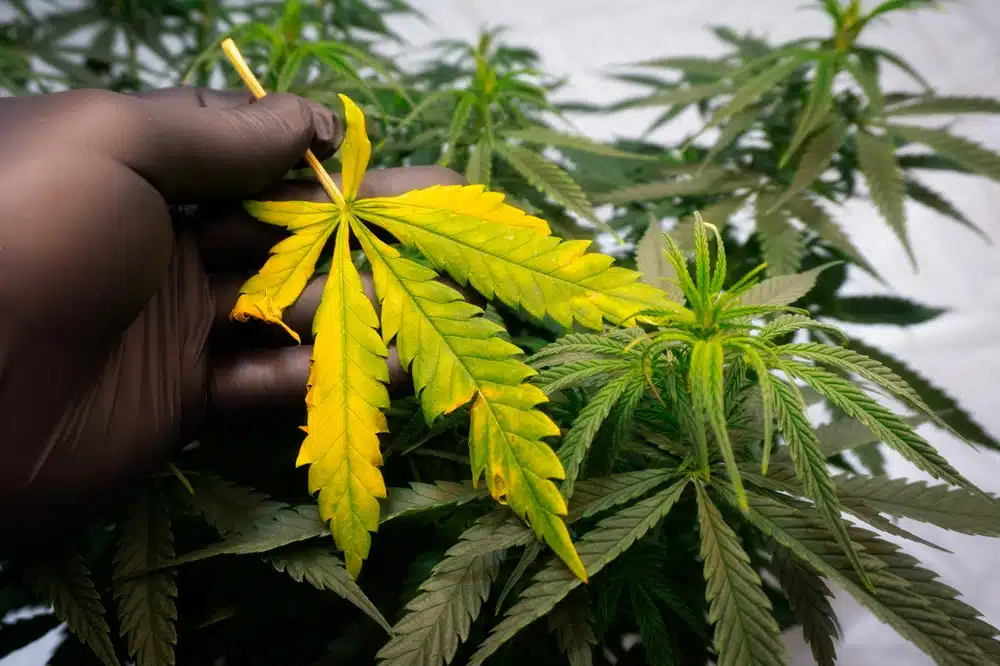
This leads to symptoms appearing in older leaves first, including:
- Yellowing between leaf veins (interveinal chlorosis)
- Gradual leaf fading from bottom upward
- Rust-colored spots in advanced stages
- Leaves becoming brittle or dry
Magnesium deficiency is closely tied to photosynthesis issues, so affected plants often lose vigor and appear less energetic overall.
Cal-Mag Deficiency in Real Growing Conditions
In real cultivation environments, Cal-Mag issues rarely appear in isolation. Instead, they often show up as mixed symptoms that resemble multiple deficiencies at once.
A plant may show:
- Yellowing leaves (magnesium-related)
- Weak stems (calcium-related)
- Slowed growth (combined effect)
- Leaf spotting across different zones
This combination is what confuses many growers and leads to overcorrection.
Instead of identifying one clear deficiency, growers often increase multiple nutrients at once, which can worsen the imbalance.
How Cal-Mag Deficiency Impacts Cannabis Growth
If left unresolved, Cal-Mag deficiencies can significantly affect plant performance throughout all growth stages.
During the vegetative stage:
- Slower structural development
- Weak stem formation
- Reduced leaf size and vigor
During flowering:
- Poor bud development
- Reduced density
- Lower resin production
- Increased susceptibility to stress
Because calcium and magnesium both support fundamental plant processes, deficiencies tend to have wide-ranging effects rather than isolated symptoms.
How to Fix Cal-Mag Deficiency in Cannabis
Fixing Cal-Mag issues requires a balanced correction approach rather than aggressive nutrient increases.
Step 1: Identify the Root Cause
Before adding supplements, it’s important to determine what caused the deficiency:
- RO water usage?
- Coco coir medium?
- pH imbalance?
- Overfeeding with other nutrients?
Without identifying the cause, the issue will likely return.
Step 2: Adjust pH First
pH correction is often the fastest way to restore nutrient availability. If calcium and magnesium are locked out due to incorrect pH, supplementation alone will not solve the issue.
Restoring proper pH allows the plant to access existing nutrients again.
Step 3: Add Balanced Cal-Mag Supplement
Once pH is stable, a balanced Cal-Mag supplement can be introduced.
The key is moderation. Overapplication can lead to nutrient competition, especially with potassium.
A gradual approach is always more effective than aggressive correction.
Step 4: Improve Root Health and Uptake
Healthy roots absorb nutrients more efficiently. Supporting root function can significantly improve recovery.
This includes:
- Avoiding overwatering
- Ensuring proper drainage
- Maintaining oxygen flow in the root zone
In hydro systems, dissolved oxygen levels play an especially important role.
Preventing Cal-Mag Issues in Cannabis
Prevention is far easier than correction when it comes to Cal-Mag balance.
Experienced growers typically:
- Use mineral-balanced water sources or reintroduce minerals to RO water
- Adjust nutrient schedules for coco coir systems
- Monitor pH regularly
- Avoid excessive nutrient stacking
- Maintain stable feeding routines
Consistency is the key factor. Cal-Mag problems often develop gradually rather than suddenly, so regular monitoring helps catch early warning signs.
Final Thoughts
Cal-Mag deficiency in cannabis is not just one problem — it is a combination of two essential nutrient imbalances that affect both structure and photosynthesis.
Once you understand how calcium and magnesium interact, many common cultivation problems become easier to diagnose and fix. Instead of reacting to leaf symptoms, successful growers focus on maintaining balance in the root zone and preventing nutrient conflicts before they start.
Strong Cal-Mag management leads to stronger stems, healthier leaves, and more efficient energy production throughout the plant — all of which directly contribute to higher-quality harvests.

Alexander Broodryk is a very skilled grower and has been writing about his experiences online for many years. With over 5 years in the Cannabis Industry Alexander is not only engaging with many of his audiences but also informational. Alex has a lot of writings about Cannabis all over online and we are very happy to have him here at The Seed Fair helping to contribute his well thorough content for our website. He is dedicated to educating readers on the latest developments and trends in this rapidly evolving market. Check out his biography under our Author pages at Alexander Broodryk, Author at The Seed Fair.