Nitrogen Toxicity in Cannabis: Signs, Causes, and How to Fix Overfeeding Nitrogen
Jun
Nitrogen toxicity is one of the most common feeding mistakes in cannabis cultivation, especially among beginners who assume that more nutrients automatically mean faster growth. In reality, nitrogen is powerful but highly sensitive in excess. When overapplied, it can disrupt plant metabolism, reduce bud quality, and create long-term growth issues that are difficult to reverse quickly.
Unlike nutrient deficiencies, which are caused by a lack of elements, nitrogen toxicity happens when the plant receives more nitrogen than it can safely process. This imbalance forces the plant into unnatural growth patterns that prioritize foliage over structure and reproductive development.
Understanding nitrogen toxicity is essential for maintaining balanced feeding routines and producing healthy plants throughout the grow cycle. It is one part of a broader nutrient management strategy covered in our complete guide to cannabis nutrients and feeding.
What Is Nitrogen Toxicity in Cannabis?
Nitrogen toxicity occurs when cannabis plants absorb excessive amounts of nitrogen, usually due to overfeeding or nutrient imbalance in the root zone.
Nitrogen is essential for vegetative growth, but it must be carefully reduced during flowering. When levels remain too high for too long, the plant continues pushing leaf and stem development at the expense of flower production.
In simple terms, the plant begins producing excessive leafy growth instead of maintaining balanced development.
While this may look healthy at first, it often signals underlying stress that will later impact bud formation and overall harvest quality.
Why Nitrogen Is Important for Cannabis Growth
Nitrogen is a core macronutrient in cannabis nutrition and plays a critical role in early development.
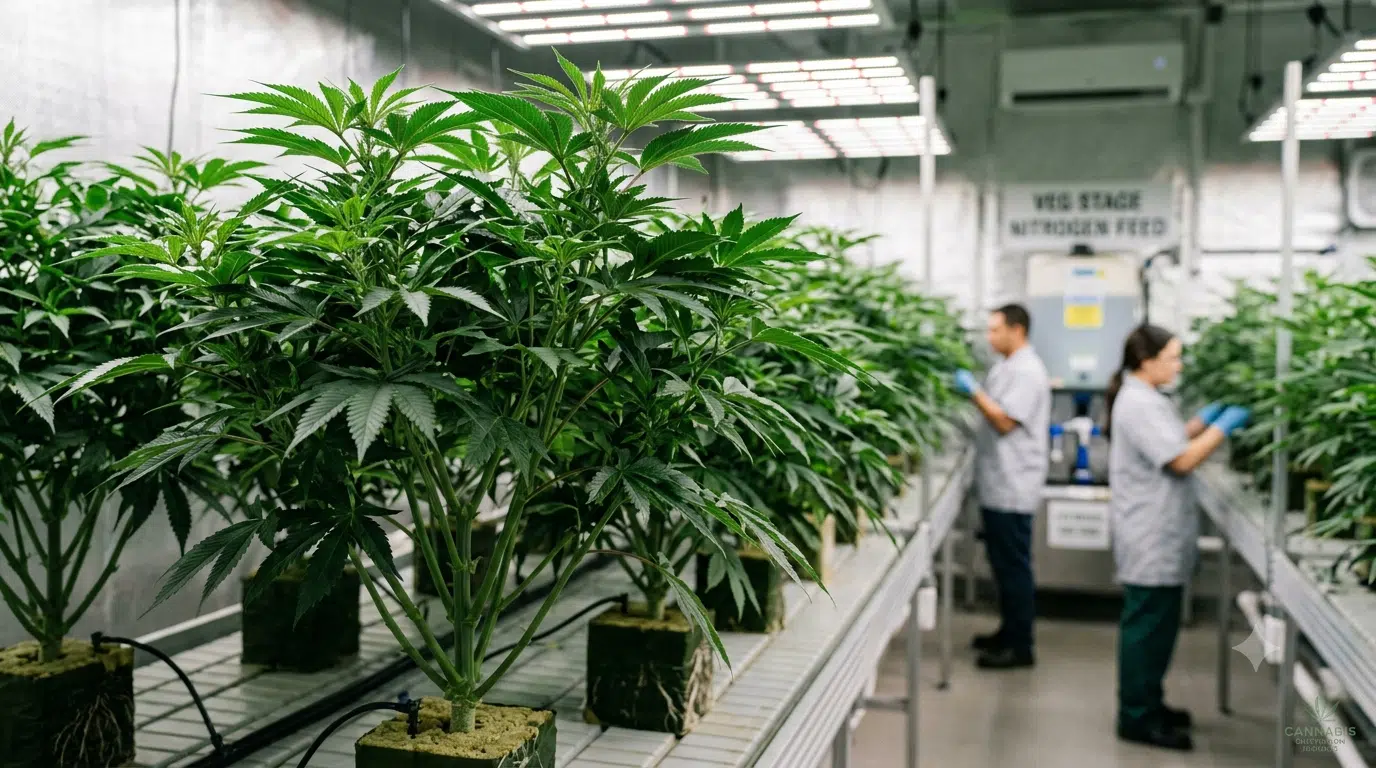
It is responsible for:
- Chlorophyll production (green pigment in leaves)
- Leaf and stem growth during vegetation
- Amino acid and protein synthesis
- Overall plant vigor and energy metabolism
During the vegetative stage, nitrogen is essential for building a strong structural foundation. However, its importance decreases significantly during flowering, when the plant shifts energy toward bud production.
This shift in nutrient demand is where many overfeeding problems first become noticeable, particularly if vegetative feeding schedules continue too far into flowering.
Causes of Nitrogen Toxicity in Cannabis Plants
Nitrogen toxicity usually develops gradually due to feeding habits or nutrient imbalance rather than a single event.
-
Overfeeding Nutrients
The most common cause is simply applying too much fertilizer. Many nutrient schedules assume ideal conditions, but real growing environments often amplify nutrient uptake, especially indoors.
When feeding is too aggressive, nitrogen accumulates in the plant faster than it can be used.
-
Using Vegetative Nutrients During Flowering
Vegetative nutrient formulas are typically high in nitrogen. If these are carried into the flowering stage for too long, plants continue producing excess foliage instead of focusing on bud development.
This is one of the most common mistakes among transitioning growers.
-
Poor Nutrient Balance (NPK Imbalance)
Even if nitrogen levels are not extremely high, an imbalance in the NPK ratio can still lead to toxicity symptoms. Excess nitrogen relative to phosphorus and potassium creates uneven metabolic activity.
-
Slow Nutrient Release Mediums
Some soils contain slow-release fertilizers that continue feeding nitrogen over time. This can make it difficult to control nutrient levels precisely, especially during flowering transitions.
Symptoms of Nitrogen Toxicity in Cannabis
Nitrogen toxicity has distinct visual and structural symptoms that experienced growers can identify early if they know what to look for.
Early Symptoms
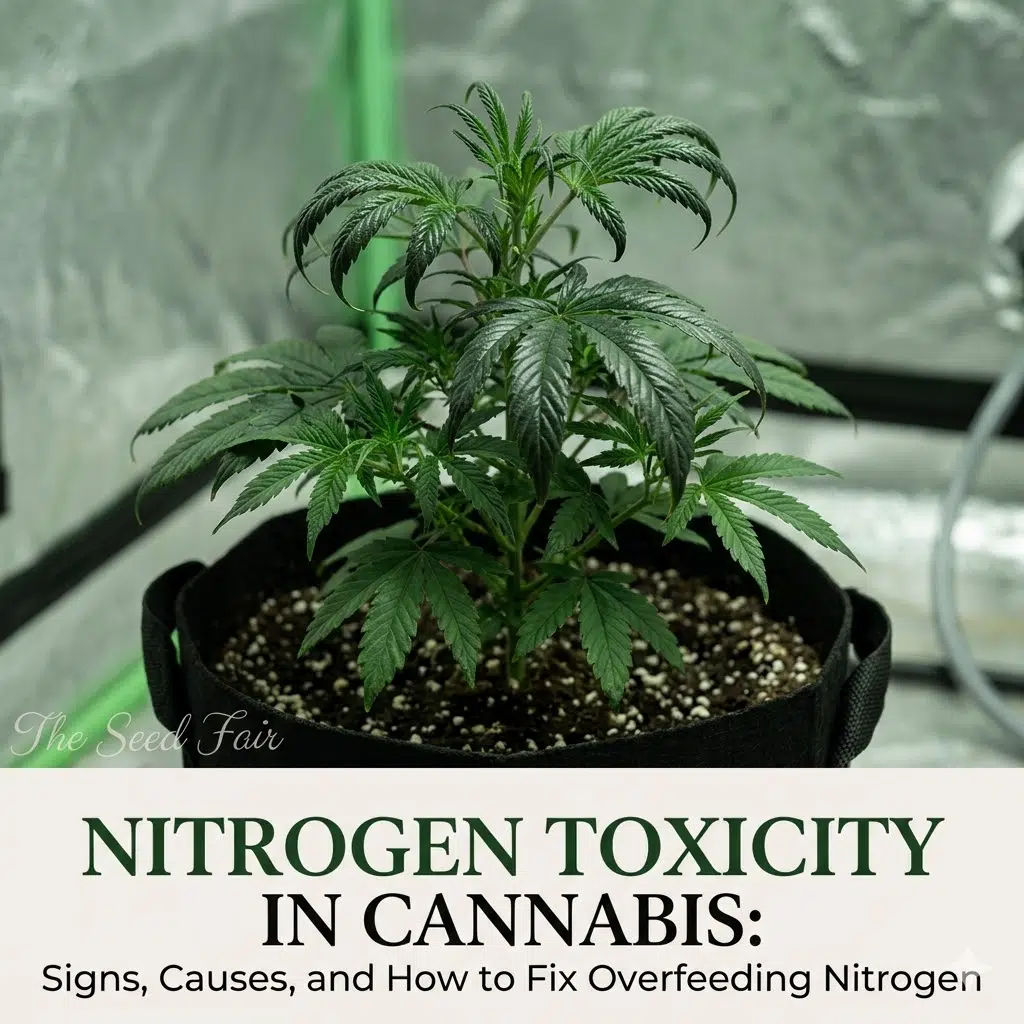
At the beginning stages, plants may appear overly lush and dark green:
- Very dark green leaves
- Thick, curled leaf tips (clawing downward)
- Rapid but unnatural leaf growth
- Slight reduction in vertical stretching
At this stage, many growers mistakenly assume the plant is extremely healthy.
Mid-Stage Symptoms
As toxicity progresses, stress becomes more visible:
- Leaves become overly stiff and heavy
- Downward clawing becomes more pronounced
- Slowed overall growth
- Reduced resistance to environmental stress
- Delayed transition into flowering behavior
The plant begins prioritizing foliage maintenance instead of structural development.
Late-Stage Symptoms
Severe nitrogen toxicity can significantly impact plant performance:
- Very dark, almost “inky” green foliage
- Leaf curling and twisting
- Weak bud development during flowering
- Delayed maturation
- Reduced aroma and resin production
At this stage, yield quality is often already compromised.
Nitrogen Toxicity During Flowering Stage (Critical Issue)
Nitrogen toxicity becomes especially problematic during flowering because cannabis plants naturally require less nitrogen at this stage.
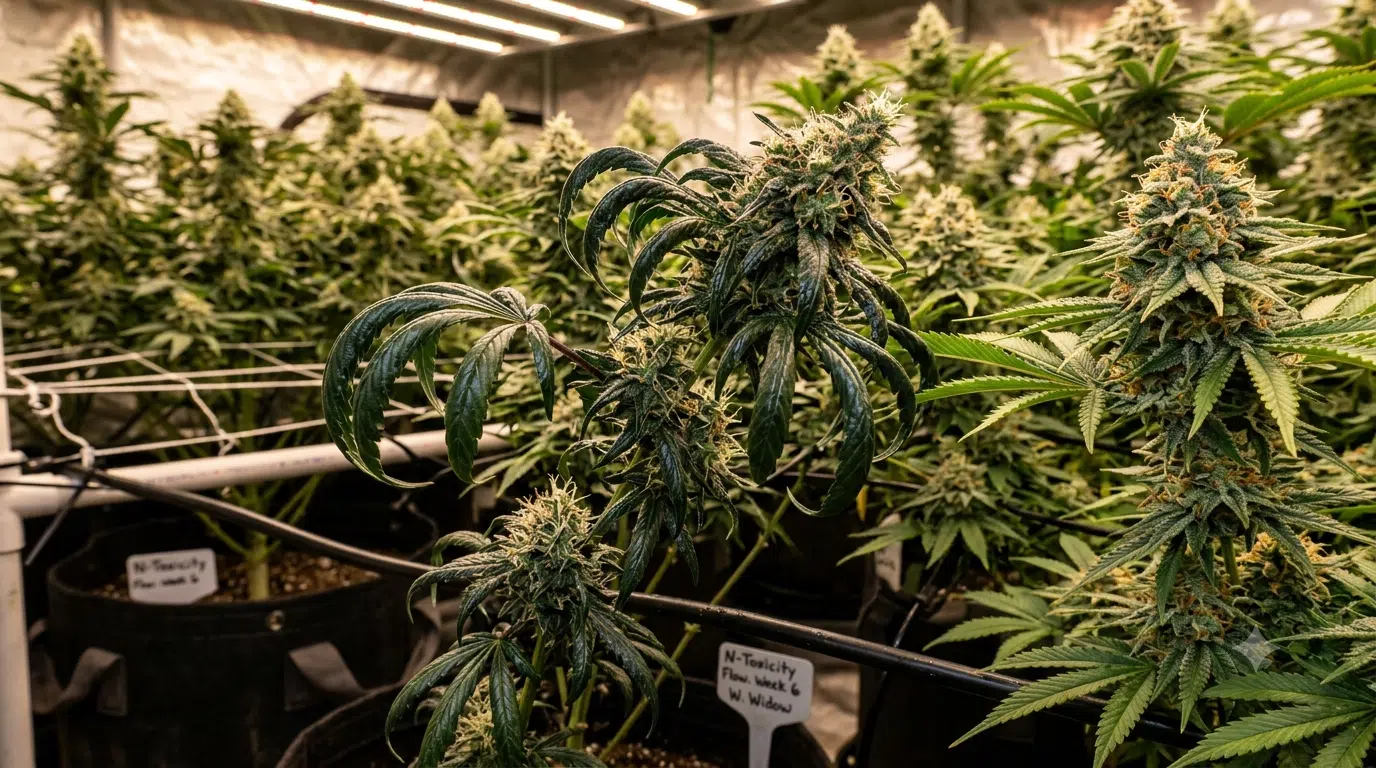
Instead, they shift focus toward:
- Phosphorus (bud formation)
- Potassium (energy transfer and flower density)
When nitrogen levels remain high during flowering:
- Buds develop slowly
- Resin production decreases
- Plants stay in “leaf-building mode”
- Overall flower quality is reduced
This is why experienced growers gradually reduce nitrogen as flowering progresses.
How to Fix Nitrogen Toxicity in Cannabis
Fixing nitrogen toxicity is primarily about reducing excess availability and restoring nutrient balance.
Step 1: Stop High-Nitrogen Feeding Immediately
The first step is to eliminate nitrogen-heavy nutrients from your feeding routine. Continuing to feed at high levels will worsen the condition.
Step 2: Flush the Root Zone (If Severe)
Flushing helps remove excess fertilizer salts from the growing medium and restore a healthier root environment. Excess salt buildup can eventually interfere with nutrient uptake and contribute to cannabis nutrient lockout, even when nutrients remain present.
This is especially useful when:
- Soil or coco is overloaded with nutrients
- Salt accumulation is present
- Plant symptoms are advanced
Flushing resets nutrient availability and allows the plant to recover gradually.
Step 3: Adjust Nutrient Ratios
After flushing or reducing feed strength, switch to a balanced or bloom-focused nutrient profile.
This reduces nitrogen intake while supporting flowering development.
The goal is not starvation — it is rebalancing.
Step 4: Improve Environmental Stability
Plants under stress recover more slowly if environmental conditions are unstable.
Supporting recovery includes:
- Stable temperature ranges
- Proper airflow
- Controlled watering habits
- Avoiding overwatering during recovery
Healthy environmental conditions allow the plant to process excess nitrogen more efficiently.
Preventing Nitrogen Toxicity in Cannabis
Prevention is far more effective than correction in nitrogen management.
Experienced growers typically follow these practices:
- Gradually reduce nitrogen during flowering transition
- Avoid overfeeding during vegetative stage
- Follow balanced NPK ratios based on growth stage
- Monitor leaf color as an early warning system
- Avoid “stacking” multiple nutrient boosters unnecessarily
One of the most important principles is timing. Cannabis does not require constant high nitrogen levels — it requires the right levels at the right stage.
Nitrogen Toxicity vs Nitrogen Deficiency (Common Confusion)
Nitrogen toxicity is only one possible cause of abnormal leaf colour and poor plant performance. Calcium and magnesium deficiencies can also produce leaf damage, although the symptoms usually develop differently. Comparing the signs of Cal-Mag deficiency in cannabis can help narrow down the underlying cause before adjusting your feeding program.
- Deficiency: pale yellow leaves, weak growth, early leaf drop
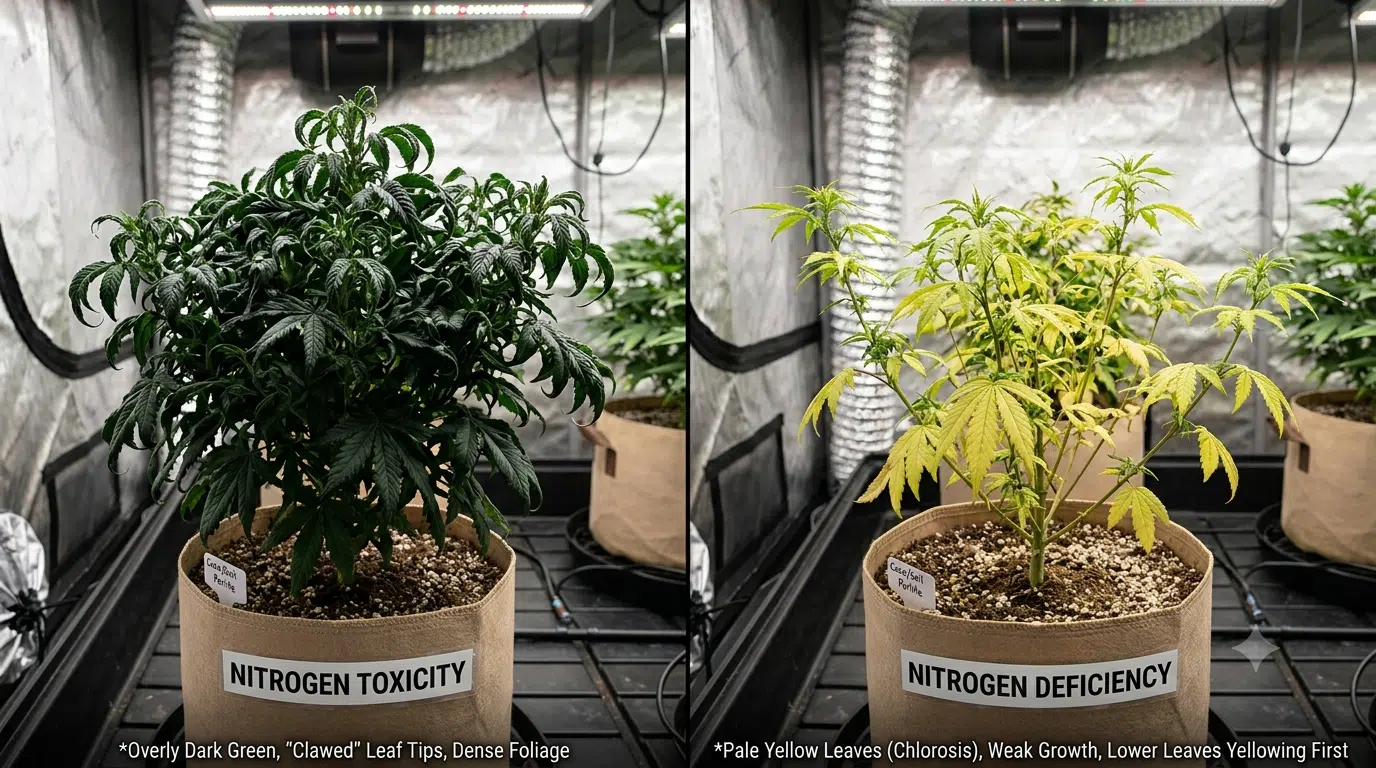
- Toxicity: dark green leaves, clawing, overly dense foliage
Understanding this difference is critical because the solutions are completely opposite:
- Deficiency → increase nitrogen
- Toxicity → reduce nitrogen
Misdiagnosis can quickly worsen plant health.
Final Thoughts
Nitrogen toxicity is a classic example of “more is not better” in cannabis cultivation. While nitrogen is essential for strong vegetative growth, excess levels disrupt the natural balance of plant development and lead to long-term performance issues.
Healthy cannabis cultivation is about controlled feeding, not aggressive feeding. Once growers learn to manage nitrogen properly across growth stages, they gain far more consistent results, improved flower quality, and better overall plant stability.
Mastering nitrogen balance is one of the key steps in moving from beginner cultivation to professional-level growing practices.

Alexander Broodryk is a very skilled grower and has been writing about his experiences online for many years. With over 5 years in the Cannabis Industry Alexander is not only engaging with many of his audiences but also informational. Alex has a lot of writings about Cannabis all over online and we are very happy to have him here at The Seed Fair helping to contribute his well thorough content for our website. He is dedicated to educating readers on the latest developments and trends in this rapidly evolving market. Check out his biography under our Author pages at Alexander Broodryk, Author at The Seed Fair.