Cannabis Nutrient Lockout: Causes, Symptoms, and How to Fix It
Jun
Cannabis nutrient lockout is one of the most frustrating problems growers encounter because it often looks like a deficiency at first glance. Plants may appear to be starving for nutrients even when the grower is feeding them correctly. The issue isn’t the absence of nutrients — it’s the plant’s inability to absorb them.
This is why many experienced cultivators describe nutrient lockout as a “hidden failure point” in cannabis feeding routines. Everything looks fine on the surface until the plant suddenly starts declining: leaves yellow, growth slows, and deficiencies appear almost overnight.
Understanding nutrient lockout is essential if you want consistent growth, especially when working toward high-yield harvests. It connects directly to pH balance, root health, watering habits, and nutrient concentration. For a broader understanding of how these factors work together throughout the grow cycle, see our complete guide to cannabis nutrients and feeding.
What Is Cannabis Nutrient Lockout?
Cannabis nutrient lockout occurs when the plant’s root system can no longer absorb nutrients from the growing medium, even though those nutrients are present.
Instead of a true deficiency, the problem is biochemical. Nutrients become “locked” in the soil or solution due to imbalanced conditions such as incorrect pH, salt buildup, or root stress.
In simple terms, the plant is sitting in a nutrient-rich environment but behaving as if it is starving.
This is why nutrient lockout is often misdiagnosed by beginners. They typically respond by adding more fertilizer, which unfortunately makes the problem worse.
Why Nutrient Lockout Happens in Cannabis Plants
Most nutrient uptake problems in cannabis come down to three interconnected factors: pH imbalance, salt accumulation, and root dysfunction. Each one affects how nutrients move from the soil into the plant.
-
pH Imbalance in the Root Zone
pH is the foundation of nutrient absorption. When the pH of soil or hydroponic solution moves outside the optimal range, certain nutrients chemically bind in forms that roots cannot absorb.
For cannabis, this usually becomes a problem when:
- Soil pH drifts too low (too acidic)
- Or rises too high (too alkaline)
Even if nutrients are available in the medium, the plant simply cannot access them.
This is one of the most common causes of lockout in both soil and coco-based grows.
-
Salt Buildup from Overfeeding
Synthetic nutrients often leave behind mineral salts. Over time, these salts accumulate in the root zone, especially when growers feed too frequently or do not flush the medium properly.
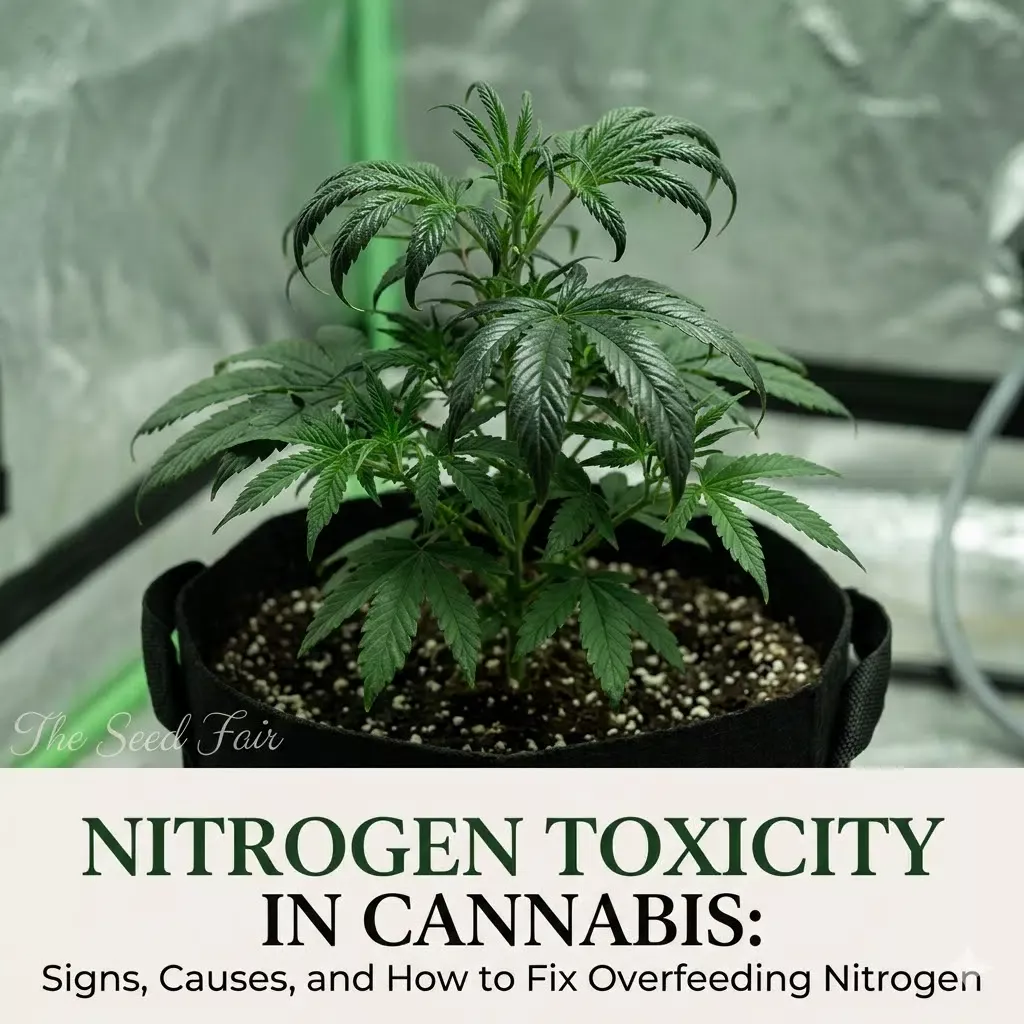
Repeated overfeeding—particularly with nitrogen-rich fertilizers—can also contribute to salt accumulation over time. Learn how to recognize the early signs of nitrogen toxicity in cannabis before nutrient uptake becomes impaired.
As salt concentration increases:
- Water uptake becomes harder for roots
- Osmotic pressure increases
- Nutrient transport becomes inefficient
Eventually, the plant begins showing deficiency symptoms even though the soil is technically “full” of nutrients.
This is especially common in indoor grows where feeding schedules are aggressive and runoff is not properly managed.
-
Root Stress or Oxygen Deprivation
Healthy roots are essential for nutrient absorption. When roots are stressed, compacted, or deprived of oxygen, nutrient uptake slows dramatically.
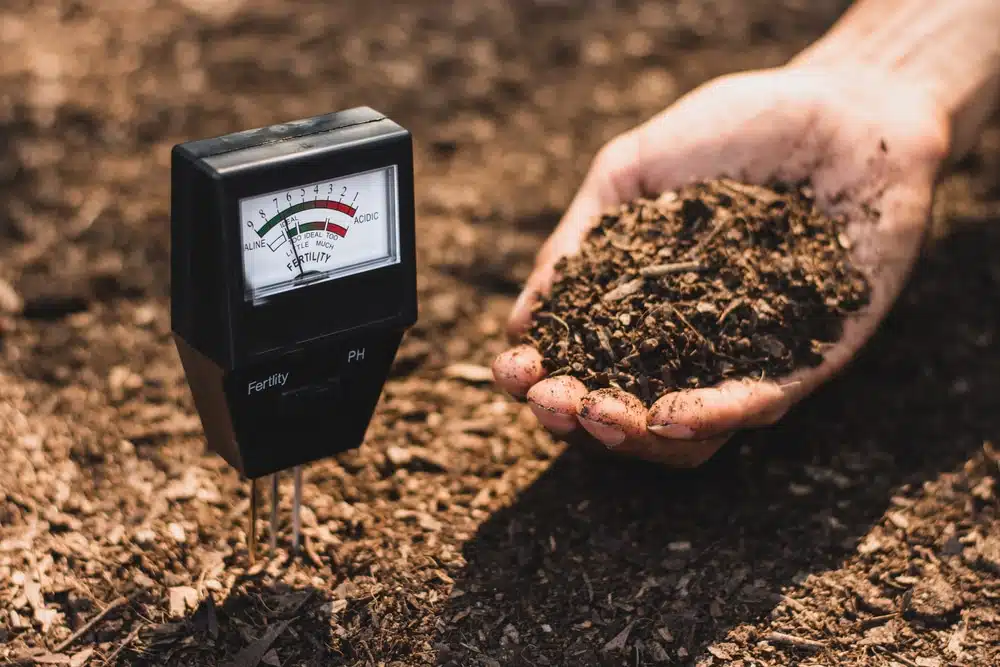
Common causes include:
- Overwatering
- Poor drainage
- Compact soil structure
- Root-bound containers
- Low oxygen in hydroponic reservoirs
When roots cannot breathe properly, nutrient transport naturally declines.
Symptoms of Nutrient Lockout in Cannabis
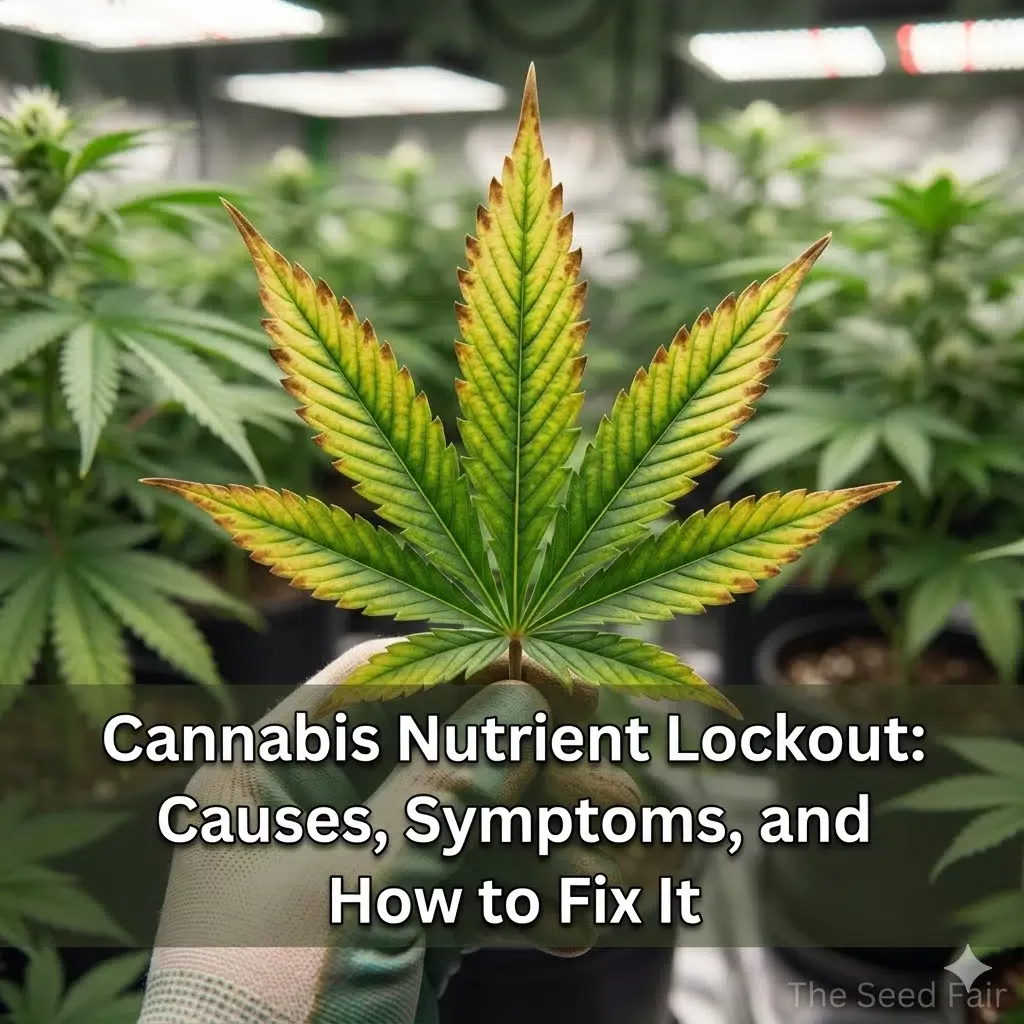
One of the reasons nutrient lockout is so difficult to diagnose is that it mimics multiple deficiencies at once. A single plant may show signs of nitrogen, calcium, magnesium, or iron deficiency simultaneously.
Because calcium and magnesium deficiencies are among the most commonly confused with nutrient lockout, comparing the symptoms of Cal-Mag deficiency in cannabis can help narrow down the underlying cause.
However, there are patterns that experienced growers recognize.
Early Symptoms
In the early stages, plants may still look relatively healthy, but subtle changes begin to appear:
- Slight leaf discoloration
- Slower-than-normal growth
- Reduced vigor in new shoots
- Minor curling or clawing of leaves
At this stage, many growers mistakenly increase feeding strength, which accelerates the problem.
Mid-Stage Symptoms
As lockout progresses, symptoms become more visible:
- Yellowing leaves despite regular feeding
- Interveinal chlorosis (yellowing between veins)
- Brown or rusty spotting
- Drooping or weak stems
- Stunted new growth
At this point, multiple nutrient pathways are already disrupted.
Late-Stage Symptoms
If untreated, nutrient lockout becomes severe:
- Widespread leaf necrosis
- Rapid defoliation (leaf drop)
- Root zone deterioration
- Flower development slowdown
- Poor bud formation or density
During flowering, late-stage lockout can significantly reduce yield quality and terpene development.
Nutrient Lockout vs Nutrient Deficiency (Critical Difference)
One of the most important skills in cannabis cultivation is distinguishing between a true deficiency and nutrient lockout.
A deficiency means the nutrient is not present in sufficient quantity.
Lockout means the nutrient is present but inaccessible.
This difference matters because the solutions are completely opposite.
- If it’s a deficiency → you add nutrients
- If it’s lockout → you restore absorption conditions
Misdiagnosis is one of the most common reasons growers experience repeated problems even after “fixing” their feeding schedule.
How to Fix Cannabis Nutrient Lockout
Fixing nutrient lockout requires resetting the root environment rather than simply adding more nutrients.
Step 1: Flush the Growing Medium
Flushing helps remove excess salts and reset the root zone balance.
In soil grows, this involves running clean, pH-balanced water through the medium until runoff stabilizes.
In hydroponic systems, this usually means replacing the nutrient solution entirely.
This step alone often improves plant appearance within several days.
Step 2: Correct pH Levels
After flushing, the next priority is stabilizing pH.
For most cannabis grows:
- Soil prefers a slightly acidic range
- Hydro and coco systems require tighter control
If pH remains unstable, lockout will return quickly even after flushing.
Step 3: Improve Root Oxygenation
Once chemical balance is restored, focus shifts to root health.
Improving oxygen flow helps recovery by:
- Encouraging new root growth
- Enhancing nutrient uptake efficiency
- Reducing stress on damaged roots
This is especially important in overwatered plants.
Step 4: Resume Feeding Slowly
After recovery begins, nutrients should be reintroduced gradually.
One of the biggest mistakes growers make is returning to full-strength feeding too quickly. Instead, start with a diluted nutrient mix and increase slowly as the plant stabilizes.
Preventing Nutrient Lockout in Cannabis
Prevention is always easier than correction.
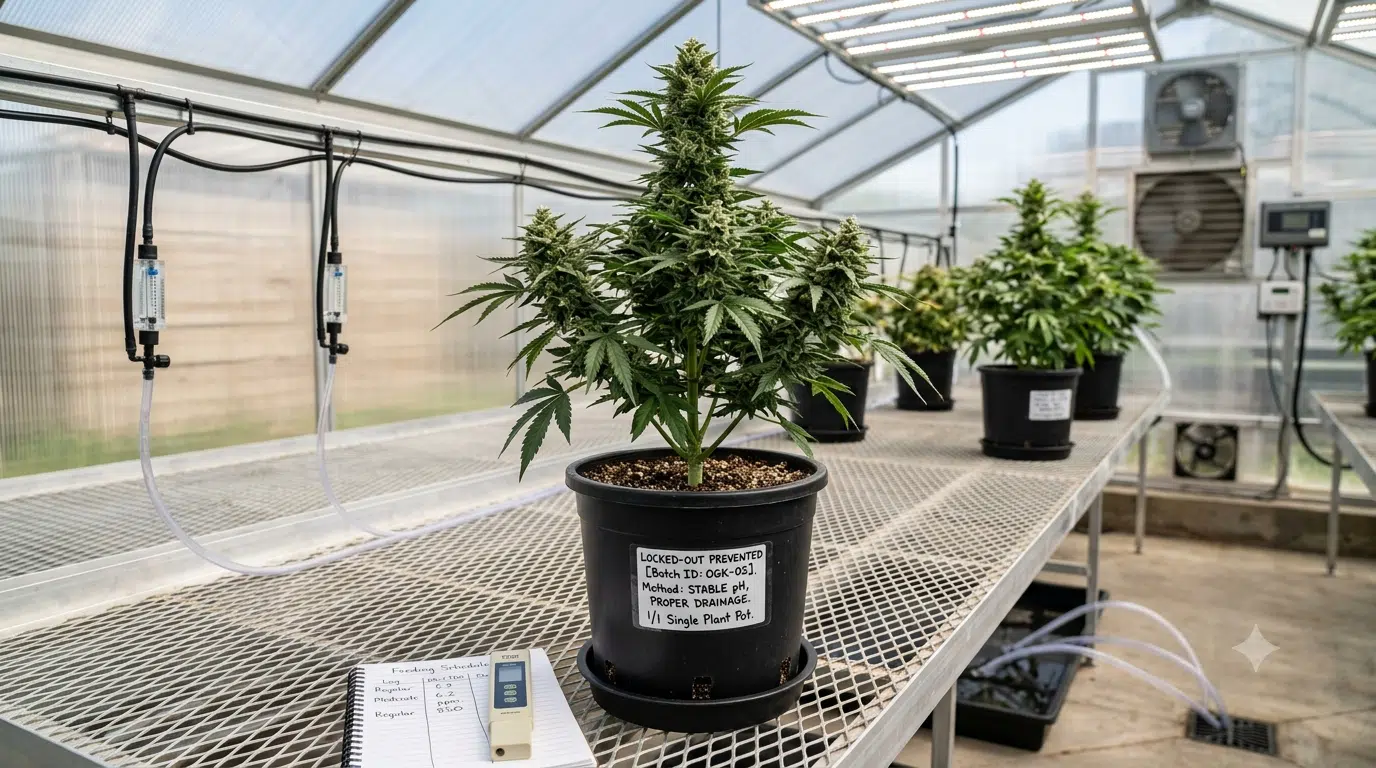
Most cases of nutrient lockout can be avoided through consistent environmental and feeding habits.
The most effective prevention strategies include:
- Maintaining stable pH throughout the grow cycle
- Avoiding excessive nutrient concentration
- Ensuring proper drainage and runoff
- Preventing overwatering
- Periodically flushing the medium
Experienced growers often emphasize that consistency matters more than intensity. Plants respond better to stable, moderate feeding than aggressive nutrient schedules.
Final Thoughts
Cannabis nutrient lockout is not a feeding problem — it is a system imbalance problem. Once you understand that nutrients can be present but unavailable, it becomes much easier to diagnose and correct issues before they escalate.
Growers who master lockout prevention tend to produce more stable plants, healthier root systems, and significantly more consistent yields.
Most importantly, they stop reacting blindly to leaf symptoms and start managing the root environment as a whole system — which is where real cultivation control begins.

Alexander Broodryk is a very skilled grower and has been writing about his experiences online for many years. With over 5 years in the Cannabis Industry Alexander is not only engaging with many of his audiences but also informational. Alex has a lot of writings about Cannabis all over online and we are very happy to have him here at The Seed Fair helping to contribute his well thorough content for our website. He is dedicated to educating readers on the latest developments and trends in this rapidly evolving market. Check out his biography under our Author pages at Alexander Broodryk, Author at The Seed Fair.